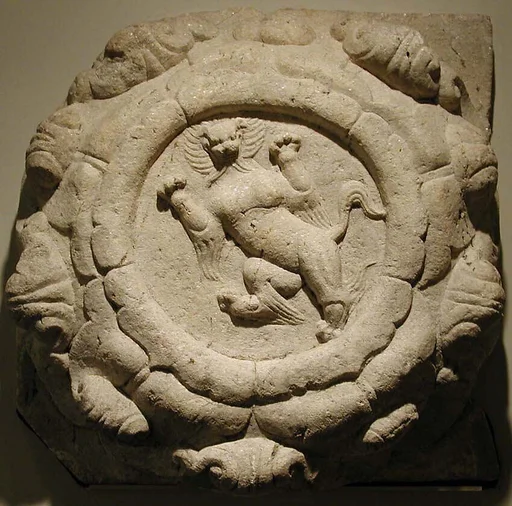
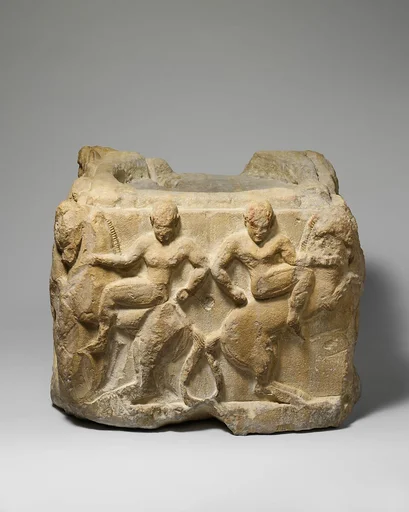
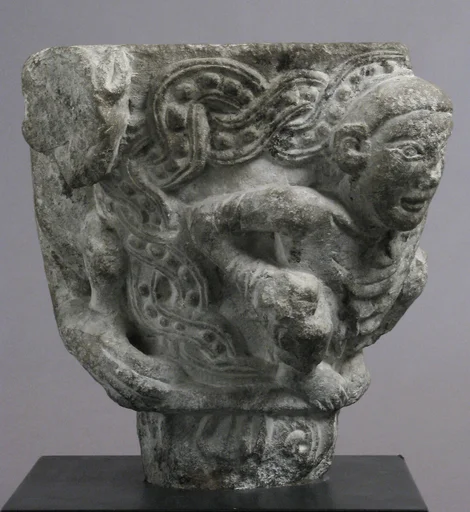
Capital with Lions Mounted by Nude Riders
Unknown
first half 12th century · Stone · Medieval Art
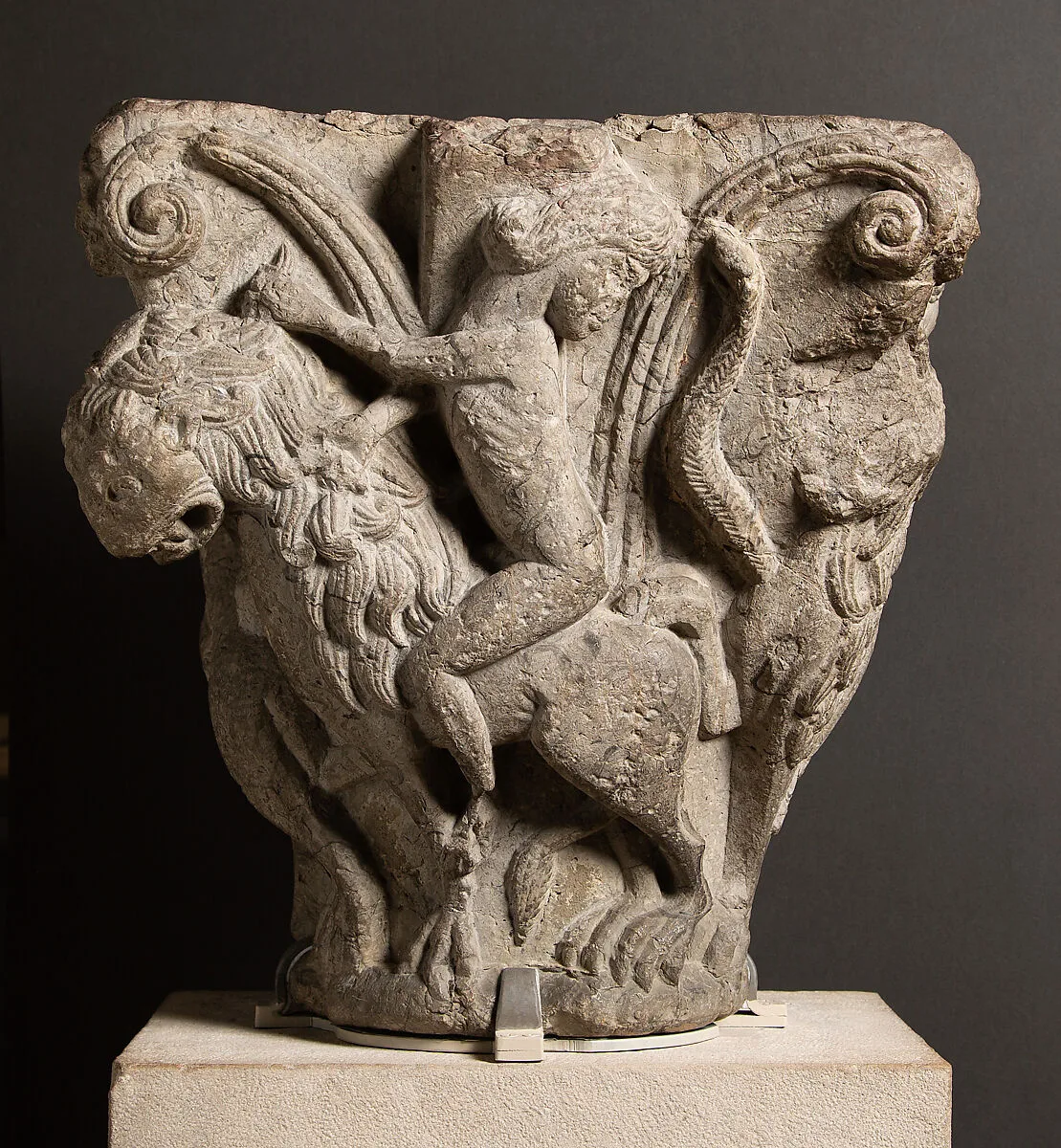
Lions, humans, and snakes encircle this capital in a dynamic composition that transforms the block’s four separate sides into a continuous parade of creatures. The sculptures of ancient Rome, which celebrated the nude form and often incorporated such symbolically powerful beasts as lions and snakes, inspired the creation of this wild and enigmatic object. Many ancient artworks were available to medieval art makers, and western European sculptors working around the year 1100 seem to have studied them particularly closely, though their own creations reveal that they were less interested in directly copying antiquity than in reinterpreting it for their own purposes. For such works, which typically decorated churches, pagan subjects took on new, Christian significances. Though its site of origin is unknown, in its style and choice of subjects this capital is similar to sculptures made for the Cathedral of Jaca in the northern Spanish province of Aragon and for the church of Saint-Sernin de Toulouse in southern France, two sites closely connected across the Pyrenees. Its distinctive stone, which captured tiny, fossilized marine creatures, is quarried on both sides of these mountains.
- Artist
- Unknown
- Date
- first half 12th century
- Medium
- Stone
- Culture
- North Spanish or South French
- Department
- Medieval Art
- Credit line
- Fletcher Fund, 1922