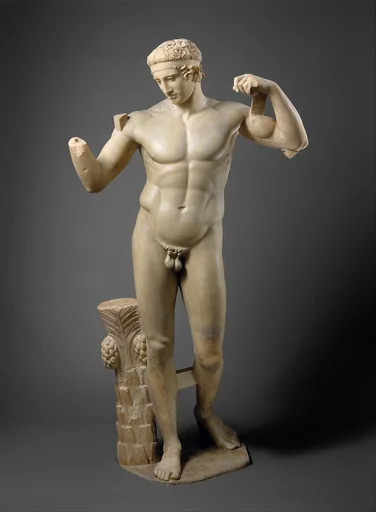
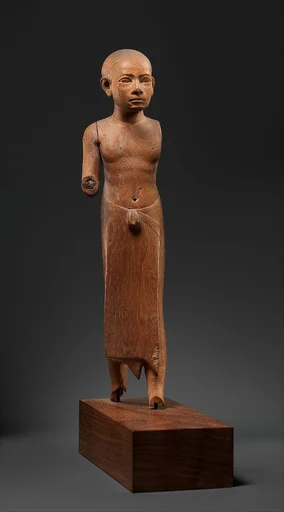
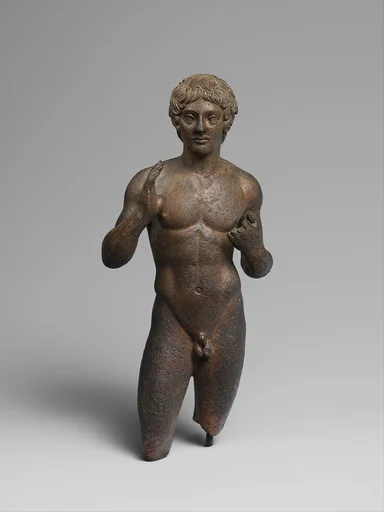
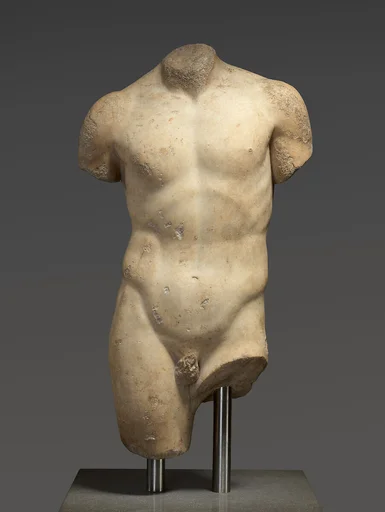
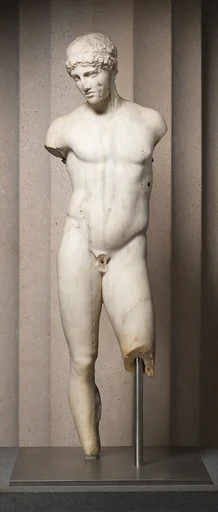
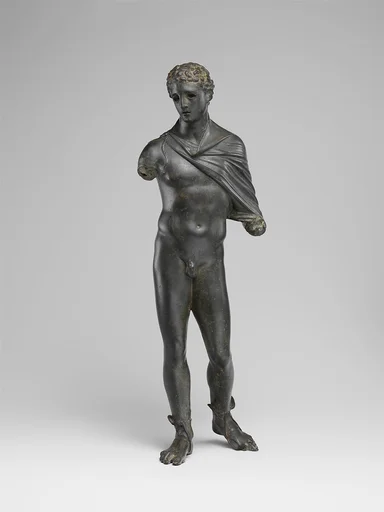
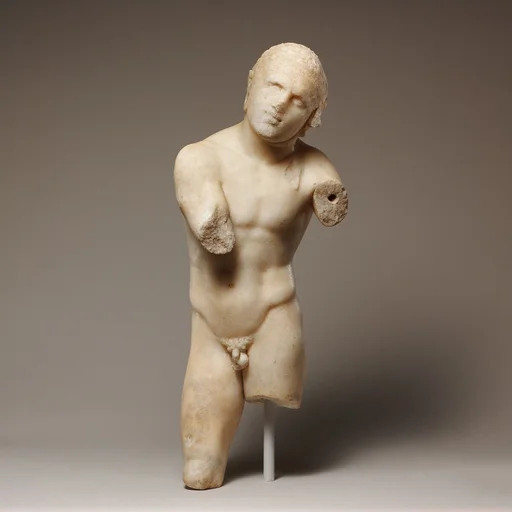
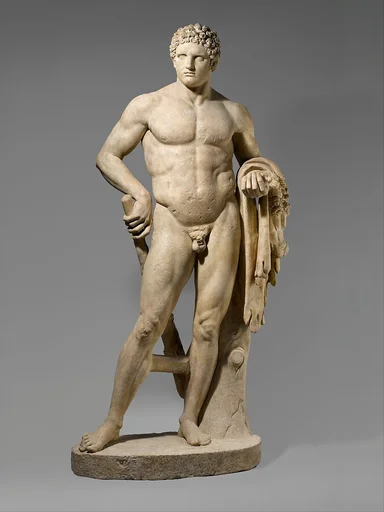
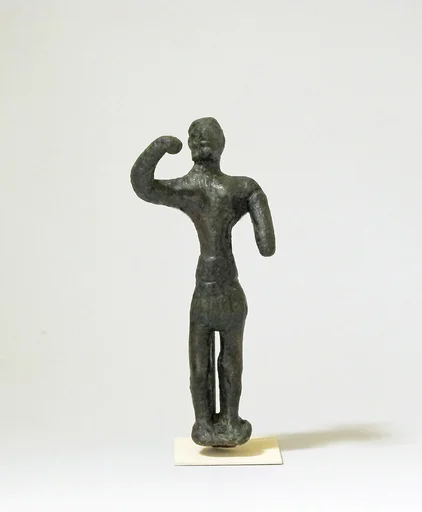
Terracotta statuette of the Diadoumenos (youth tying a fillet around his head)
Unknown
1st century BCE · Terracotta · Greek and Roman Art
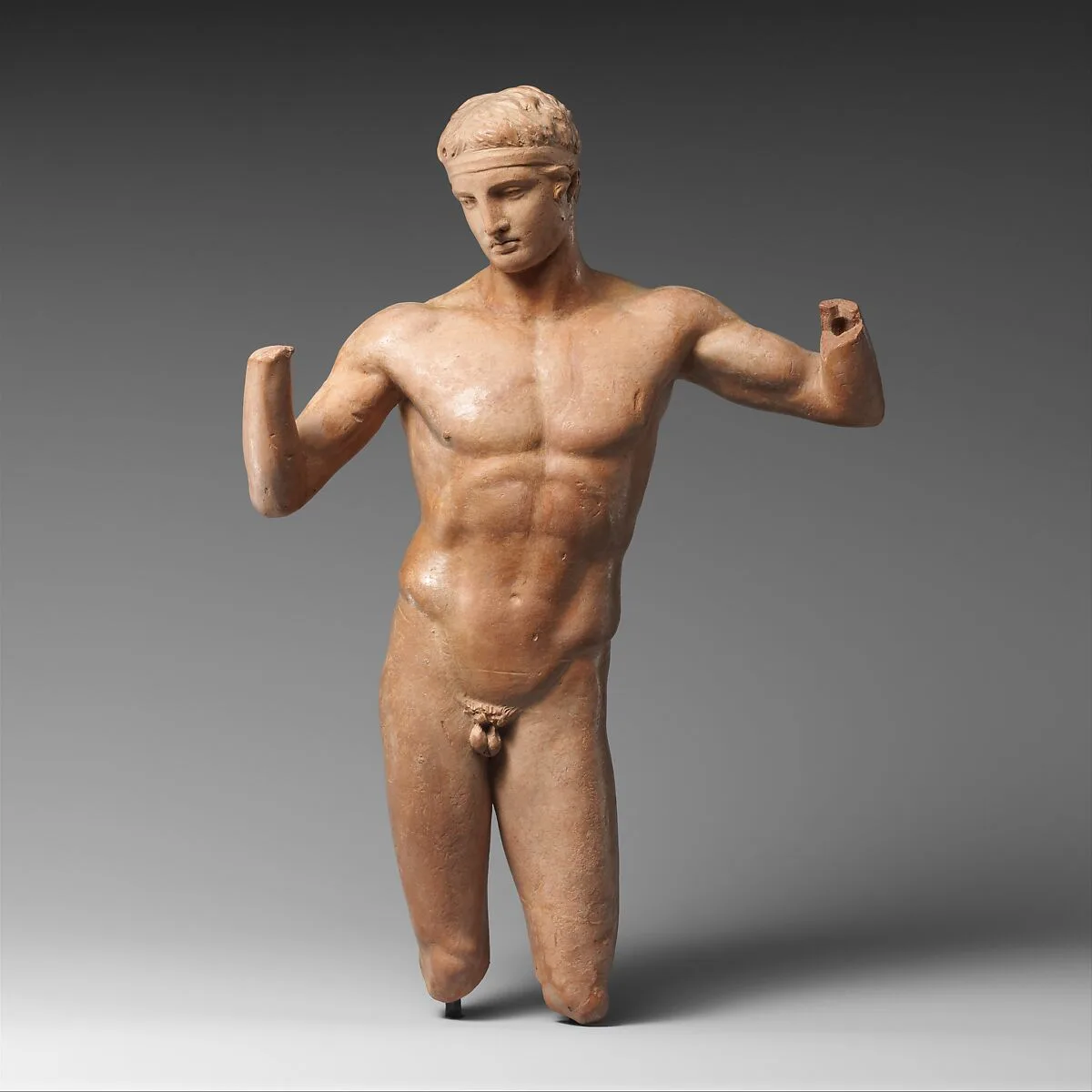
Copy of a Greek bronze statue of ca. 430 B.C. by Polykleitos Connoisseurship and the origins of the discipline of art history began in the Hellenistic period. Greek statues of the fifth century B.C., notably works by Polykleitos, Phidias, and others, were sought out and frequently replicated. The pose of the famous statue of the Diadoumenos by Polykleitos is recognizable in this statuette, but the slender, graceful forms conform to Late Hellenistic taste. Although terracotta was one of the most abundantly available and inexpensive materials of sculptural production in antiquity, it was used to make miniature copies less widely than might be expected. Apparently, only a few centers of production concentrated on this sculptural genre, and those that did limited their choices of subject considerably. The Greek city of Smyrna on the west coast of Asia Minor was among the most important copying centers, and a number of large- and small-scale replicas or variations of well-known statuary types, from both the Classical and Hellenistic periods, were made there.
- Artist
- Unknown
- Date
- 1st century BCE
- Medium
- Terracotta
- Culture
- Greek
- Department
- Greek and Roman Art
- Credit line
- Fletcher Fund, 1932