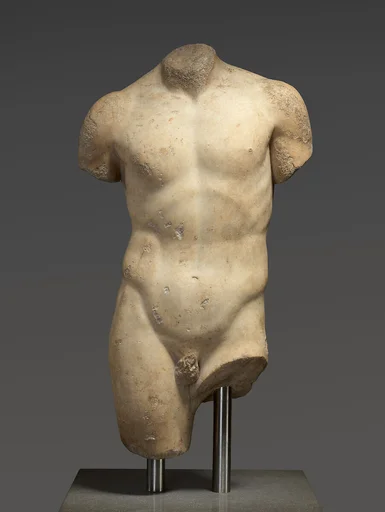
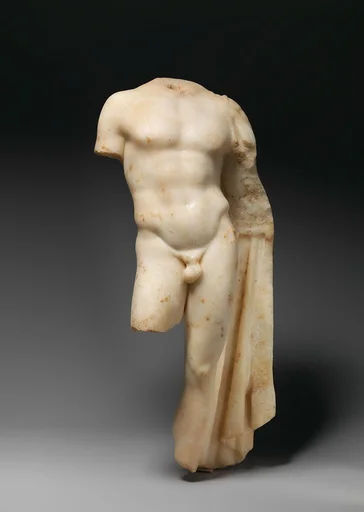
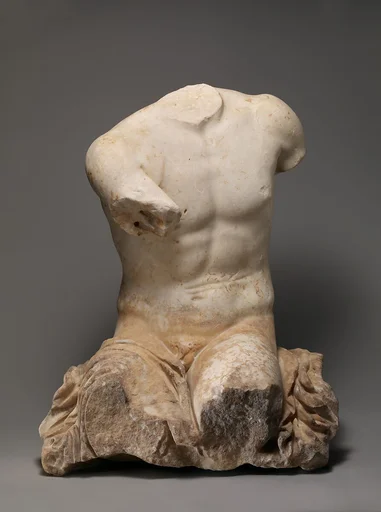
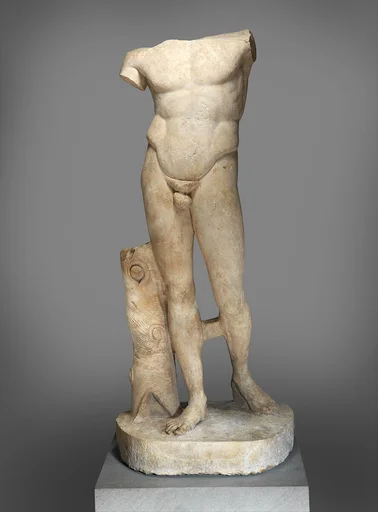
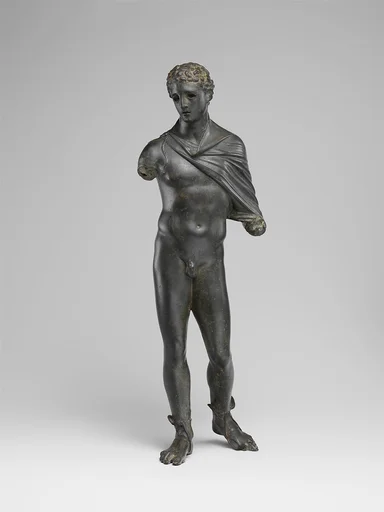
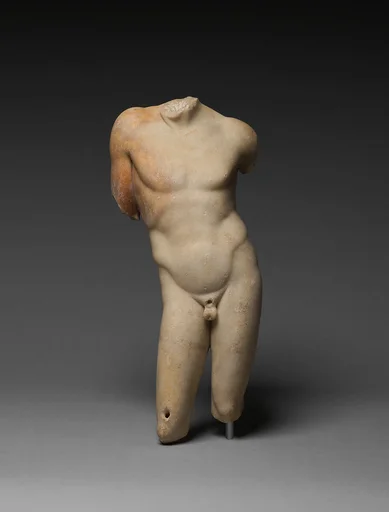
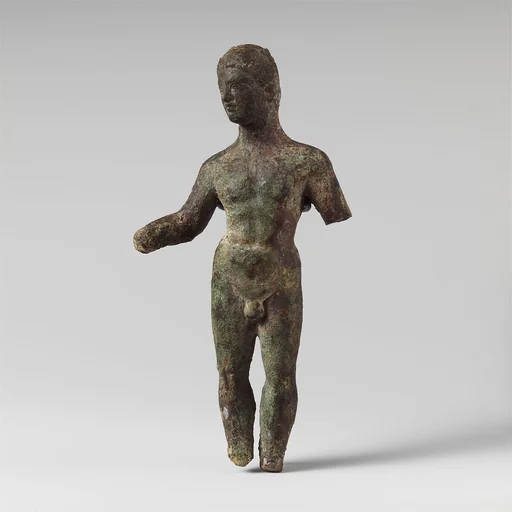
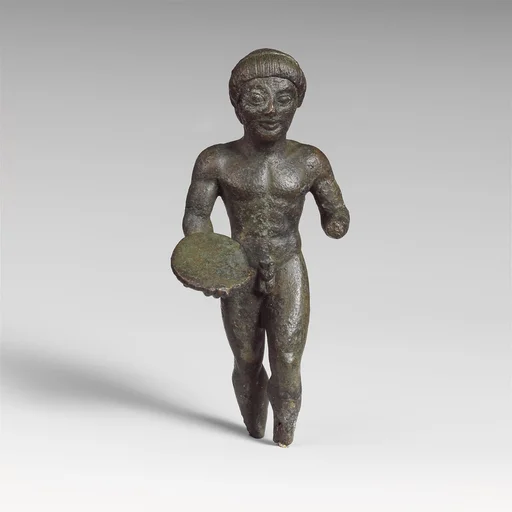
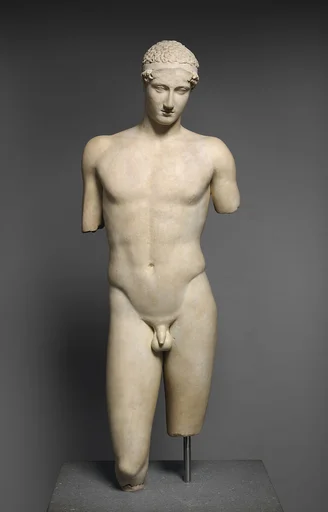
Small marble statue of an athlete
Unknown
3rd or 2nd century BCE · Marble · Greek and Roman Art
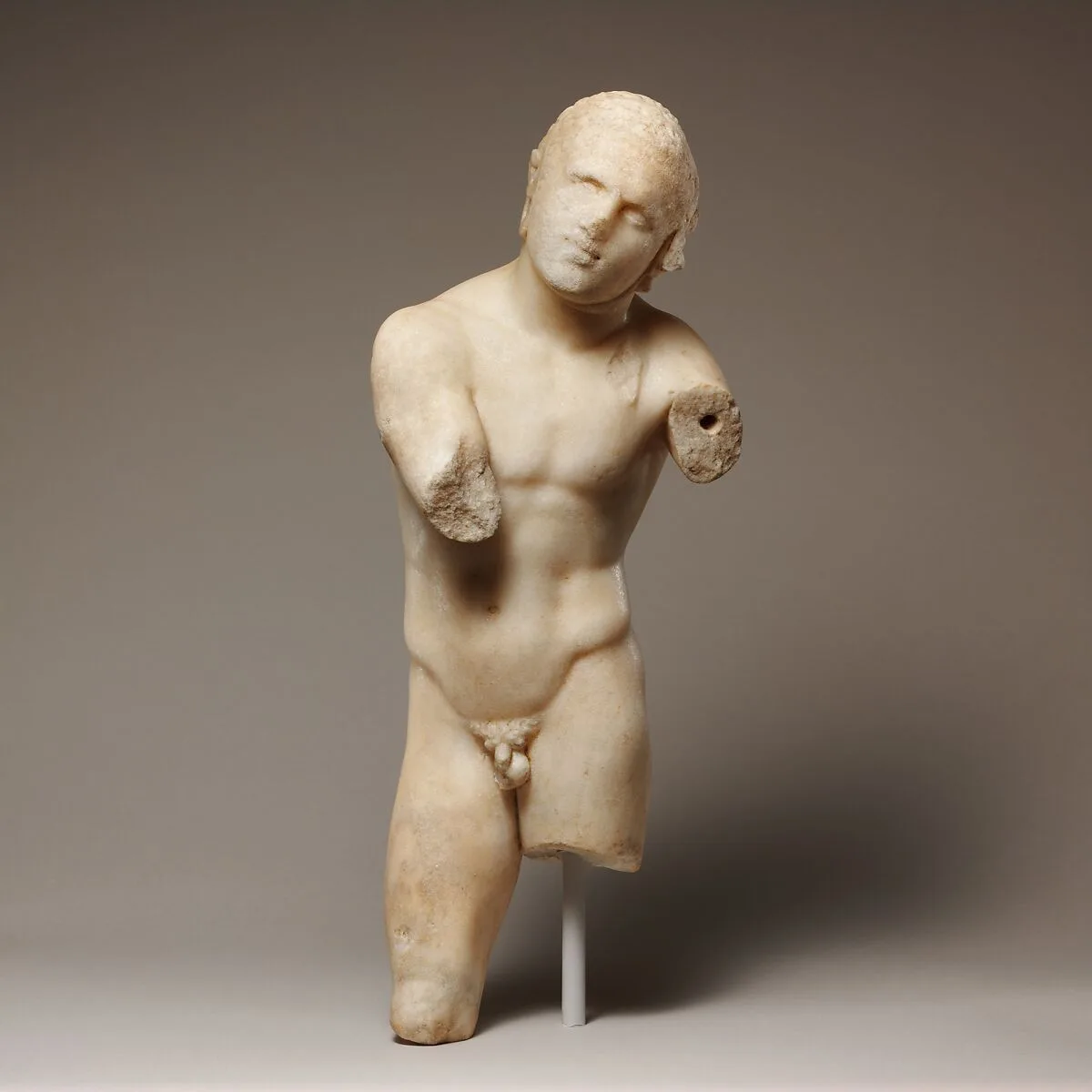
Among the greatest honors accorded ancient Greek athletes were statues dedicated to the gods to commemorate victories in the games held at the Panhellenic sanctuaries and local festivals throughout the Greek world. These statues, typically made of bronze or marble, could be set up at the sanctuary where the games occurred or in a public place in the victor’s hometown. Not all Panhellenic victors received statues, and some did only years after winning. Statues could commemorate a single victory or many victories, which were customarily recorded on the statue’s base. In Hellenistic times, athletic programs at the Panhellenic festivals were expanded to their greatest extent, and as a result, there was a much wider variety of athletic statues than in the preceding Classical period. This athlete is represented fastening a headband with a chinstrap, which would have afforded some protection for his cauliflower ears. It also may have served as an emblem of distinction, one that would stay securely in place during competition. He was clearly a competitor inone of the combat sports—boxing, wrestling, or the pankration, an athletic contest that combined boxing, wrestling, and kicking.
- Artist
- Unknown
- Date
- 3rd or 2nd century BCE
- Medium
- Marble
- Culture
- Greek
- Department
- Greek and Roman Art
- Credit line
- Rogers Fund, 1917