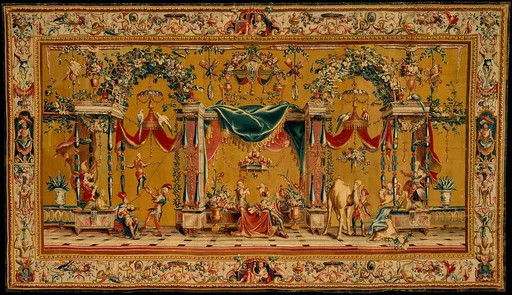
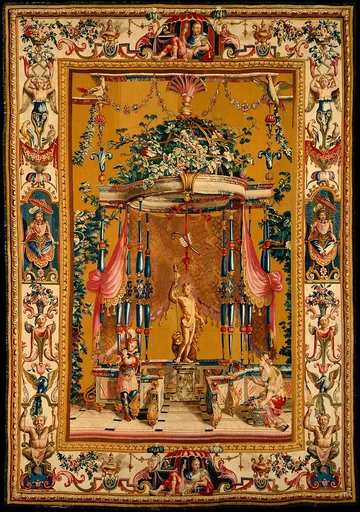
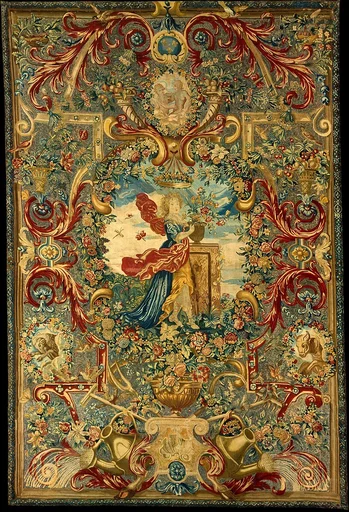
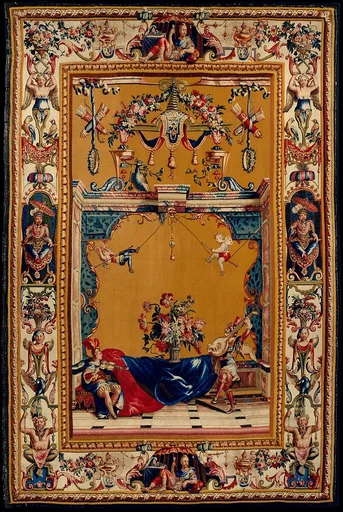
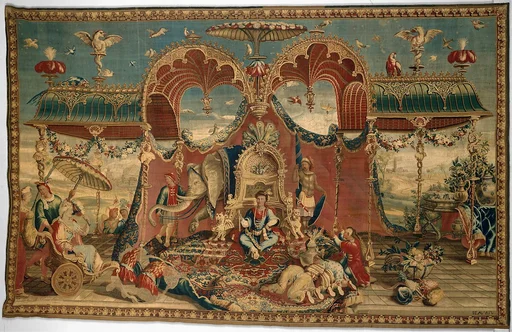
The Elephant from a set of five Grotesques
Beauvais|Jean-Baptiste Monnoyer|Philippe Béhagle|Jean Berain|Guy Louis Vernansal the Elder
designed ca. 1688, woven ca. 1690–1711 · Wool, silk (21-27 warps per inch, 8-9 per cm.) · European Sculpture and Decorative Arts
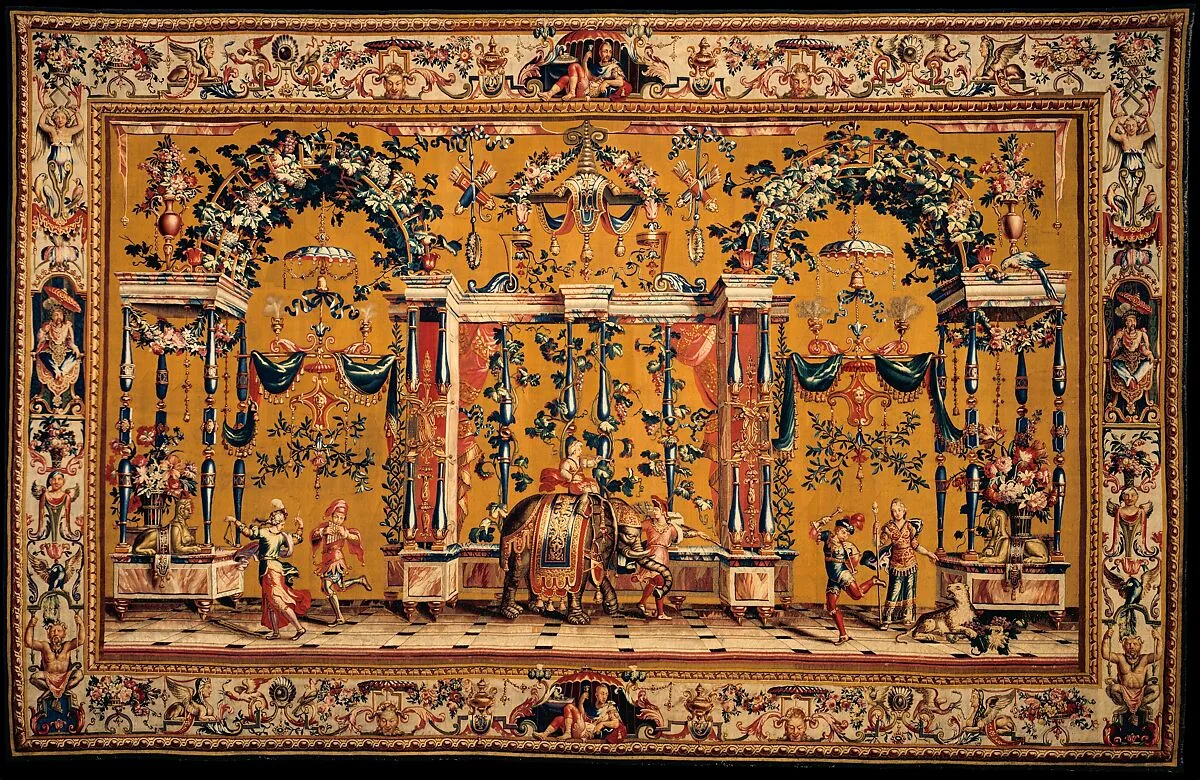
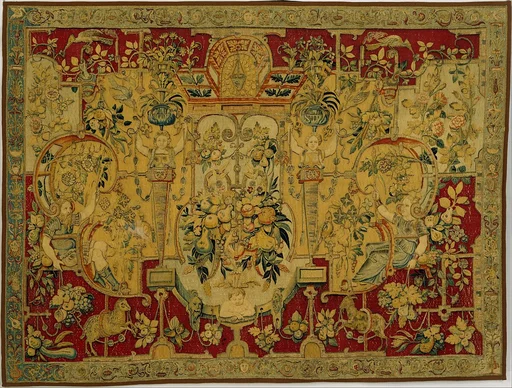
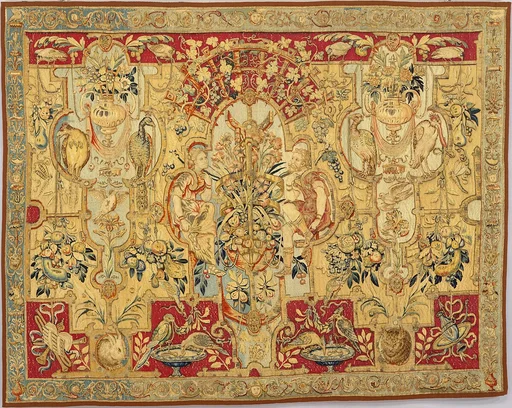
Presenting musicians, acrobats, and exotic animals within a fanciful architectural setting, this tapestry is from a set known as the Berain Grotesques, in reference to the pervasive stylistic influence of Jean Berain (1640–1711), who may even have provided preliminary sketches. The Classical architecture, flora, fauna and figures against the blank ground was in emulation of the Roman wall-paintings excavated in the subterranean chambers of Nero's palace in Rome (erroneously called 'grotti', hence 'grotesques'.) The light-hearted subject matter and whimsical design contrast with the heavier, ornate style that had characterized French tapestry during the third quarter of the seventeenth century. The series enjoyed immense popularity during the late seventeenth and early eighteenth centuries, and the Beauvais workshop produced many weavings for international clients.
- Artist
- Beauvais|Jean-Baptiste Monnoyer|Philippe Béhagle|Jean Berain|Guy Louis Vernansal the Elder
- Date
- designed ca. 1688, woven ca. 1690–1711
- Medium
- Wool, silk (21-27 warps per inch, 8-9 per cm.)
- Culture
- French, Beauvais
- Department
- European Sculpture and Decorative Arts
- Credit line
- Gift of John M. Schiff, 1977