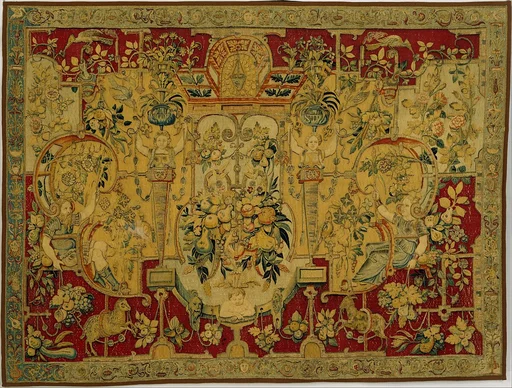
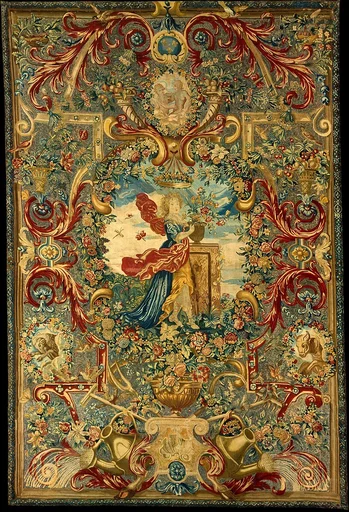
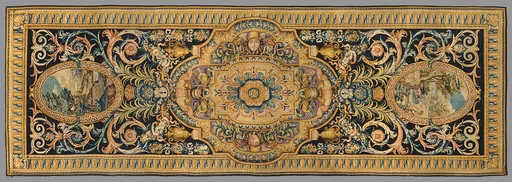
Panel with grotesques, from a set of bed hangings
Cornelis Floris II
ca. 1550–60 · Silk, wool, silver and silver-gilt thread (20-22 warps per inch, 8-9 per cm.) · European Sculpture and Decorative Arts
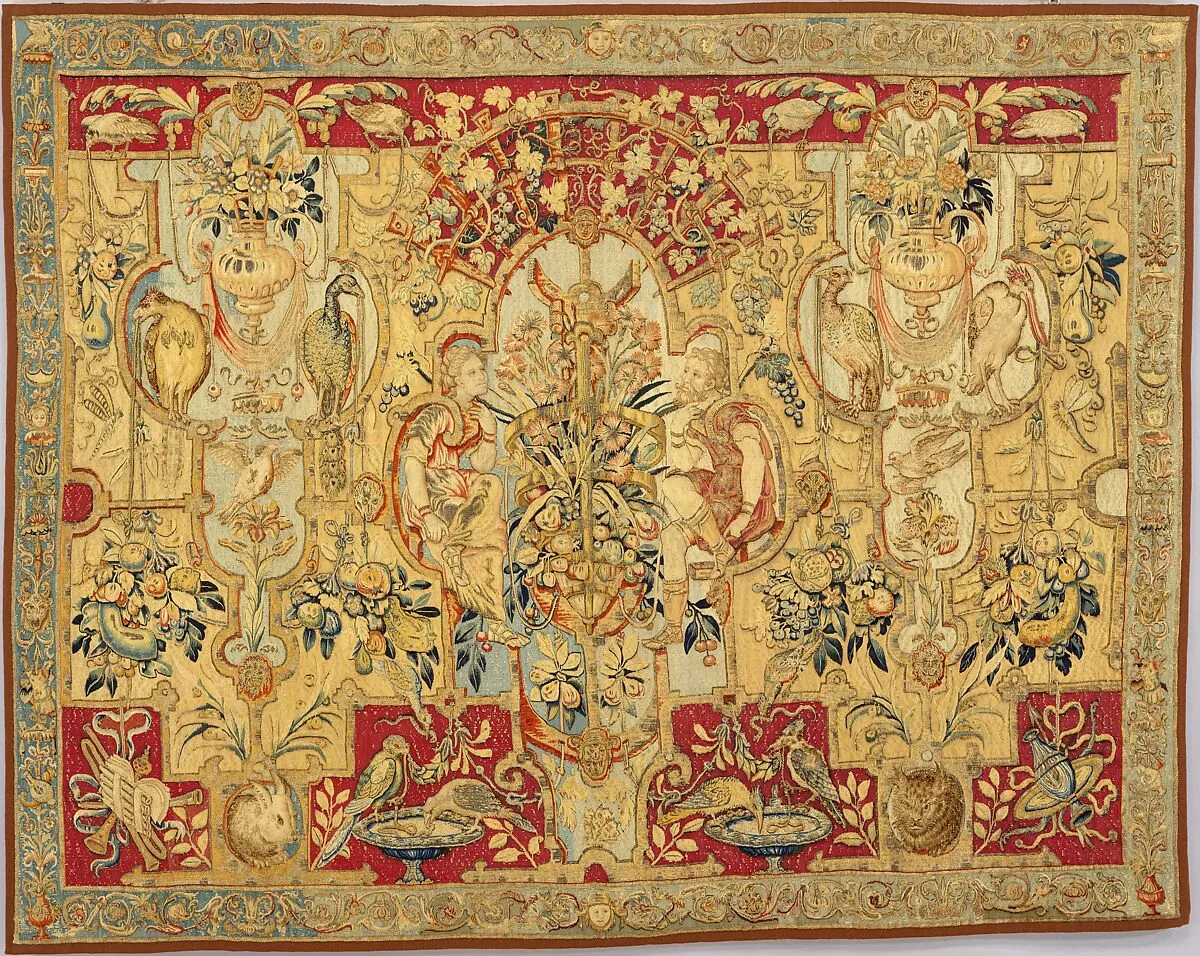
The late fifteenth-century rediscovery of the Roman emperor Nero’s palace, the Domus Aurea, or Golden House, spurred a revival of the fanciful decorations of part-human creatures amid leafy patterns—called “grotesques”—that were found on its walls and evoked the palace’s grottolike, subterranean spaces. Italian and Flemish designers of the period developed the style in tapestries, whose bright dyes and space-enveloping properties were suited to grotesques’ sinuous forms and skewed, otherworldly version of reality. Pope Leo X and the Genoese statesman Andrea Doria both commissioned grotesque tapestries from celebrated Brussels-based weavers; this panel, with its bold palette and fanciful, Antique-inspired motifs, was probably originally made for Philip II, King of Spain, to embellish a four-poster bed.
- Artist
- Cornelis Floris II
- Date
- ca. 1550–60
- Medium
- Silk, wool, silver and silver-gilt thread (20-22 warps per inch, 8-9 per cm.)
- Culture
- Netherlandish, Brussels
- Department
- European Sculpture and Decorative Arts
- Credit line
- Gift of George Blumenthal, 1941