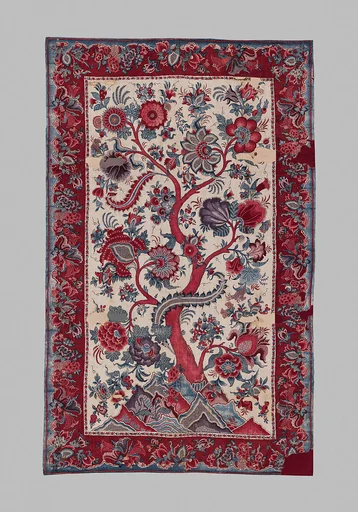
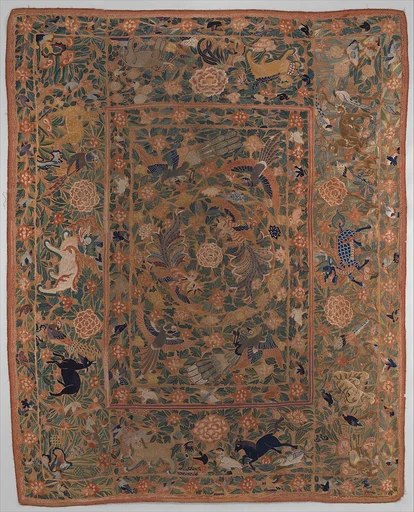
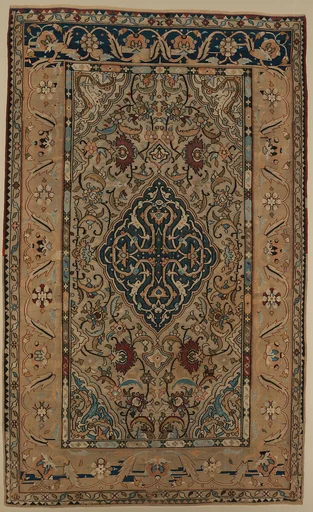
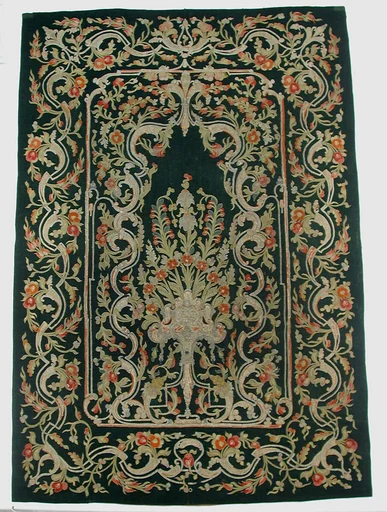
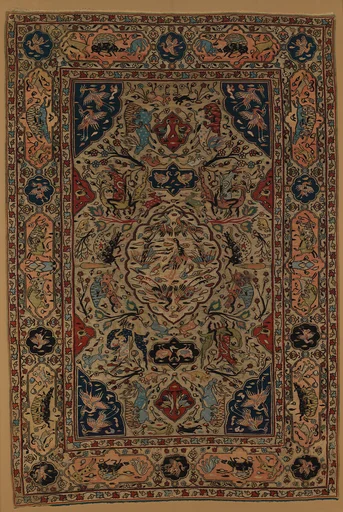
Bed Cover (Palampore)
Unknown
18th century · Cotton; plain weave, mordant painted and dyed, resist-dyed · Islamic Art
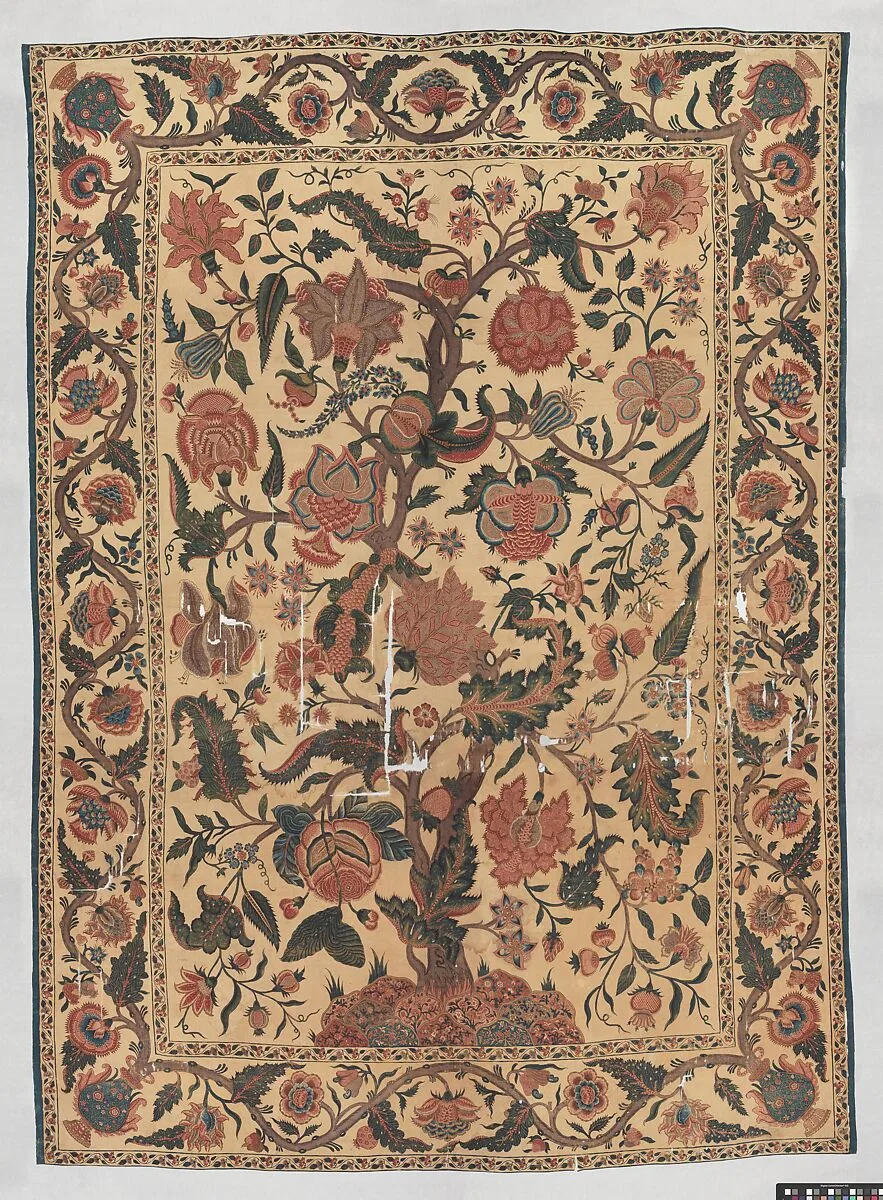
This type of dyed cloth, known as a palampore from the Hindi term for a bed cover, palangposh, was made in abundance in India for the European market in the late seventeenth and eighteenth centuries. The size of the palampores conformed to bed sizes in Europe, and their decoration, often with a central tree laden with fruits and birds, combined elements from English embroideries, Chinese decorative objects, and Indian textiles. Lengths of such fabric also hung on the walls of the bedrooms, which were often decorated with Chinese porcelains and other Eastern exotica.
- Artist
- Unknown
- Date
- 18th century
- Medium
- Cotton; plain weave, mordant painted and dyed, resist-dyed
- Department
- Islamic Art
- Credit line
- Purchase, Bequest of George Blumenthal and Gift of Indjoudjian Freres, by exchange, and The Friends of the Islamic Department Fund, 1982