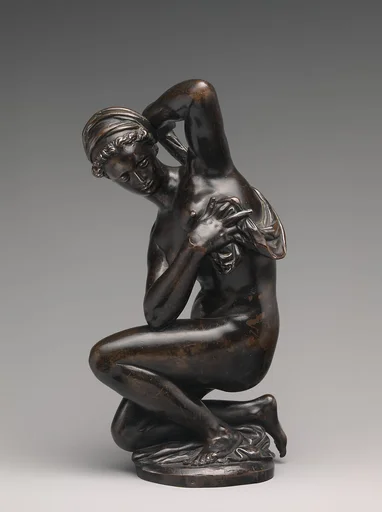
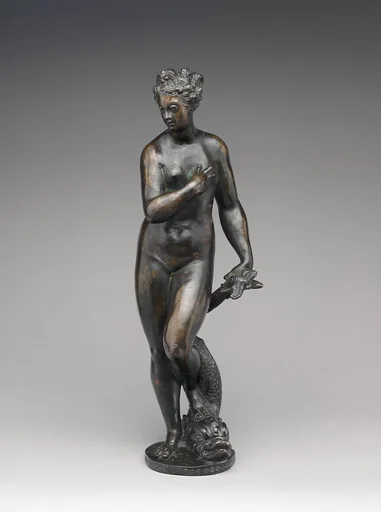
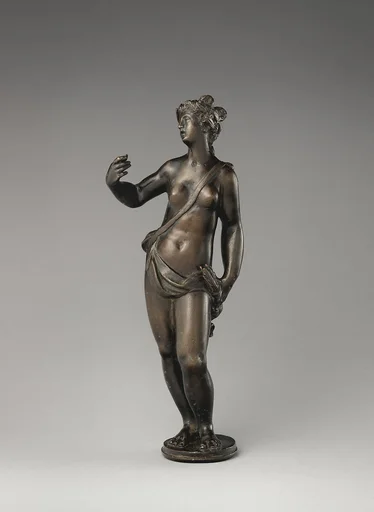
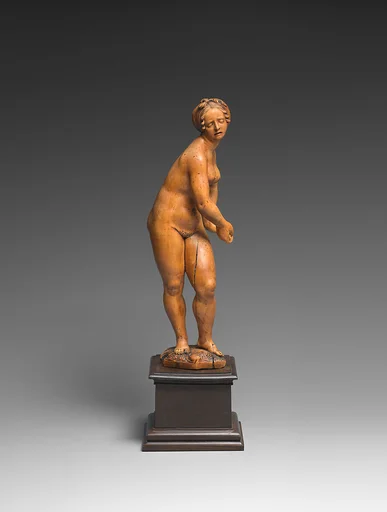
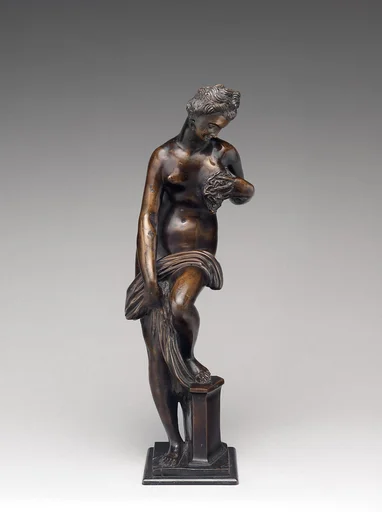
Crouching Venus
Unknown
late 17th–early 18th century · Bronze, black lacquer patina · European Sculpture and Decorative Arts
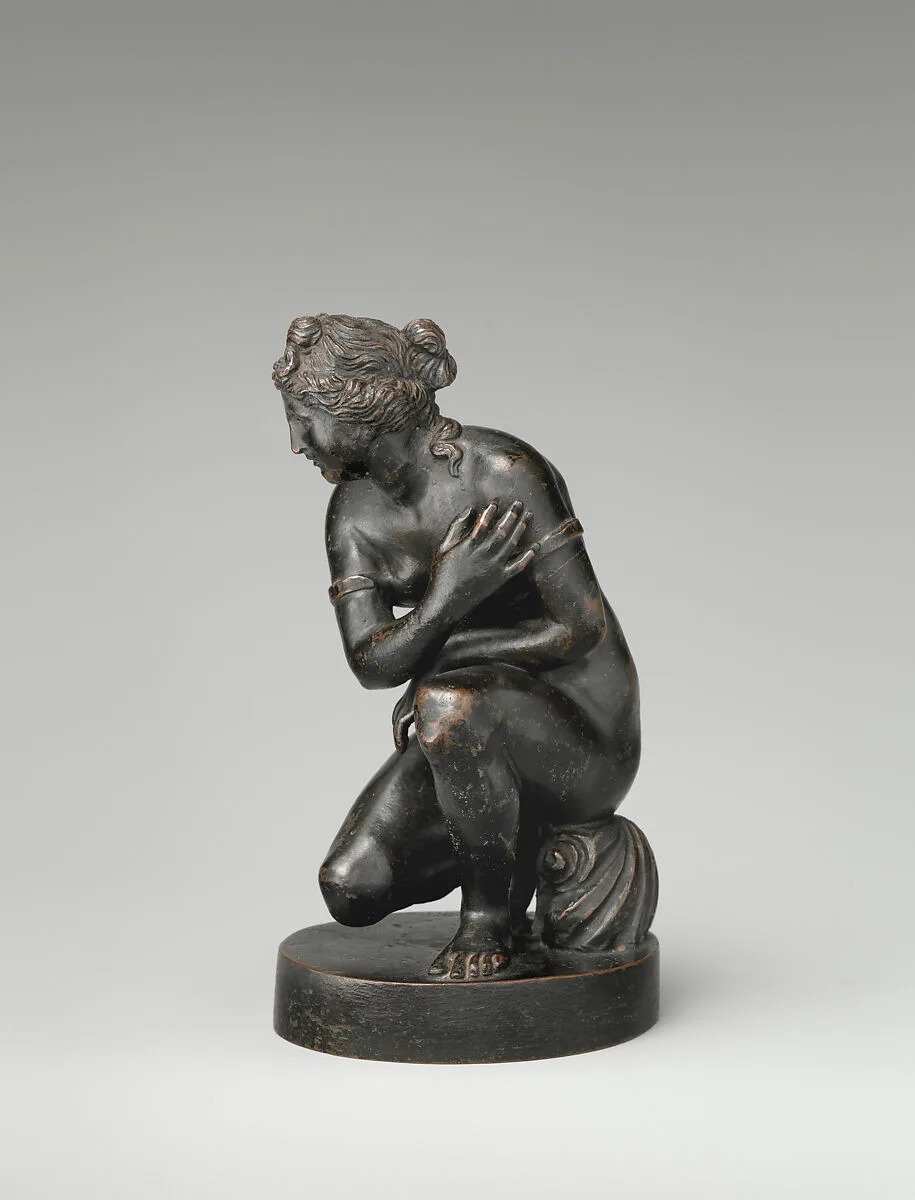
The source is an ancient composition often identified as the “Aphrodite of Doidalses,” the best-known marble—and the one our bronzista consulted—being that in the Uffizi.[1] It was restored by 1704, when an engraving records the seashell that supports the goddess’ left buttock, present in our work too.[2] The conceit was that she appeared on land immediately after her birth, borne there by the shell. Our man gives her two armlets for extra allure. Reductions apparently were sold in eighteenth-century Rome by Neoclassical founders Giacomo Zoffoli and Francesco Righetti, but this one still has more than a whiff of the Baroque about it.[3] -JDD Footnotes (For key to shortened references see bibliography in Allen, Italian Renaissance and Baroque Bronzes in The Metropolitan Museum of Art. NY: The Metropolitan Museum of Art, 2022.) 1. Haskell and Penny 1981, pp. 321–23. 2. Maffei 1704, pl. 28. 3. Haskell and Penny 1981, p. 323.
- Artist
- Unknown
- Date
- late 17th–early 18th century
- Medium
- Bronze, black lacquer patina
- Culture
- Italian, probably Rome
- Department
- European Sculpture and Decorative Arts
- Credit line
- The Friedsam Collection, Bequest of Michael Friedsam, 1931