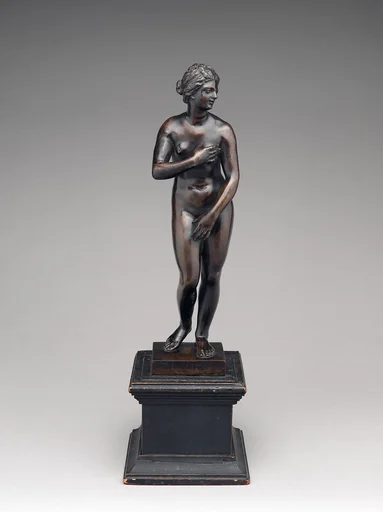
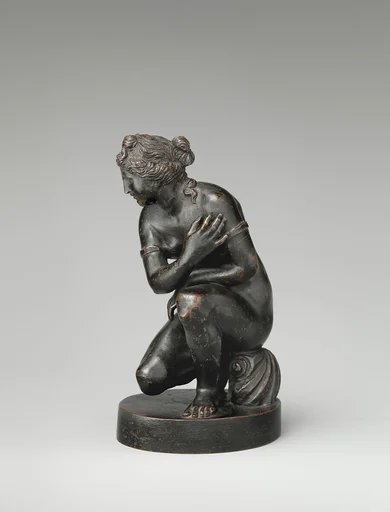
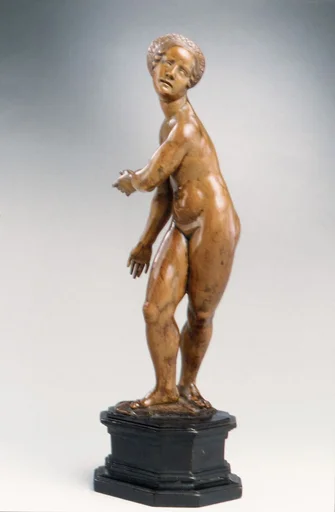
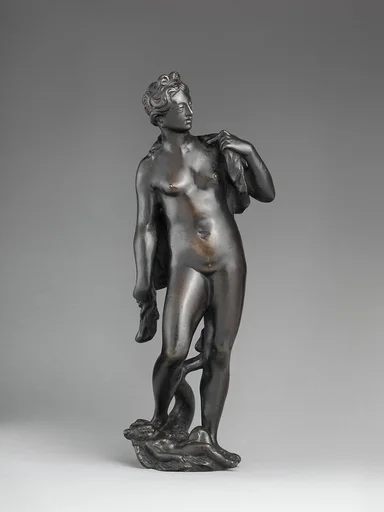
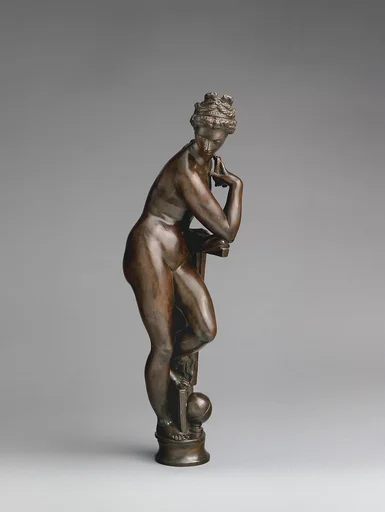
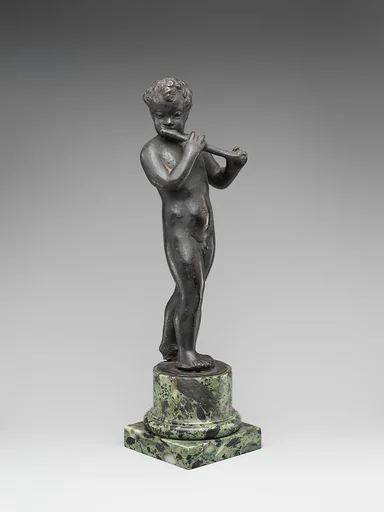
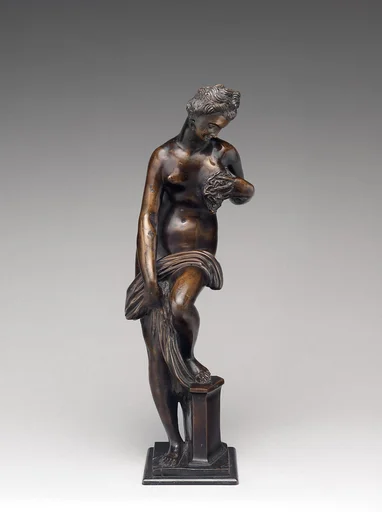
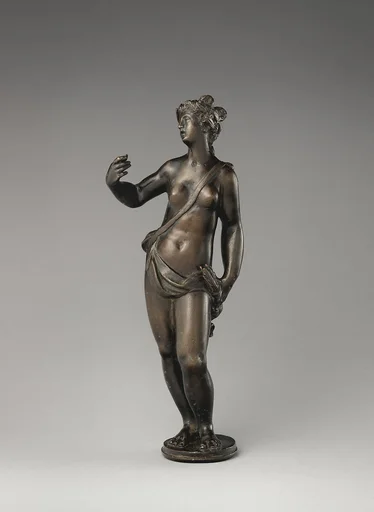
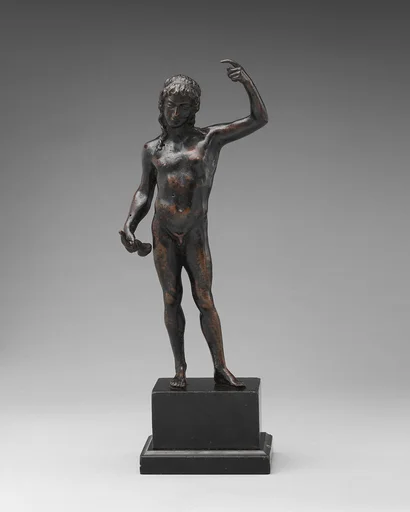
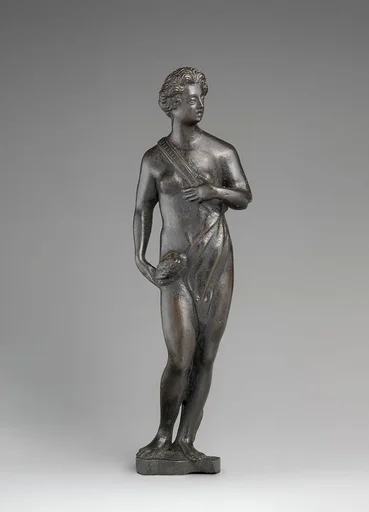
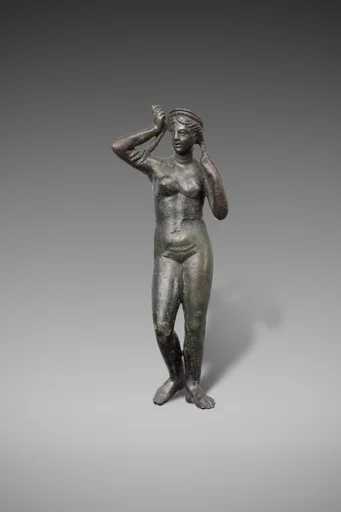
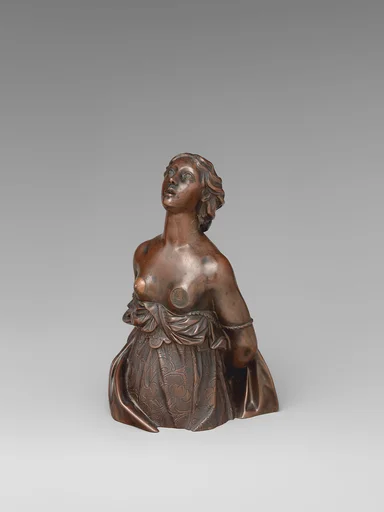
Lucretia
Conrad Meit of Worms
1500–1515 · Boxwood (Buxus sempervirens); pedestal: various pieces of dark colored wood, including pieces of ebony (Diospyros sp.) · European Sculpture and Decorative Arts
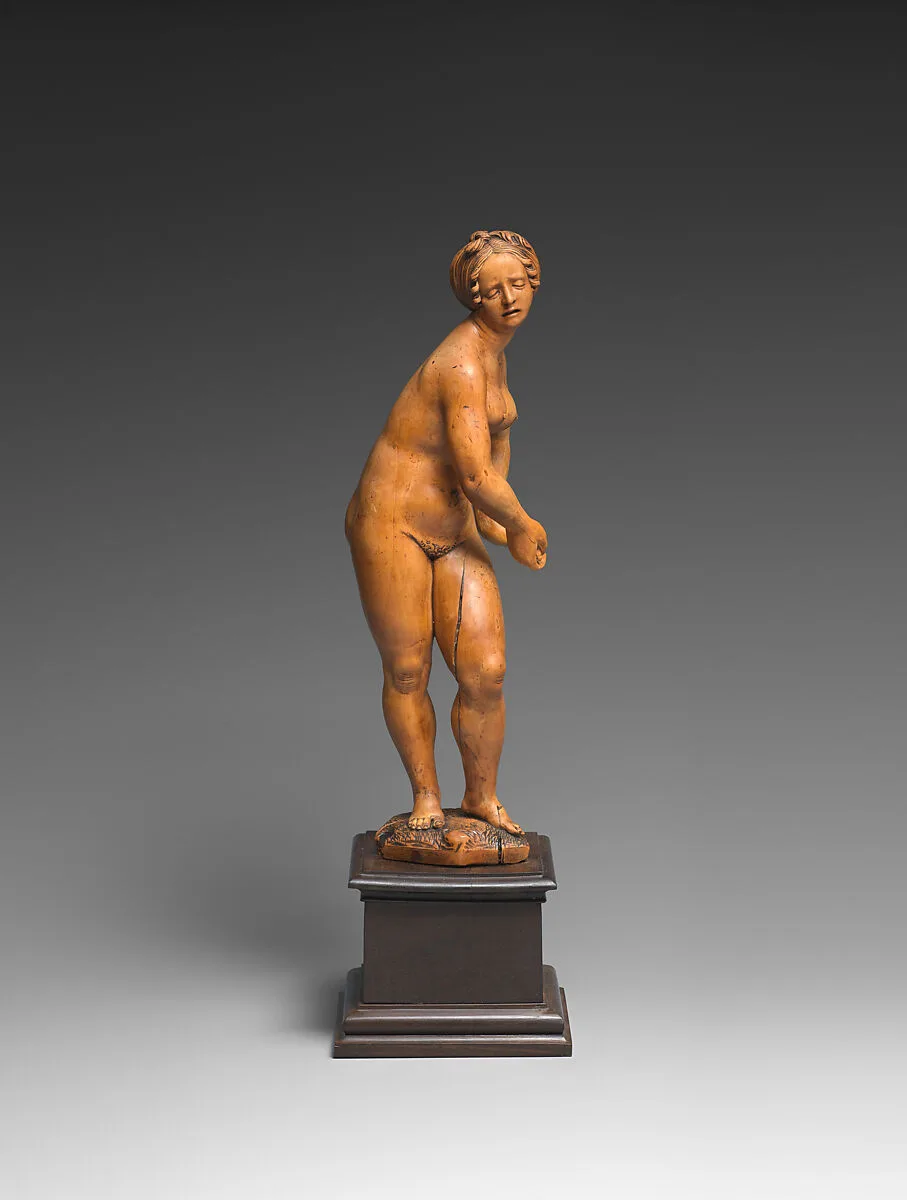
Lucretia was a beautiful and virtuous noblewoman who committed suicide in 510 bce after being raped by Prince Sextus Tarquinius, the son of the last Roman king. Her tragic death brought about the rebellion that established the Roman Republic. The subject of a secular story about ancient Rome, Lucretia was nevertheless admired for her chastity by religious writers during the Renaissance. She was both touted as a model of Christian womanhood and sexualized as an acceptable subject for artistic depictions of sensuous female nudes.
- Artist
- Conrad Meit of Worms
- Date
- 1500–1515
- Medium
- Boxwood (Buxus sempervirens); pedestal: various pieces of dark colored wood, including pieces of ebony (Diospyros sp.)
- Culture
- Flemish
- Department
- European Sculpture and Decorative Arts
- Credit line
- Gift of J. Pierpont Morgan, 1917