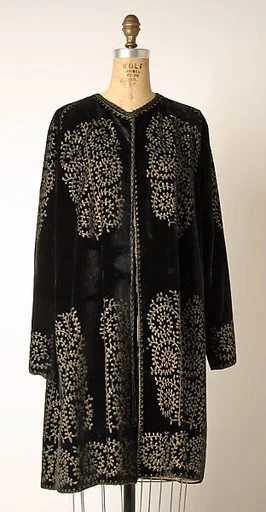
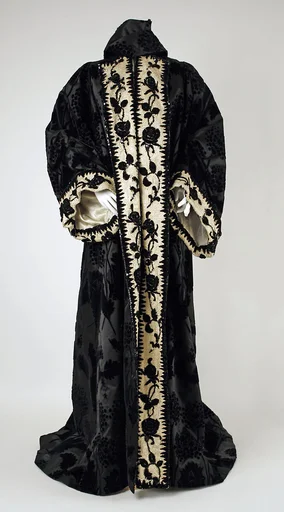
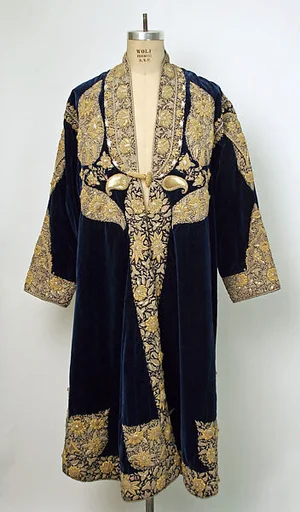
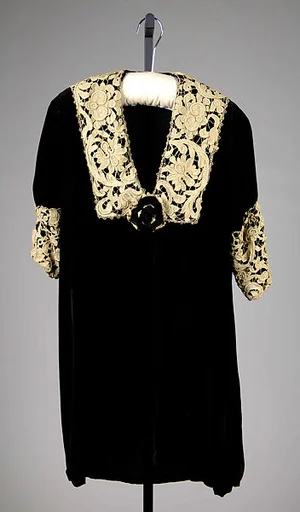
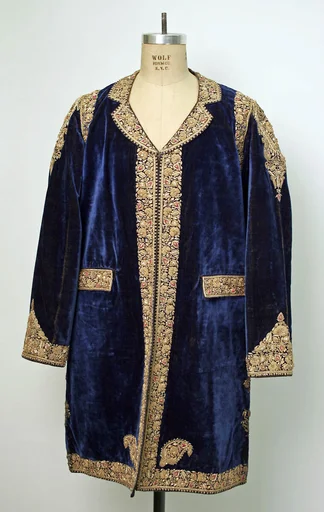
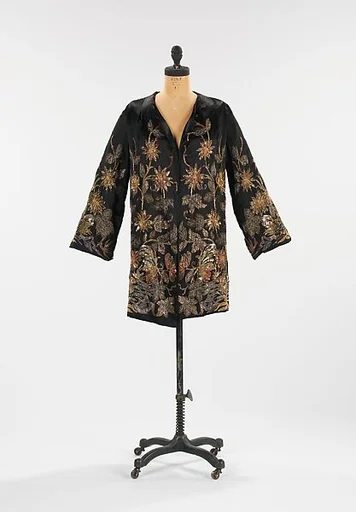
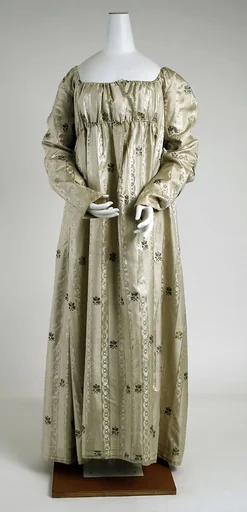
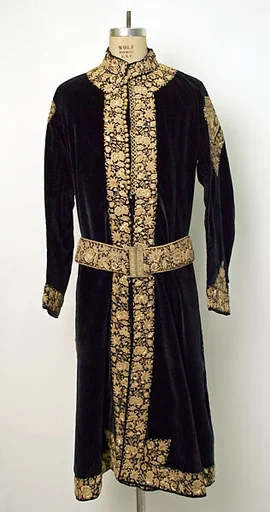
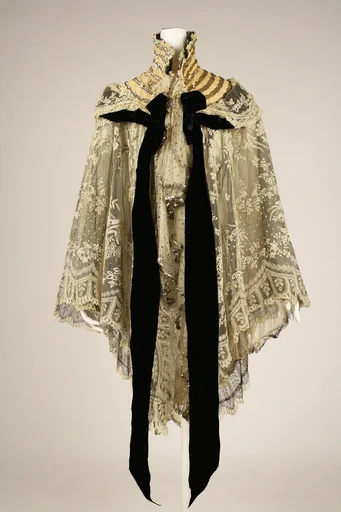
Evening cape
Myrbor|Sarah Lipska
ca. 1925 · silk, metal · Costume Institute
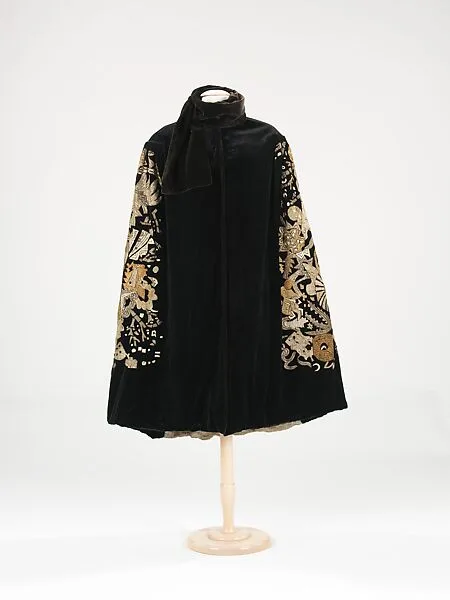
The French couture house Myrbor was opened in July 1922 by Marie Cuttoli, a French statesman's wife, on 17 rue Vignon in Paris. Only in operation until 1936, the house employed prominent European and Russian artists including Picasso and Matisse to create designs for the interior decorations and clothing which the house produced. Both Eastern European émigrés who worked as set designers with Leon Bakst, Natalia Goncharova, a Russian Futurist artist, and Sarah Lipska, of Polish origins, were among the house's coterie of artists. These two women executed designs for embroideries and, in Goncharova's case, garments, which extant fashion sketches document. Lipska's work is represented in the Brooklyn Museum collection in the form of embroidery samples. Both women's designs for Myrbor are characterized by abstract motifs and Cubist-inspired patterns which were fashioned in embroidery and appliqués applied in a distinctive open whip stitch. This cape, which bears a fairly rare Myrbor label, exhibits the quintessential abstract quality of most Myrbor pieces. The glimmering metallic embroidered geometric motifs are expertly executed. The artistic personality of the cape and its embroidered motifs can be explained by the fact that an artist, involved in Cubism or the Cubist off-shoot Futurism, probably designed the embroidery. The silhouette, particularly the neck treatment, is reminiscent of Russian folk dress, an example of the influence Eastern European artists and designers had on Myrbor's designs.
- Artist
- Myrbor|Sarah Lipska
- Date
- ca. 1925
- Medium
- silk, metal
- Culture
- French
- Department
- Costume Institute
- Credit line
- Brooklyn Museum Costume Collection at The Metropolitan Museum of Art, Gift of the Brooklyn Museum, 2009; Gift of Mrs. Dudley N. Schoals, Charlotte Shufeldt, Frank A. Vanderlip, Jr., and John M. Vanderlip, 1967