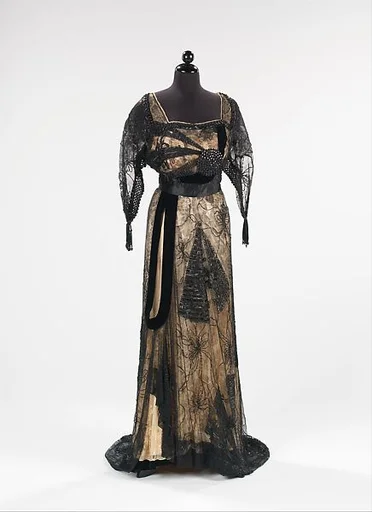
Evening dress
Jeanne Victorine Margaine-Lacroix|Maison Margaine-Lacroix
ca. 1913 · silk, metal, gelatin · Costume Institute
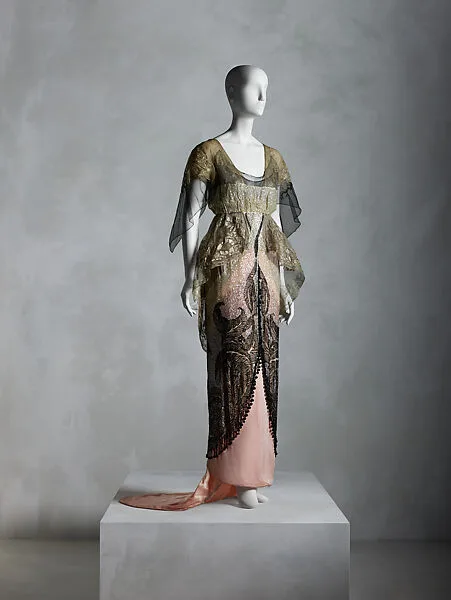
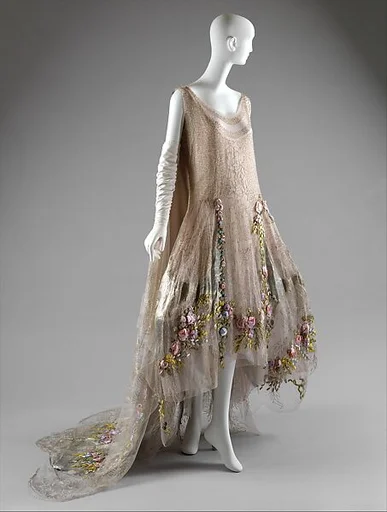
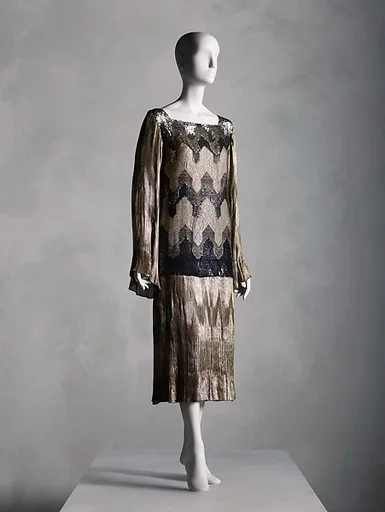
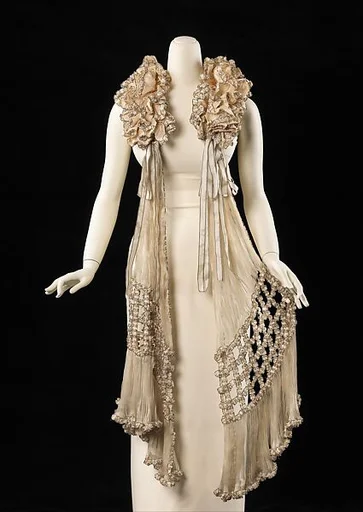
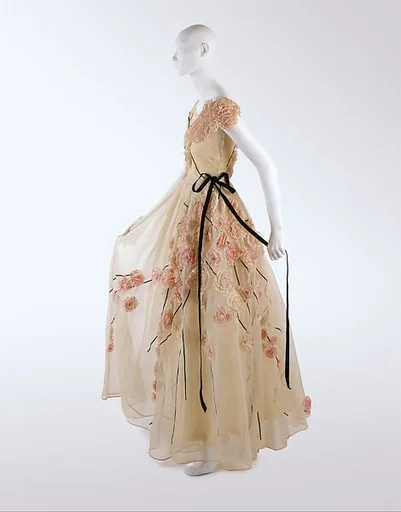
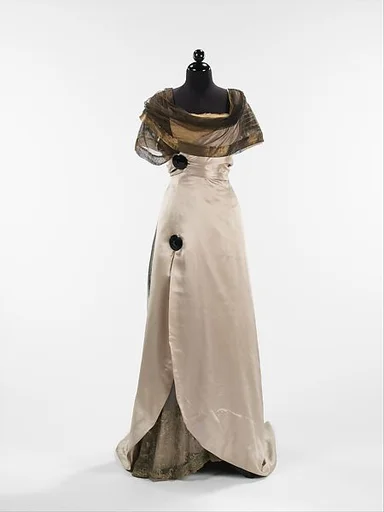
Maison Margaine was founded in the nineteenth century by Armandine Fresnais-Margaine and renamed Maison Margaine-Lacroix by her daughter Jeanne following her death. Although the house has been largely overlooked in fashion history, recent scholarship has revealed the influence it wielded in the early twentieth century. Among the house’s most notable innovations were the development of the popular robe styles “Tanagra,” first introduced in 1889 and worn with its own modified corset, and “Sylphide,” which was advertised to replace stays with an “ingenious” built-in lining as early as 1904. Jeanne worked closely with manufacturers to develop modernized soft knit and front-lacing undergarments that enabled greater freedom of motion. An advocate for a more natural form, she sought to eliminate the bulky layers associated with earlier corsetry, as evidenced by her remark that “suppleness is demanded by women, because that alone gives ‘line.’ Stiff, hard bands cannot meet their wishes.” This rare and sumptuous gown of pale pink satin reflects the subtle move toward a slender, more naturalistic figure prior to WWI and foreshadows the dramatic shifts that would occur in fashion during the following decade. The elegant symbiosis between the placement of metallic lace, silk net, incandescent sequins, and beaded black passementerie is both typical of the period and emblematic of the refinement and skill of the couture house.
- Artist
- Jeanne Victorine Margaine-Lacroix|Maison Margaine-Lacroix
- Date
- ca. 1913
- Medium
- silk, metal, gelatin
- Culture
- French
- Department
- Costume Institute
- Credit line
- Gift of Sandy Schreier, in celebration of the Museum’s 150th Anniversary, 2019