Bindalli Wedding Dress
Unknown
mid-19th–early 20th century · Velvet, metal wrapped thread; embroidered · Islamic Art
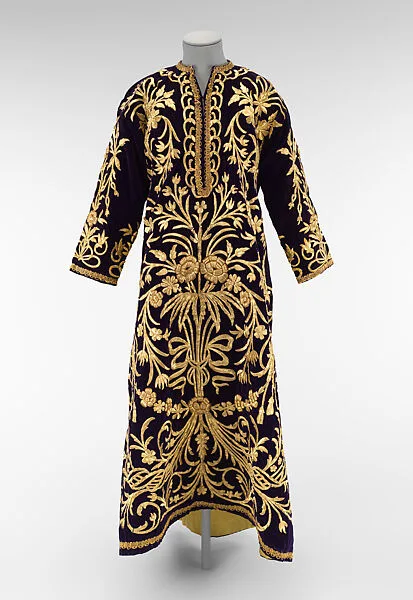
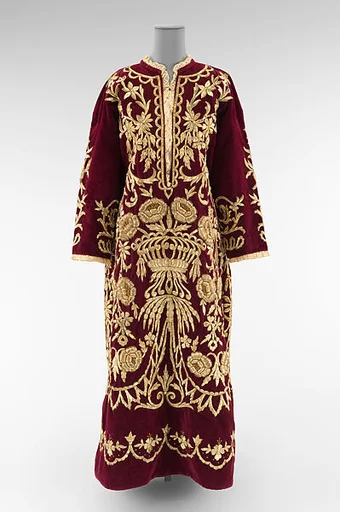
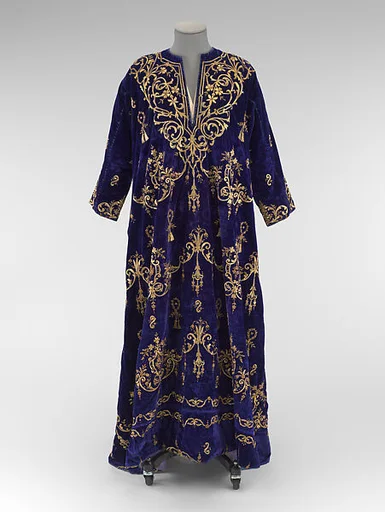
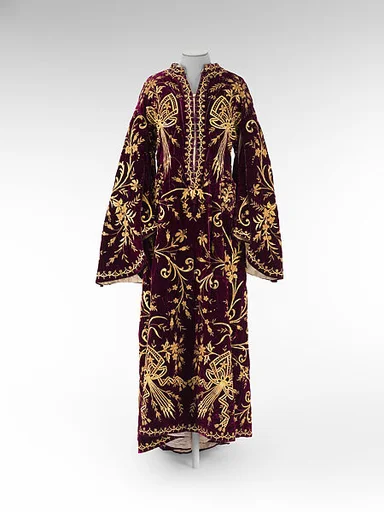
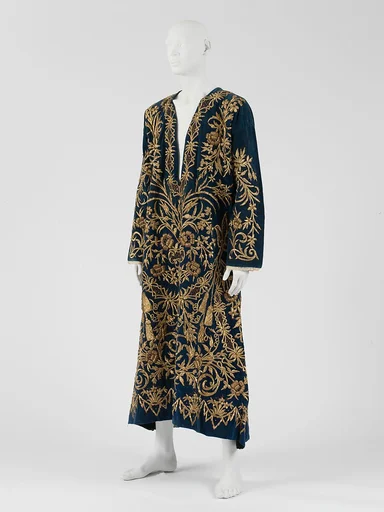
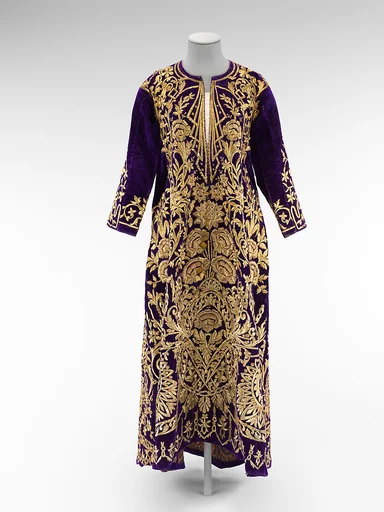
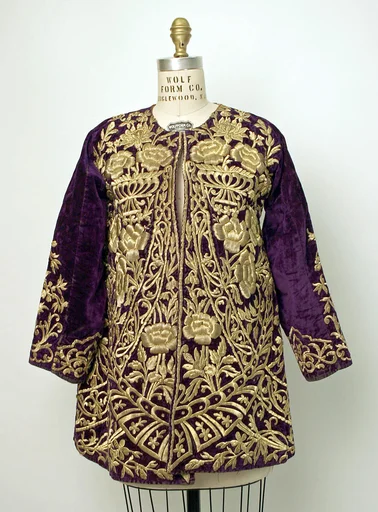
Worn by both Muslim and Jewish women in the Balkans and Anatolia for weddings and other special occasions, bindalli dresses like this came into use in the second half of the nineteenth century and were popular well into the twentieth century. They were worn by women in urban and rural contexts, remaining popular in rural areas after they had fallen out of use in urban fashion. Their name, bindalli (bindallı in Turkish), means thousand branches and refers to the embroidered decoration which was generally an elaborate design of plant motifs, often growing out of vases or arranged in garlands, executed in a couched embroidery technique called dival using gold or silver metal wrapped thread over cardboard. The dresses appear in a variety of shapes over the decades in which they were worn, demonstrating clearly the changes in dress design and tailoring modes which characterized Ottoman women’s clothing in these decades. With its round neck, front opening, dropped shoulders and straight sleeves, this example typifies one of the most common styles for the bindalli dress. The all over design of the embroidery consists of garlands, floral sprays with occasional large flowers, and a chain motif outlining the neck and front opening. Gold braid edges the hem, sleeve ends and neck opening.
- Artist
- Unknown
- Date
- mid-19th–early 20th century
- Medium
- Velvet, metal wrapped thread; embroidered
- Department
- Islamic Art
- Credit line
- Gift of Helen Marshall Scholz, 1965