Bindalli Wedding Dress
Unknown
mid-19th–early 20th century · Cotton, metal wrapped thread; embroidered · Islamic Art
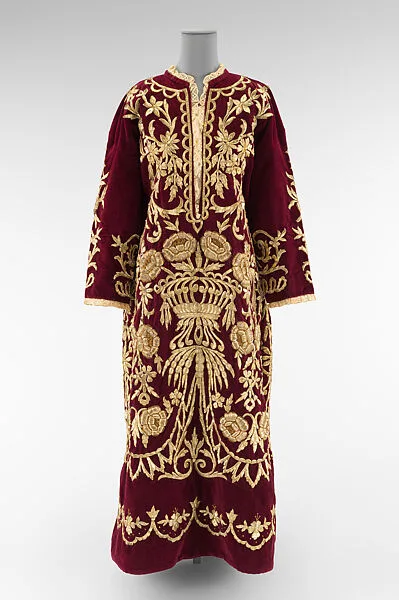
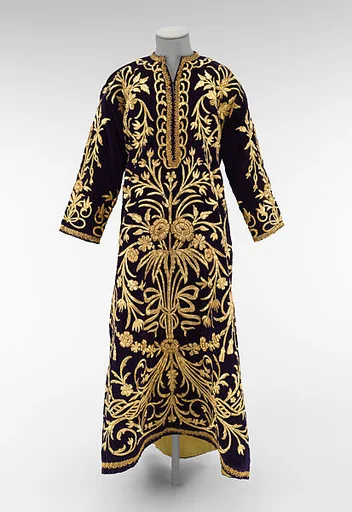
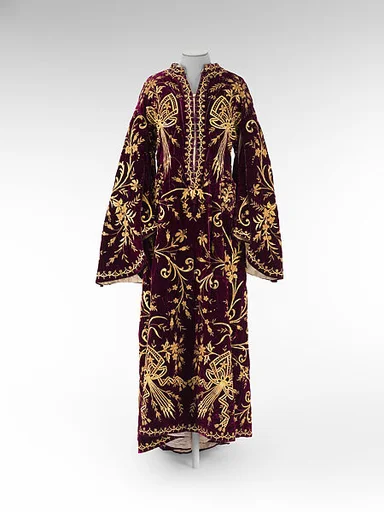
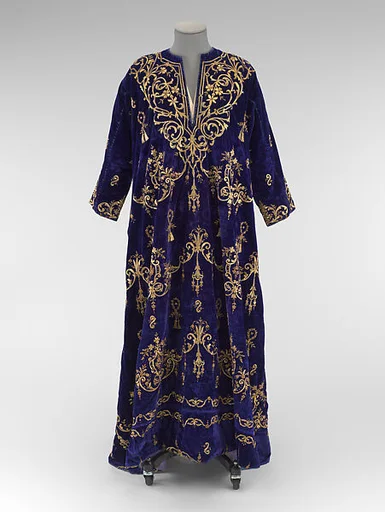
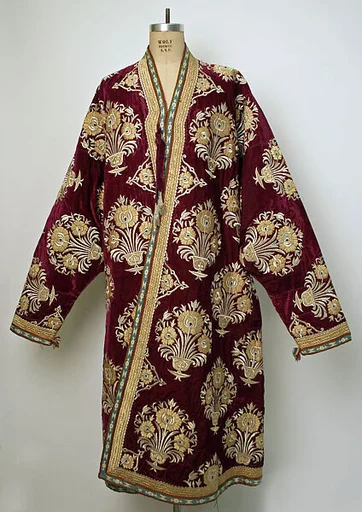
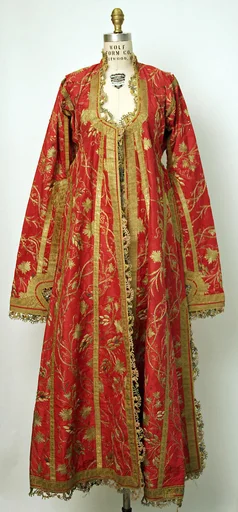
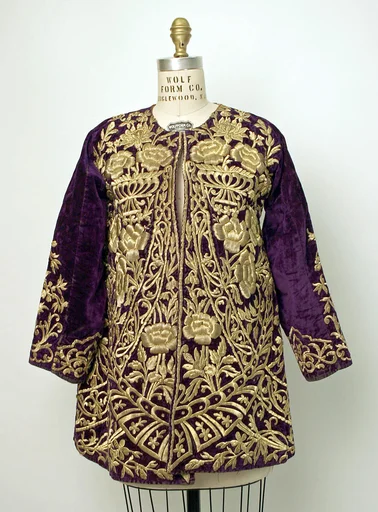
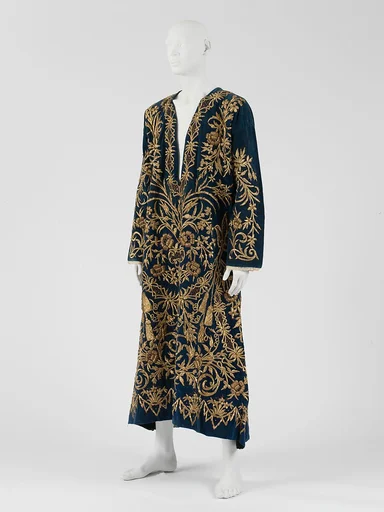
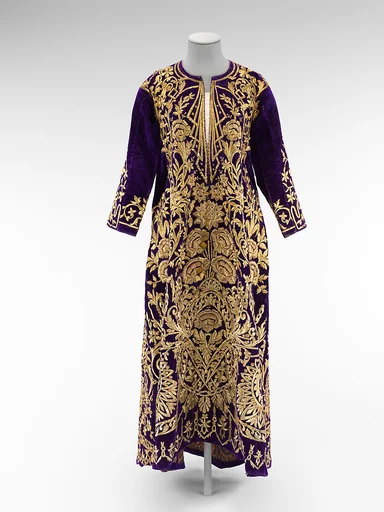
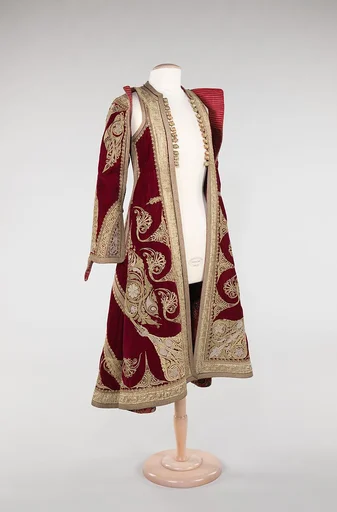
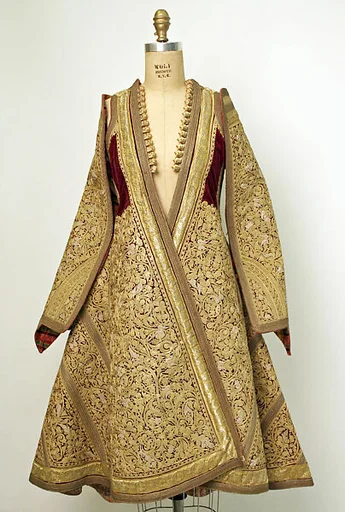
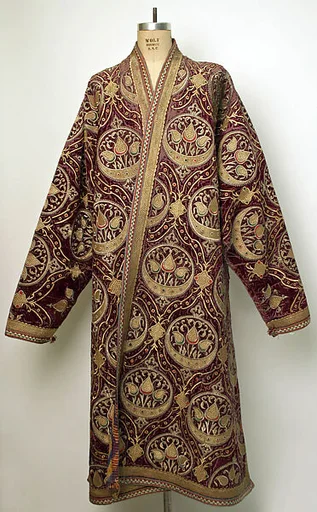
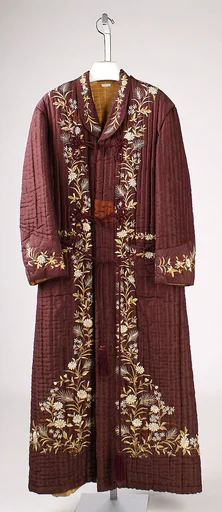
The bindalli dress was worn by both Muslim and Jewish women of different economic classes in the Balkans and Anatolia for weddings and other special occasions, beginning in the second half of the nineteenth century. The name, bindalli (bindallı in Turkish), means thousand branches and refers to the elaborate embroidered decoration carried out using a style called dival, characterized by the use of metal-wrapped threads and couching. Both the fabric used here, a wine-colored cotton velvet, and the shape of the dress, with its round neck, front opening, dropped shoulders and straight sleeves, are typical of this very popular genre of woman’s dress. Beautifully executed gold embroidery covers the body of the dress in an all over design of garlands, large flowers and other motifs. A scalloped design marks the neck and front opening. Additional designs ornament the sleeves and a floral garland encircles the hem of the dress. The sleeve edges and front opening are decorated with lace.
- Artist
- Unknown
- Date
- mid-19th–early 20th century
- Medium
- Cotton, metal wrapped thread; embroidered
- Department
- Islamic Art
- Credit line
- Gift of Luise Kaish, 1993