神坂雪佳筆 笹波図襖|Bamboo Grass and Waves
Kamisaka Sekka
ca. 1920s–30s · Set of four sliding-door panels (fusuma); ink and gold on paper · Asian Art
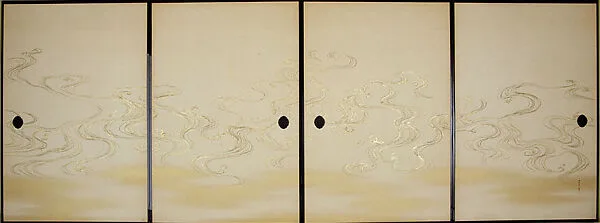
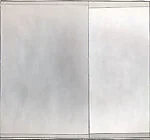
Images of water with waves and bamboo grass (sasa) are painted on opposite sides of these sliding-door panels. Here and there a pooled pigment effect (tarashikomi), a signature device of Rinpa-school artists, can be discerned. Kamisaka Sekka was trained in traditional Japanese painting styles, but government-sponsored trips to Paris and Glasgow introduced him to the art of the West, particularly Art Nouveau. Upon returning to Japan, he blended Rinpa-school techniques with elements of Western taste. During the summer Tanabata Festival, people write wishes on paper strips and fasten them to sasa leaves, often setting them afloat on a river. The Tanabata story, derived from ancient Chinese legend, describes two celestial lovers separated by the heavenly river (Milky Way) and allowed to meet only once a year. The waves and sasa on Sekka’s screens may be a reference to this festival and tale.
- Artist
- Kamisaka Sekka
- Date
- ca. 1920s–30s
- Medium
- Set of four sliding-door panels (fusuma); ink and gold on paper
- Culture
- Japan
- Department
- Asian Art
- Credit line
- Gift of Gitter-Yelen Foundation, in honor of Maxwell K. Hearn, 2011