극락에서 설법하는 아미타불 조선|阿彌陀極樂會圖 朝鮮|Amitabha Buddha’s assembly in the Western Paradise
Unidentified artist
late 18th–early 19th century · Ink and traces of color on paper · Asian Art
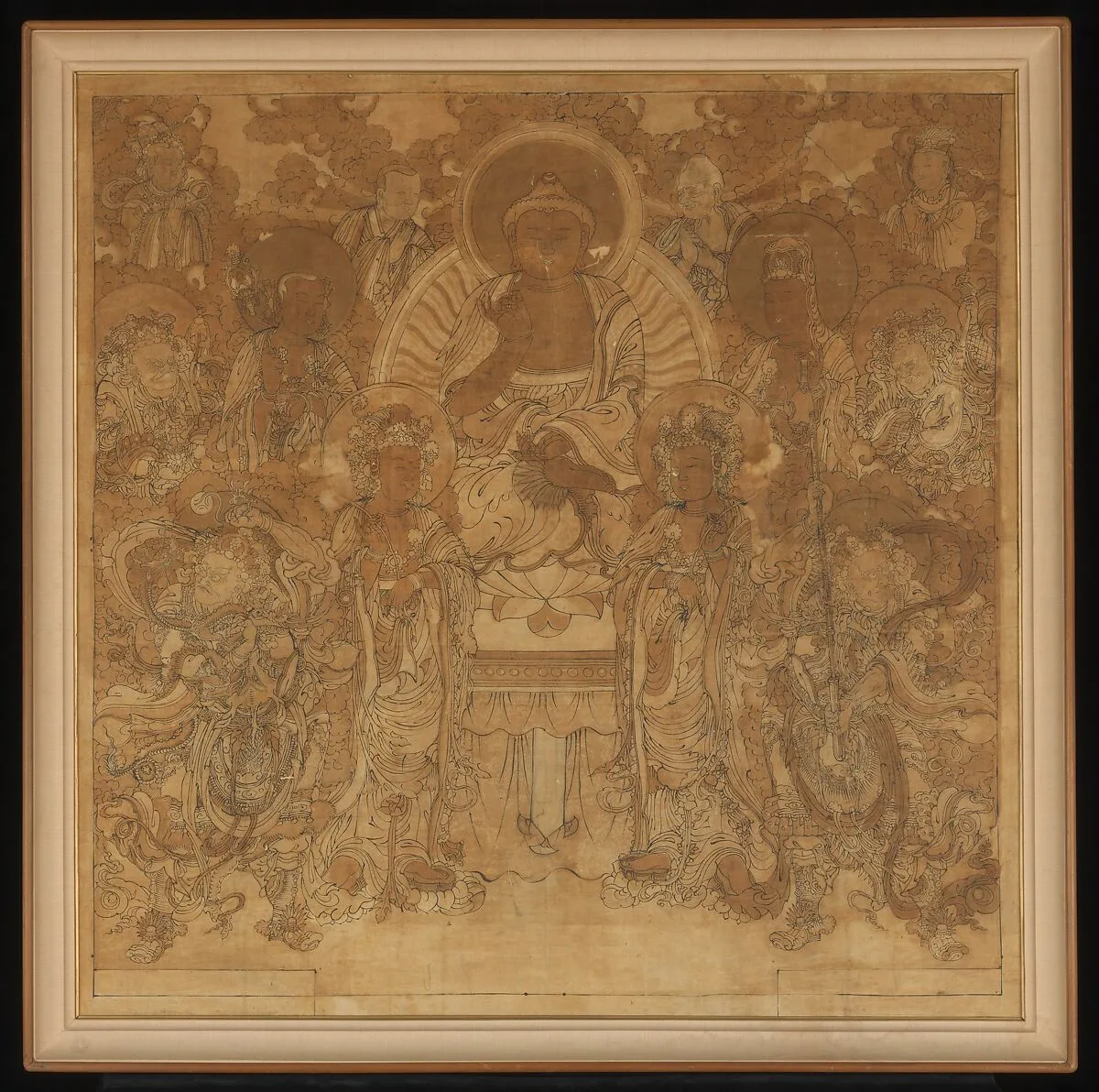
This work depicts an assembly of divine figures in the Western Paradise, the realm of the Amitabha Buddha (Korean: Amita). The central deity sits on a lotus flower atop a fabric-covered dais, surrounded by a supporting cast of twelve, including bodhisattvas, disciples, guardians, and attendants. In particular, Avalokiteshvara (Korean: Gwaneum) and Kshitigarbha (Korean: Jijang)—at the Buddha’s left and right, respectively—are often paired as attendant bodhisattvas to Amitabha in Korean Pure Land Buddhist iconography. He touches his right thumb to his right middle finger in a gesture indicative of teaching. Ink drawings such as this one were adhered to the backs of coarsely woven, semitransparent silks on which the final image was painted (guided by the outlines of the underdrawing). Here, the small areas of the paper where the pigments have seeped through the silk display faint traces of red and green. This piece is a finished drawing rather than a study sketch; few such underdrawings survive as independent works of art. The elegant and dynamic calligraphic quality of the drawing would have been lost in the final painting, as pigments mask and trump lines. The drawing reveals the processes involved in producing a Buddhist painting in Joseon Korea, preserving an important facet of that creative output.
- Artist
- Unidentified artist
- Date
- late 18th–early 19th century
- Medium
- Ink and traces of color on paper
- Culture
- Korea
- Department
- Asian Art
- Credit line
- Louis V. Bell, Mary Trumbull Adams and Harris Brisbane Dick Funds, 2011