Untitled
Unknown
18th–19th century · Wool, cotton, and dye · Asian Art
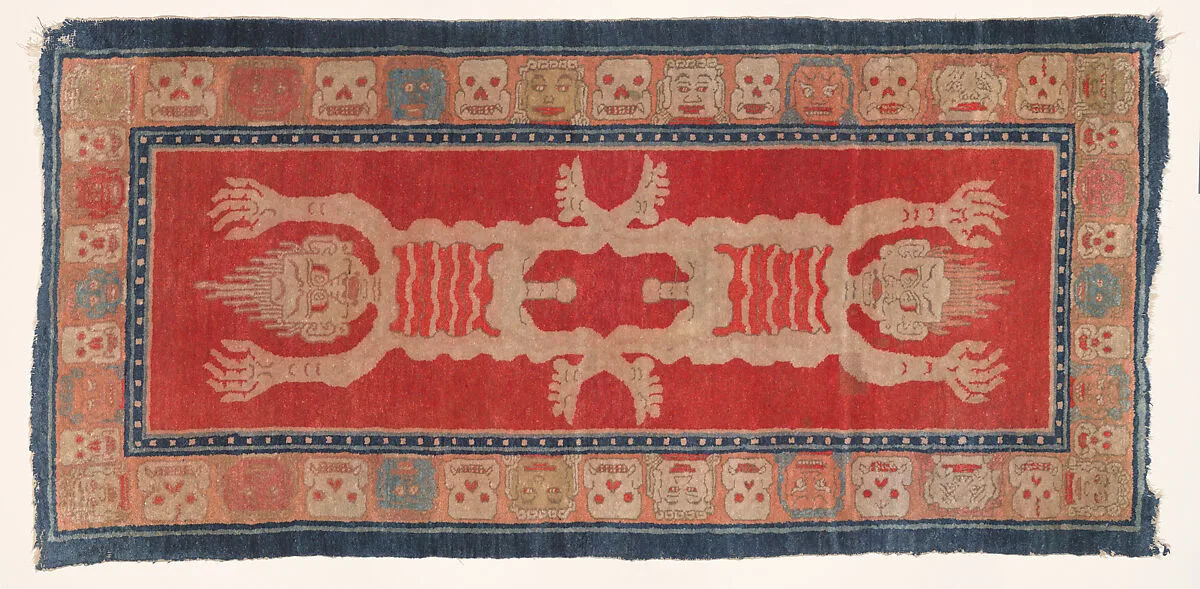
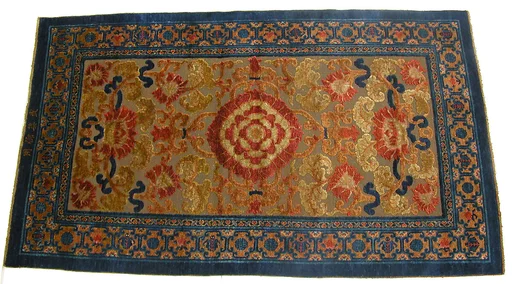
Woolen rugs form an important part of Tibetan material culture, serving as floor coverings on beaten earth floors for warmth, and as saddle blankets for riding. They also provide the setting for some of the most dramatic imagery in Tibetan art. The design of flayed male figures forms part of the paraphernalia employed to invoke protective deities. Such rugs feature in the annual New Year’s Eve exorcism dance performance (Tse Gutor, rtse dgu gtor), performed by masked dancers to cleanse the past year’s sins in preparation for the new.
- Artist
- Unknown
- Date
- 18th–19th century
- Medium
- Wool, cotton, and dye
- Culture
- Tibet
- Department
- Asian Art
- Credit line
- Gift of Steven Kossak, The Kronos Collections, 2022