Carpet
Unknown
ca. 1800 · Wool, cotton, and silver mtal wrapped thread · Islamic Art
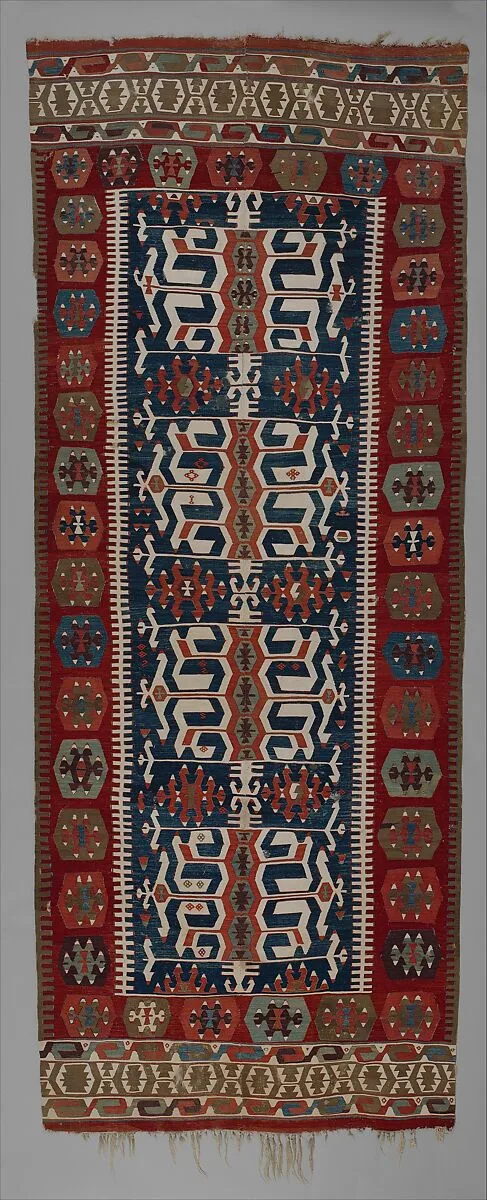
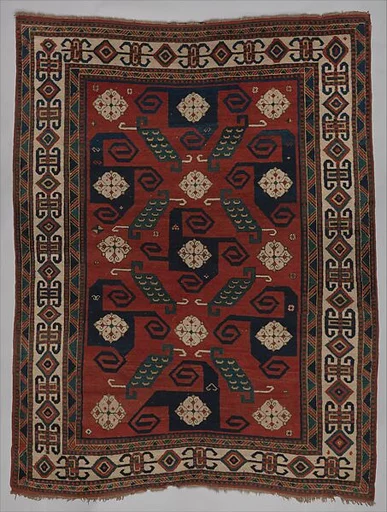
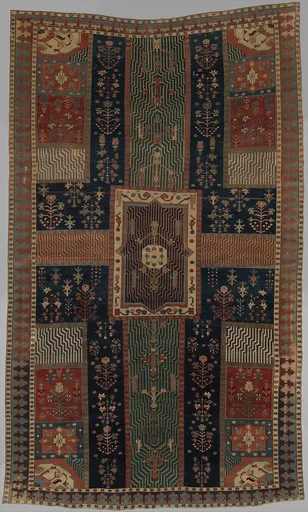
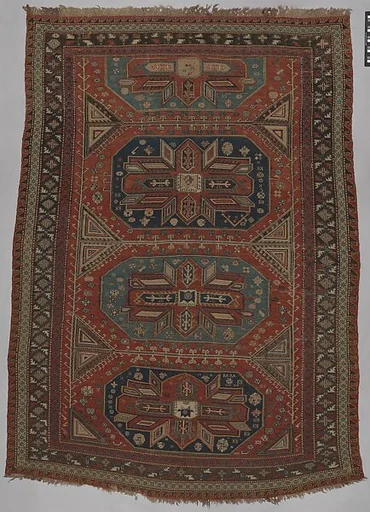
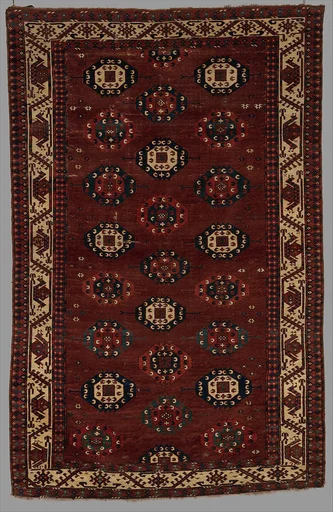
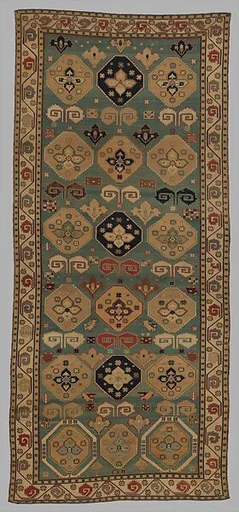
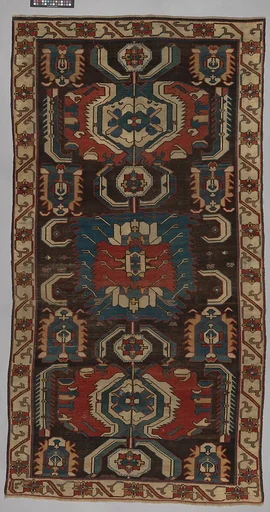
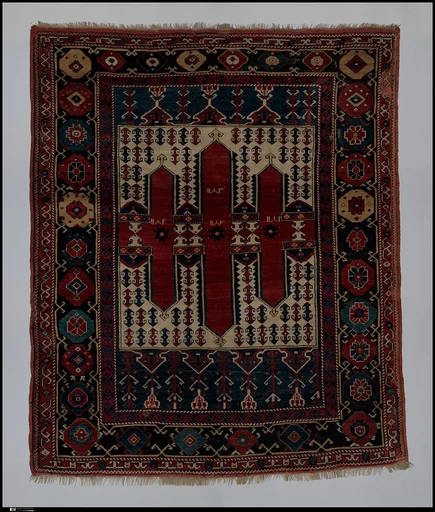
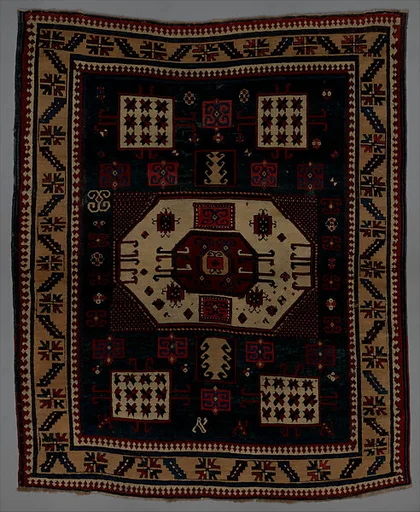
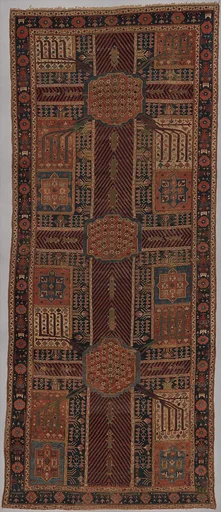
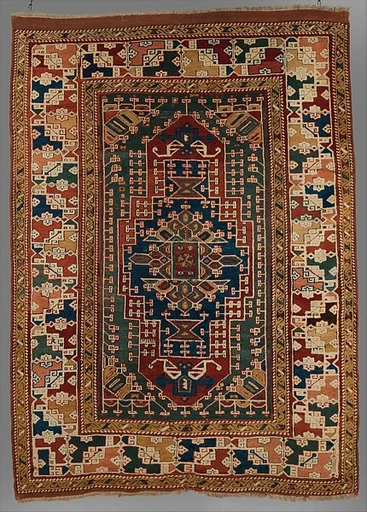
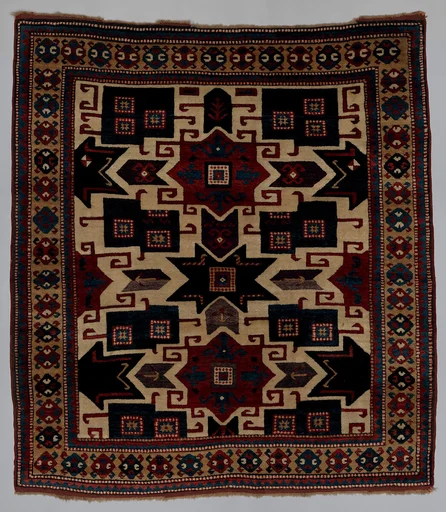
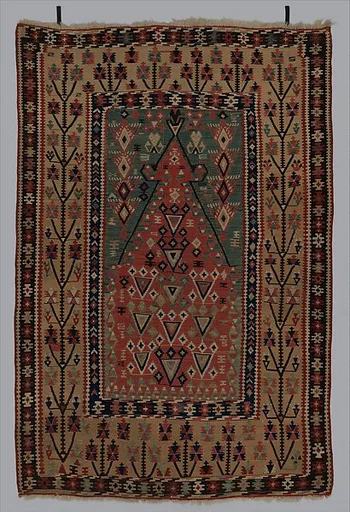
Flatwoven floor coverings representing a vibrant village and nomadic tradition were produced in a wide swathe of the Islamic world from Iran, the Caucasus, and Anatolia to Central Asia. This striking kilim reflects the continuation of a mythological and symbolic decorative repertoire that has long associations with Central Anatolia, here creatively reinterpreted in an early nineteenth-century tribal sensibility. The kilim is woven in a palette of indigo blue and red with accents of brown, green, mauve, and white. The ends are finished with a series of horizontal bands, two of which consist of the "hook," or ҫengal, pattern. A wide border of hexagonal rosettes in green, brown, and mauve, each enclosing a gul, or abstract flower, frames the central field, a compartmentalized vertical composition incorporating a birth goddess motif that has survived in this region from the Neolithic period (2500 B.C.). Like many of the abstract motifs found on Anatolian kilims, this one is believed to have protective properties.
- Artist
- Unknown
- Date
- ca. 1800
- Medium
- Wool, cotton, and silver mtal wrapped thread
- Department
- Islamic Art
- Credit line
- Purchase, Rebecca and Richard Lindsey Gift, 2006