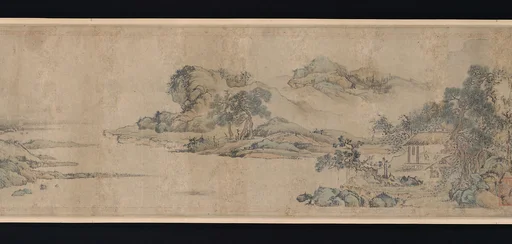
明/清 張宏 桃源勝概圖 卷|Peach Blossom Spring
Zhang Hong
dated 1638 · Handscroll; ink and color on paper · Asian Art
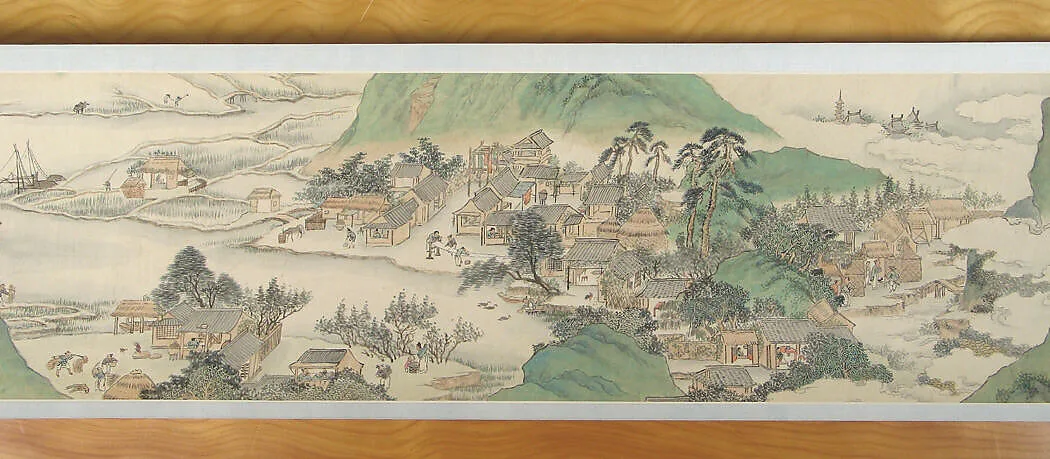
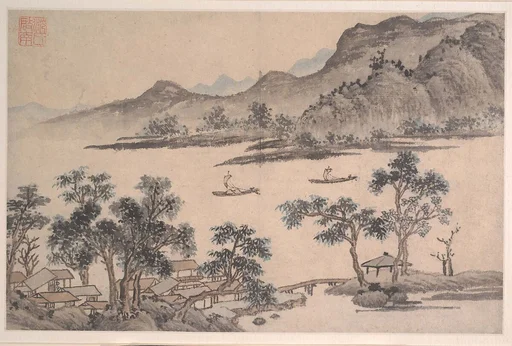
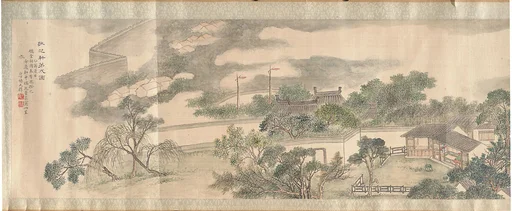
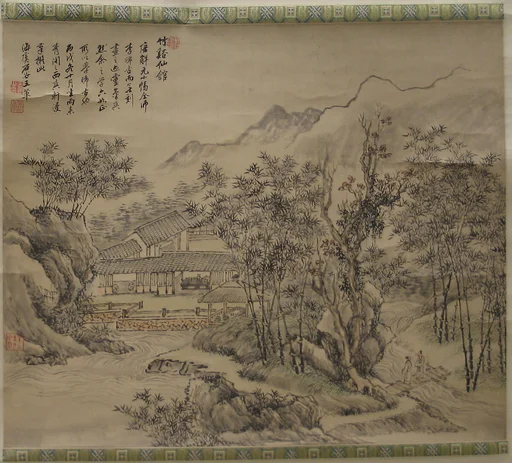
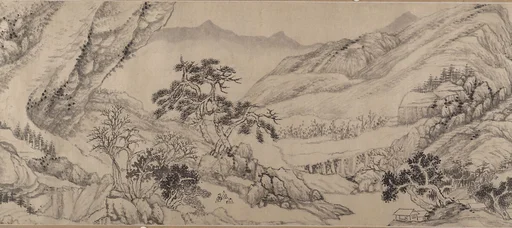
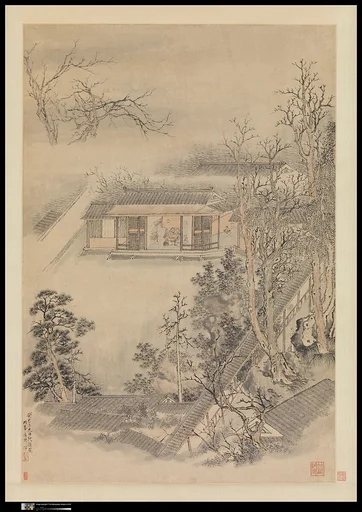
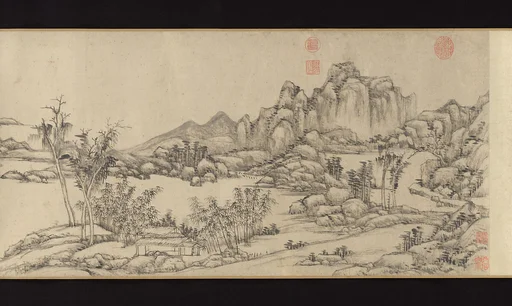
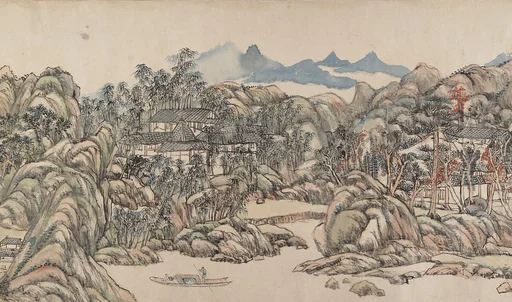
"Peach Blossom Spring," as first told by the poet Tao Qian (365–427), is the tale of a fisherman who, having followed a stream lined with blossoming peach trees, stumbles upon an idyllic community that for generations has been sequestered from political and social upheavals. He eventually takes his leave, but when he tries to find the stream again, it has vanished. In Zhang Hong's keenly observed interpretation, the viewer is led from a winding stream through a cloudbank to the spot where the fisherman, oar in hand, first encounters the sheltered people, whose clothing styles haven't changed since the Qin dynasty (221–207 B.C.). The remainder of the scroll lovingly examines the ageless rhythms of rural life, especially those related to rice cultivation and silk production. Painted just six years before the collapse of the Ming dynasty, this vision of a utopian world must have been especially appealing. Zhang Hong, a native of Suzhou, was an accomplished landscape and figure painter who became known as a Ming loyalist in the early years of the Manchu Qing dynasty (1644–1911). Mounted after Zhang's painting is another version of the story composed by Wang Wei (701–761), and transcribed by Zhang's fellow townsman Fan Yunlin (1558–1641), a scholar-official and calligrapher.
- Artist
- Zhang Hong
- Date
- dated 1638
- Medium
- Handscroll; ink and color on paper
- Culture
- China
- Department
- Asian Art
- Credit line
- Gift of Julia and John Curtis, 2015