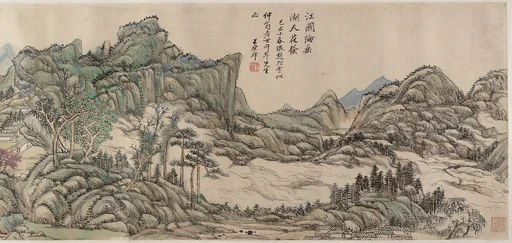
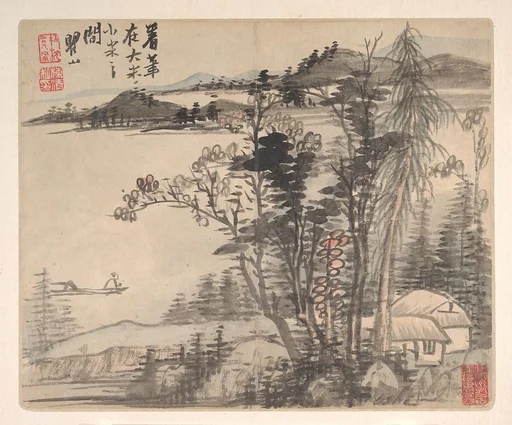
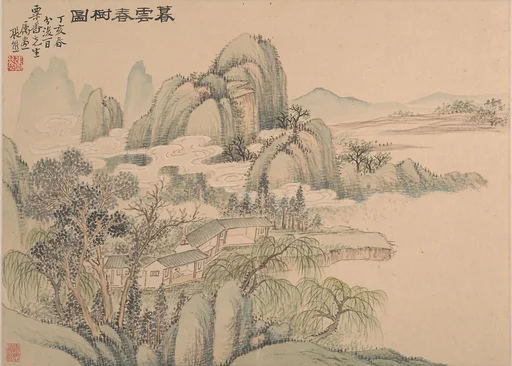
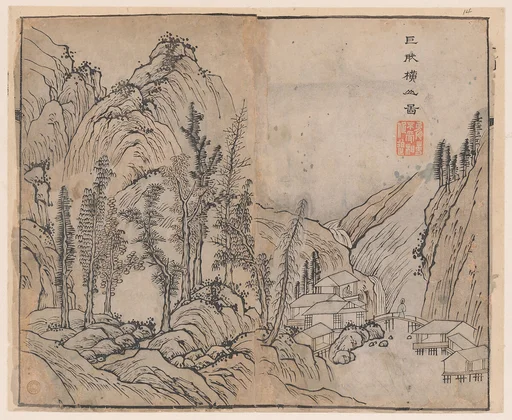
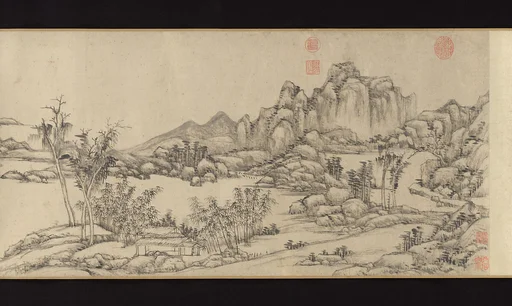
清 王原祁 輞川圖 卷|Wangchuan Villa
Wang Yuanqi
dated 1711 · Handscroll; ink and color on paper · Asian Art
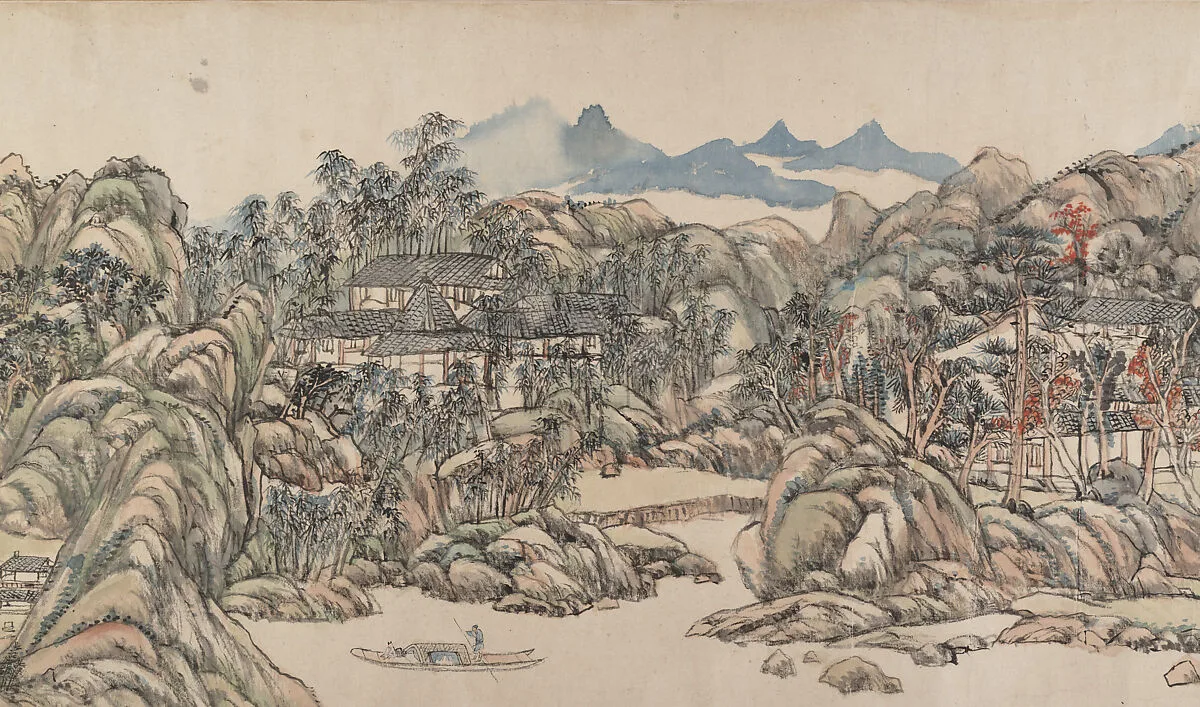
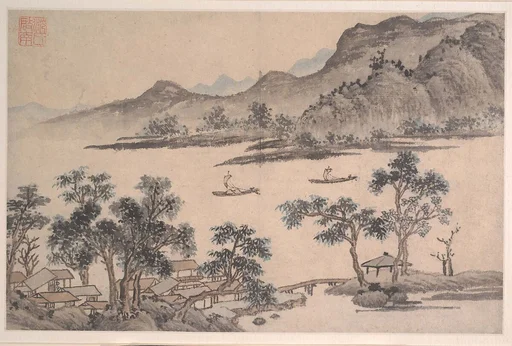
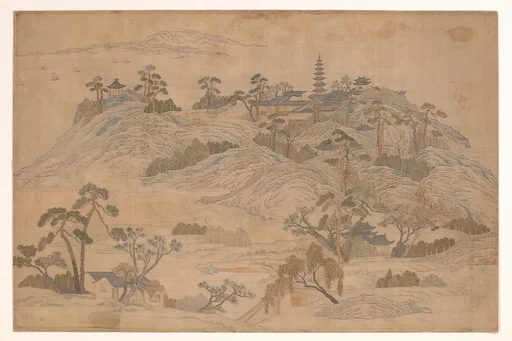
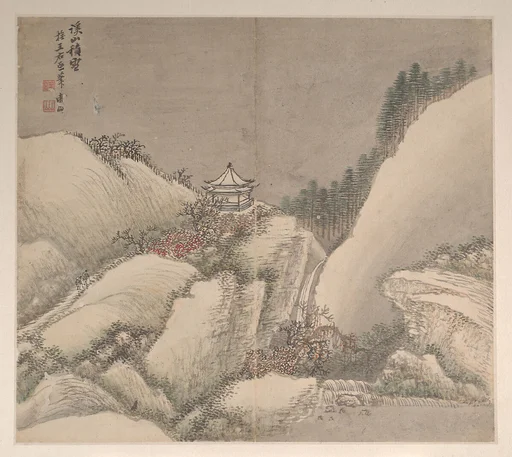
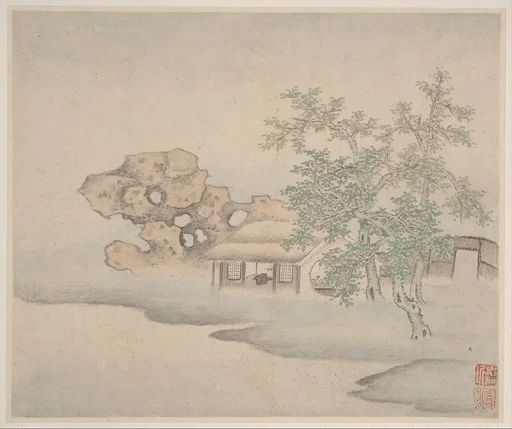
The elegant Wangchuan Villa situated in the picturesque hills on the outskirts of the Tang dynasty (618–907) capital, Chang'an (modern Xi'an), is one of the most famous gardens of ancient China. The rambling estate with spectacular scenery was the retreat of the poet, musician, and landscape painter Wang Wei (699–759). Almost one thousand years later, Wang Yuanqi used a rubbing of a Wangchuan composition etched into stone in 1617 for the general outlines of his painting and referred to Wang Wei's poems to guide his inspiration. In a colophon appended to the painting, Wang Yuanqi expresses satisfaction that he has captured some of Wang Wei's idea of "painting in poetry and poetry in painting." Tutored in painting by his grandfather Wang Shimin (1592–1680), Wang Yuanqi followed the lead of Dong Qichang (1555–1636), the first artist to transform landscape structure in painting by means of abstract compositional movements known as "breath force" (qishi). Inspired by the archaic convention of ringed mountain motifs in the engraving, Wang Yuanqi created "dragon veins" (longmo), through which the cosmic "breath force" vigorously flows. Calligraphic brush formulas suddenly become torrents of writhing, churning rock forms, rising and falling like waves.
- Artist
- Wang Yuanqi
- Date
- dated 1711
- Medium
- Handscroll; ink and color on paper
- Culture
- China
- Department
- Asian Art
- Credit line
- Ex coll.: C. C. Wang Family, Purchase, Douglas Dillon Gift, 1977