Untitled
Unknown
late 19th or early 20th century · Silk, flannel · Asian Art
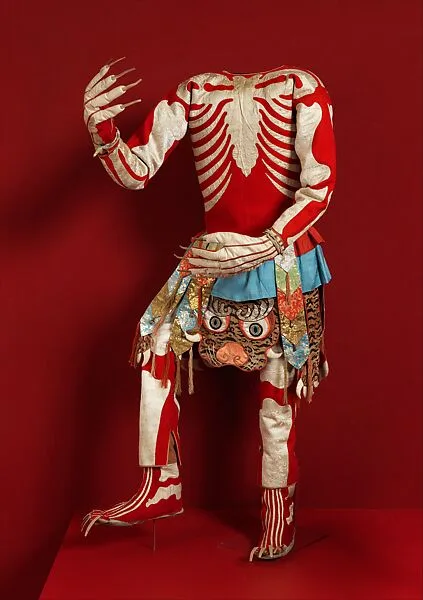
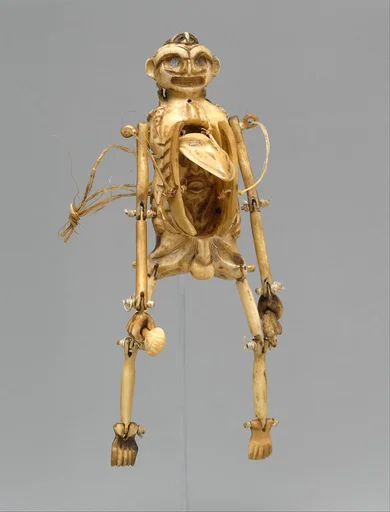
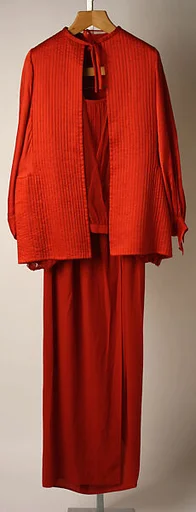
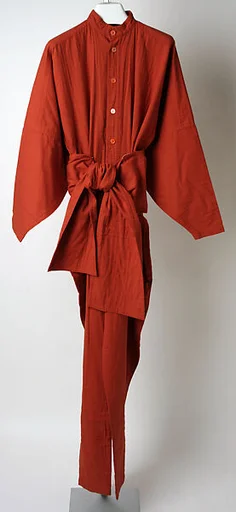
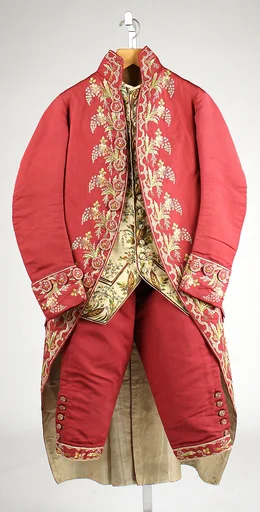
In cham (ritual dance performances), monks wore skeleton costumes and masks like these to evoke the transient nature of life and, by extension, of all things—a central tenet of Buddhism. Its imagery fundamentally speaks to the cycle of rebirth and the active pursuit of enlightenment in this lifetime. For the lay community, it was auspicious to see these performances, one of the few times when Vajrayana ritual entered the public sphere. Skeleton dances were alternatively done in secretive monastic contexts. They might take place, for example, to prepare a monk to meditate in cremation grounds, in search of a deeper understanding of impermanence. Whether public or private, these performances were accentuated by dramatic masks and elaborate costumes like this, where white bones stand against red fabric flesh.
- Artist
- Unknown
- Date
- late 19th or early 20th century
- Medium
- Silk, flannel
- Culture
- Tibet
- Department
- Asian Art
- Credit line
- Gift of Mrs. Edward A. Nis, 1934