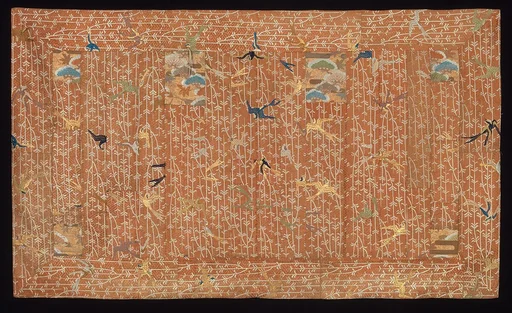
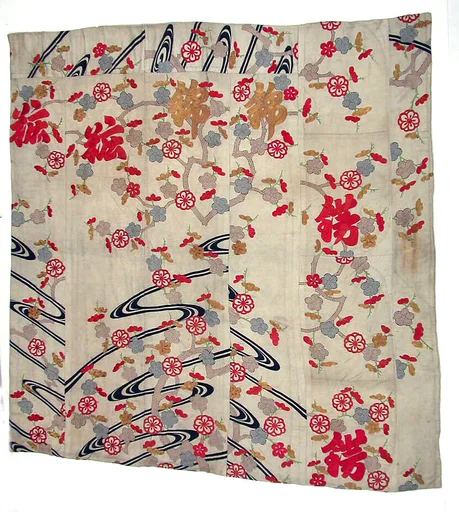
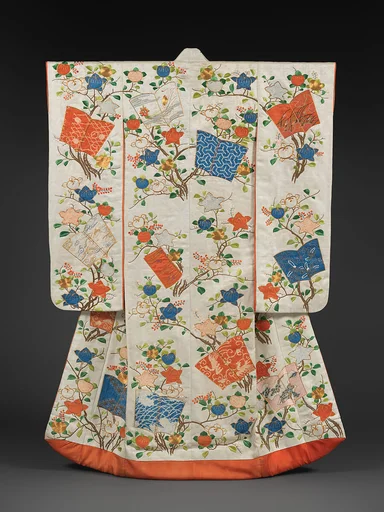
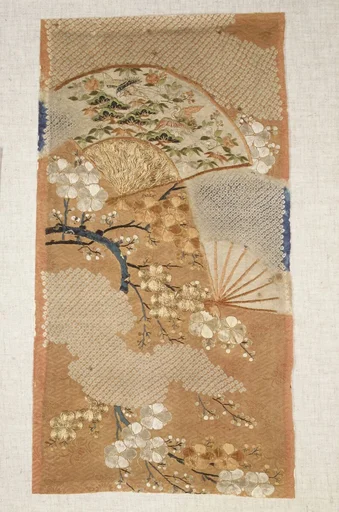
紅縮緬地紅葉軍配団扇模様袈裟|Buddhist Vestment (Kesa) with Maple Leaves and Fans
Unknown
second half of the 18th–first half of the 19th century · Paste-resist dyed silk crepe (chirimen) with shaped-resist dyeing, silk and metallic-thread embroidery · Asian Art
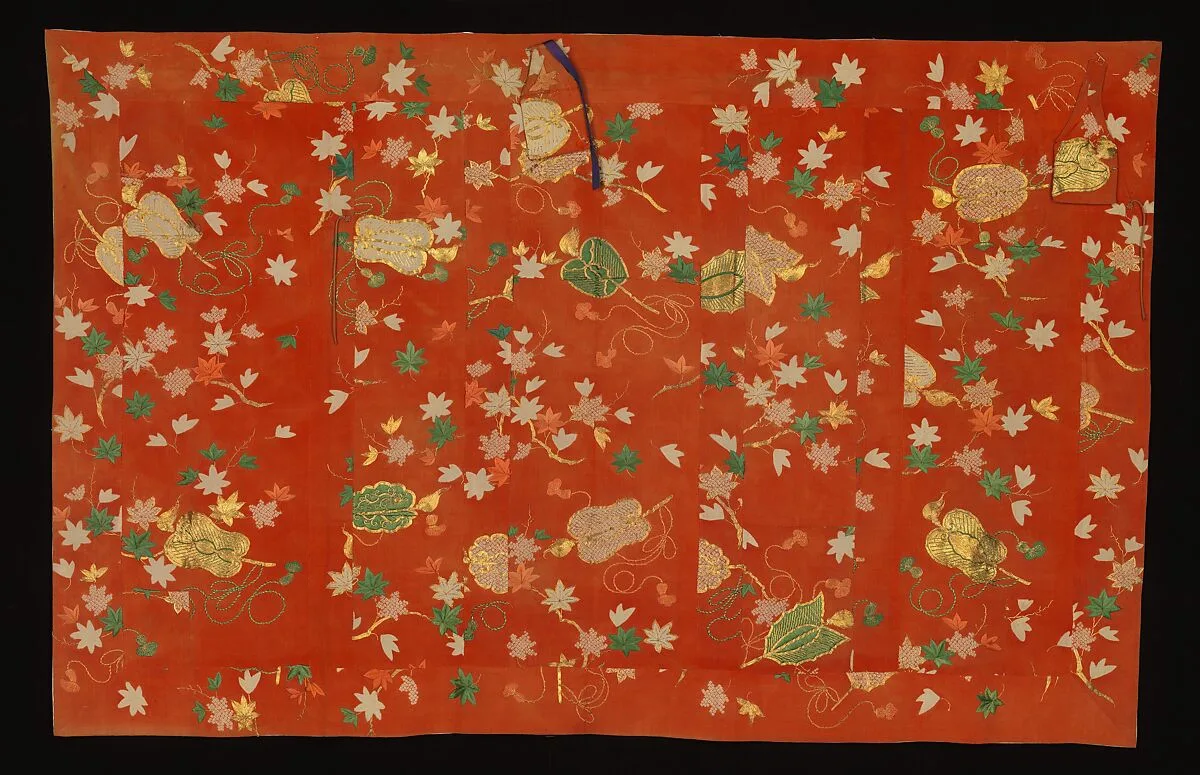
After the death of a woman of high social status, one or more of her treasured garments would often be presented to a temple, where they were made into altar cloths or vestments, like this kesa. Such donations constitute a form of shōgon, which was thought to bestow karmic merit on the donor. Shōgon refers to the gorgeous adornment of Buddhist altars and worship halls where rituals are performed.
- Artist
- Unknown
- Date
- second half of the 18th–first half of the 19th century
- Medium
- Paste-resist dyed silk crepe (chirimen) with shaped-resist dyeing, silk and metallic-thread embroidery
- Culture
- Japan
- Department
- Asian Art
- Credit line
- Gift of E. G. Kennedy, 1932