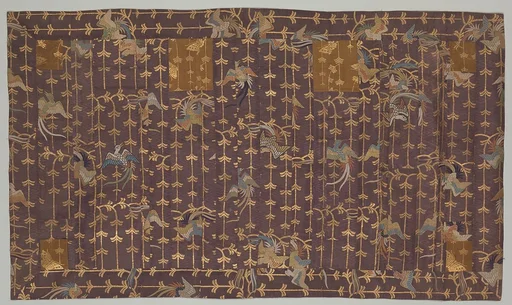
柳に燕模様袈裟|Buddhist Priest's Robe (Kesa) with Pattern of Swallows among Willow Branches
Unknown
18th century · Brocaded twill with supplementary weft patterning; silk and metallic thread · Asian Art
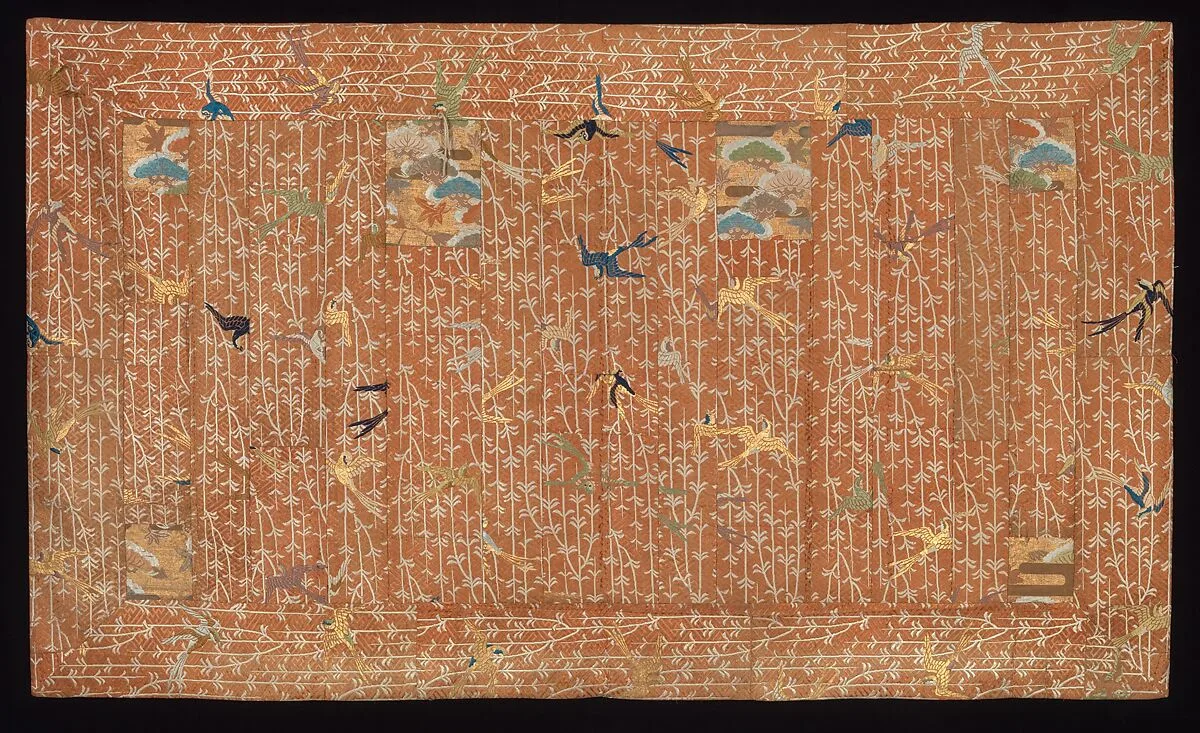
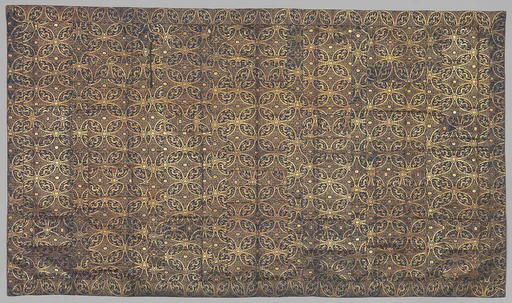
The textile used for the body of this seven-sectioned kesa features a lively design of swallows among willow branches on a reverse-swastika fret background (the reverse-swastika is a symbol of infinity in Buddhist thought). The kesa’s corner and central patches are made from a contrasting fabric patterned with pine boughs on a gold ground. The long floating pattern wefts seen on the surface of both examples are characteristic of karaori, which also lends its name to Noh costumes made of this type of textile. The border of a kesa usually is continuous; piecing in the border here is an indication that the textile used for this kesa was not woven specifically to be sewn into a vestment and may once have been a Noh robe or other garment. Treasured textiles and items of clothing often were given to temples for use as vestments and altar cloths.
- Artist
- Unknown
- Date
- 18th century
- Medium
- Brocaded twill with supplementary weft patterning; silk and metallic thread
- Culture
- Japan
- Department
- Asian Art
- Credit line
- Purchase, Joseph Pulitzer Bequest, 1919