Untitled
Unknown
18th–19th century · Stencil-dyed plain-weave silk · Asian Art
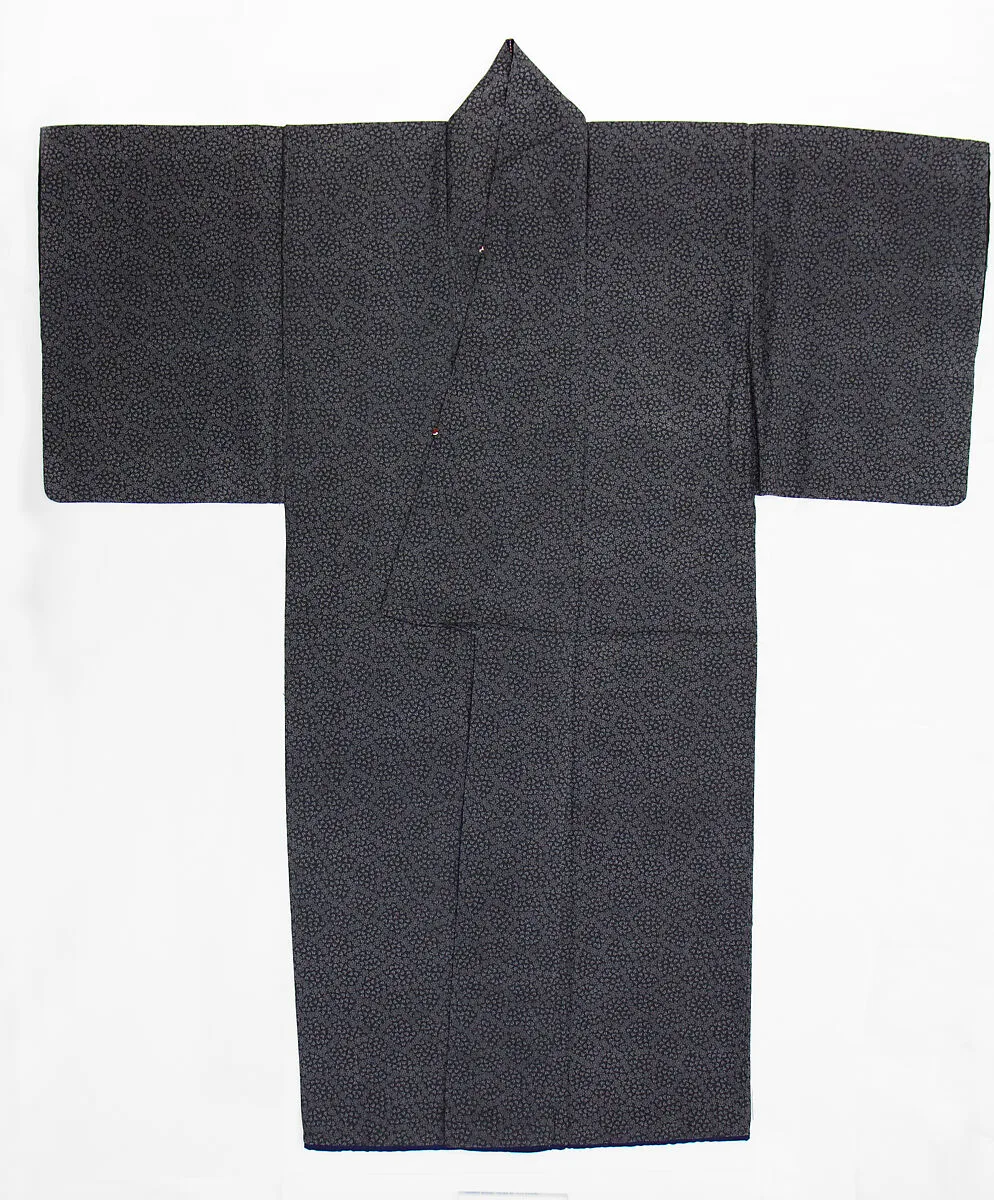
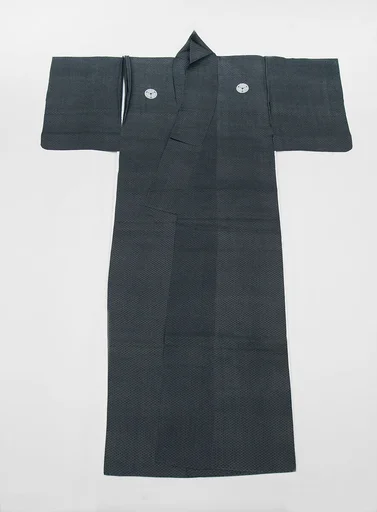
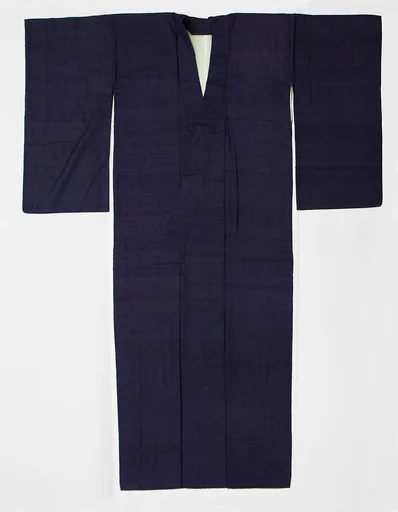
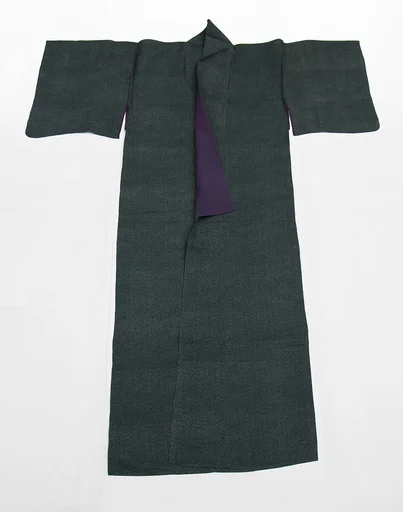
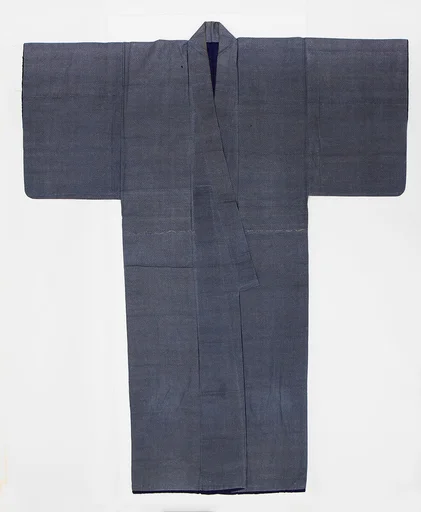
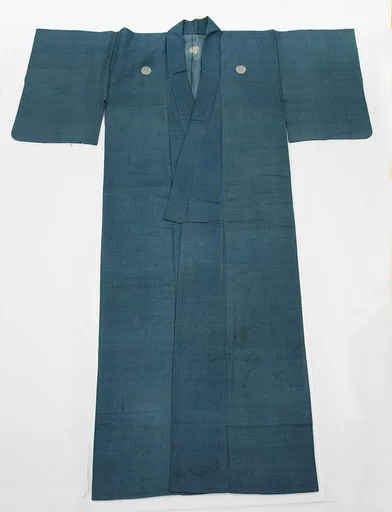
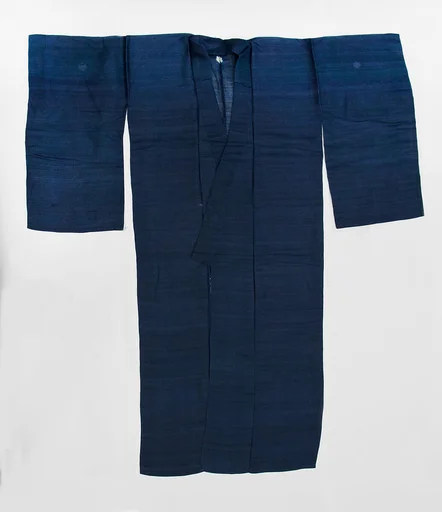
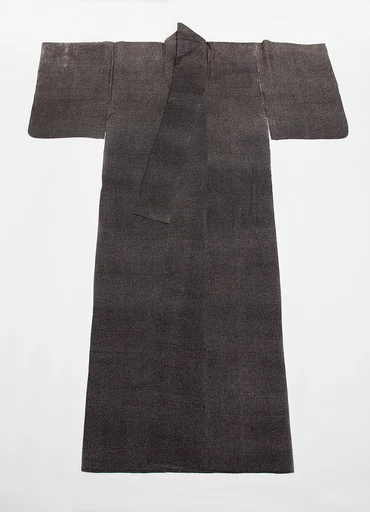
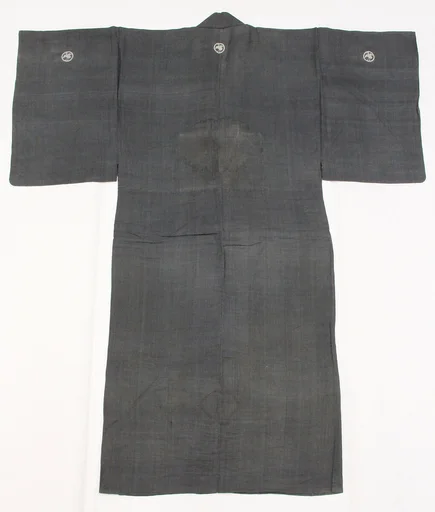
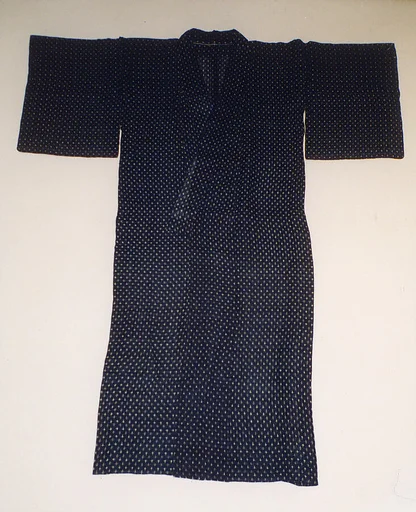
Around the seventeenth century, “small-crest” (Edo komon) patterns became favored among the samurai residing in Edo to embellish their formal attire. Traditionally, the delicate motifs were created by applying paste to white fabric through paper stencils (Ise katagami). These areas would then resist the dye, typically indigo, applied to create the garment’s monochrome ground. Items decorated with this technique appear from a distance to be unembellished; when seen up close, however, the tiny repeating patterns fascinate the eye. Though this style of fabric was developed for samurai garments, in the later Edo period it was adopted more widely. This elegant but understated woman’s kosode features a dense motif of cherry blossoms, which form circles enclosing groups of minute butterflies.
- Artist
- Unknown
- Date
- 18th–19th century
- Medium
- Stencil-dyed plain-weave silk
- Culture
- Japan
- Department
- Asian Art
- Credit line
- Purchase, Roy R. and Marie S. Neuberger Foundation Inc. and several members of The Chairman's Council Gifts, 2000 Benefit Fund, and funds from various donors, 2001