Untitled
Rekisentei Eiri
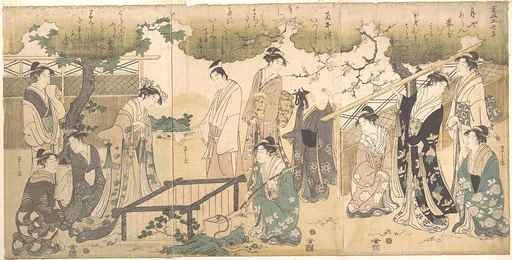
late 18th century · Triptych of woodblock prints; ink and color on paper · Asian Art
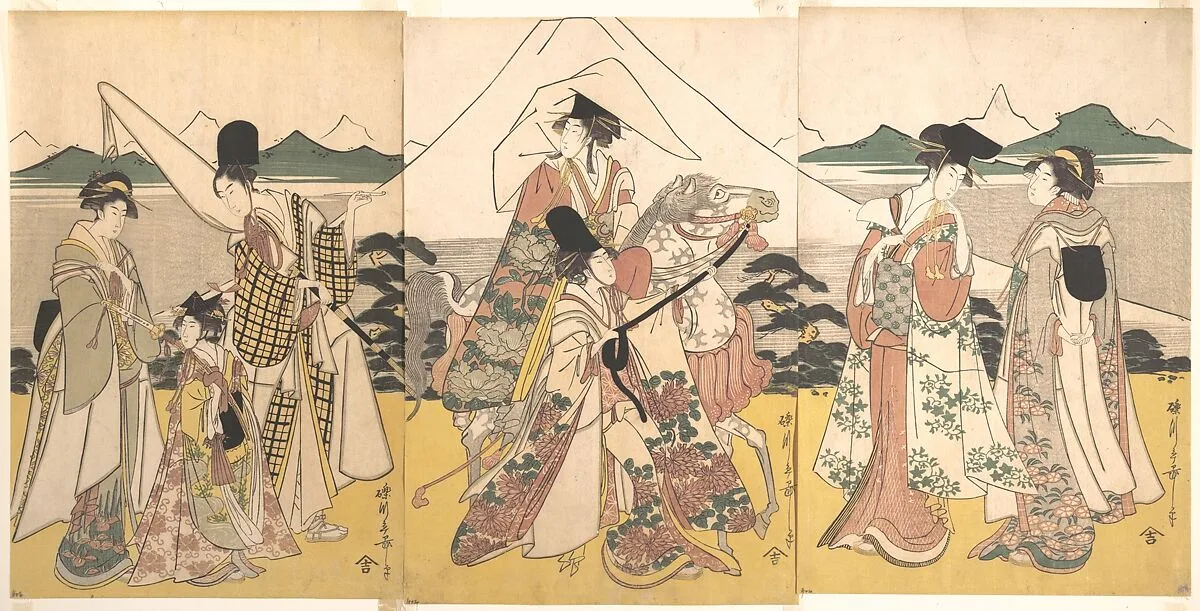
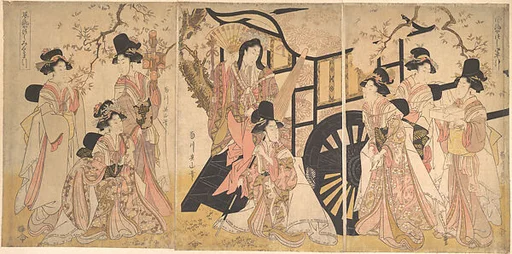
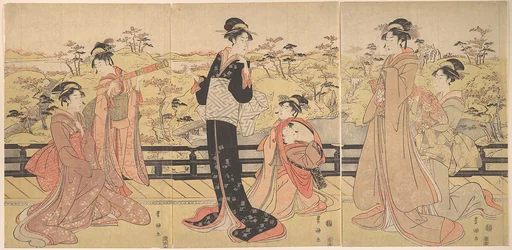
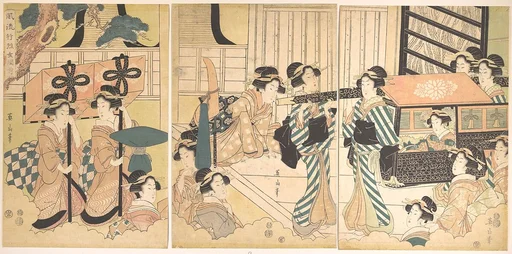
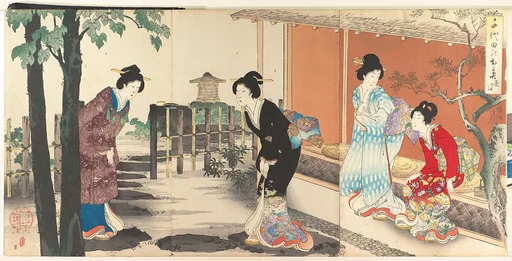
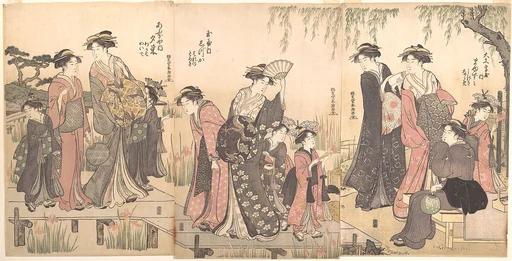
The ninth chapter in The Tales of Ise is the most famous passage of the text and one of the most frequently illustrated in Japanese literature. Narihira has lost all will to continue his worldly life in the capital and, in a disconsolate mood, leaves home with one or two close friends in search of a peaceful existence in the eastern provinces. Illustrators most often represented the moment during this Azuma kudari, or journey to the east, when the dispirited travelers pass the foot of Mount Fuji. Supposedly, that is the subject of the triptych here, but the artist had no qualms whatsoever about abandoning the loneliness and disillusionment of the journey described in The Tales of Ise. In this mitate, or contemporary parody of classical subjects, the poetic description of the small, gloomy group of travelers is used as an excuse to mount a glamorous pageant of beautiful Edo-period women wearing the finest contemporary fashions. So unconcerned was the artist with the faithful rendition of the text that even the romantic hero, Narihira himself, was represented as a pretty girl showing off her fine clothes.
- Artist
- Rekisentei Eiri
- Date
- late 18th century
- Medium
- Triptych of woodblock prints; ink and color on paper
- Culture
- Japan
- Department
- Asian Art
- Credit line
- H. O. Havemeyer Collection, Bequest of Mrs. H. O. Havemeyer, 1929