Untitled
Unknown
19th century · Resist-dyed hemp and ramie · Asian Art
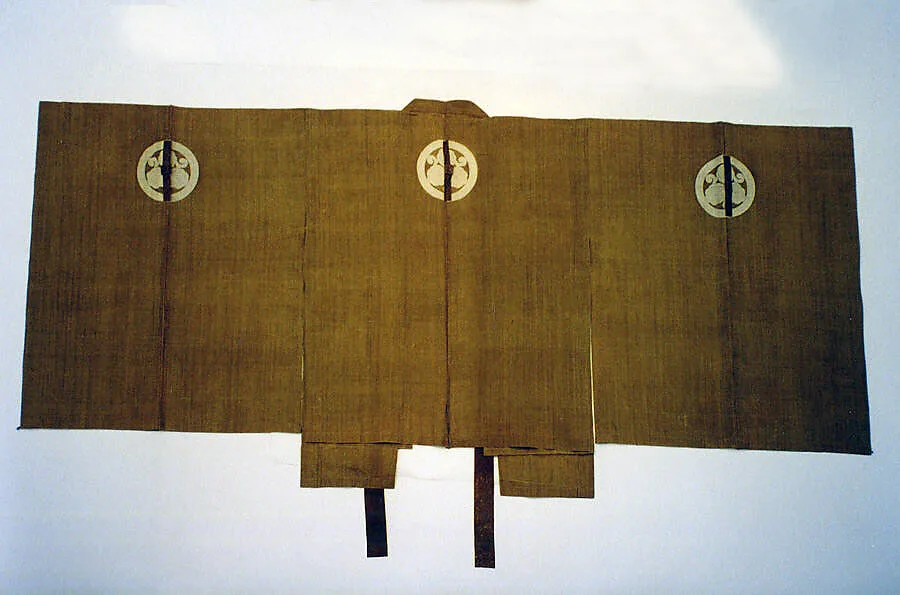
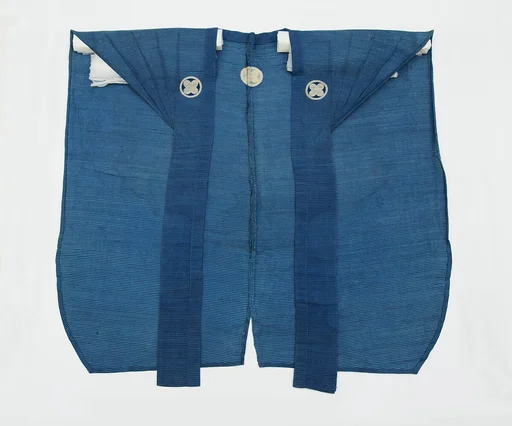
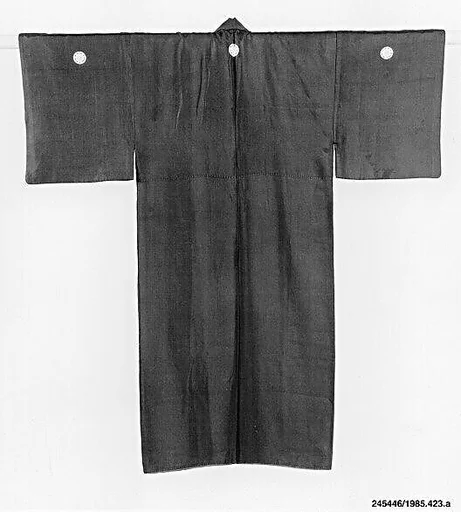
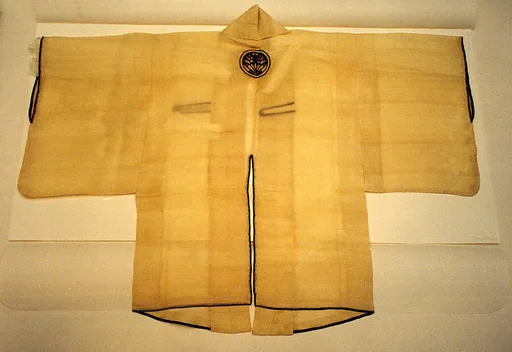
One type of suit worn by samurai is made up of a large-sleeved jacket (suo) with matching long trousers (nagabakama) decorated with a family crest (mon). Each sleeve of the jacket consists of two widths of cloth, and the trousers are so long that they extend well beyond the foot. The cords at the front of the jacket and the decorative knot at the center of each mon are made of leather, a feature that sets the suo apart from other samurai garb. The suo has a long history in Japan, emerging in the Muromachi period (1392–1573). By the Edo period (1615–1868) it had become the formal dress of the shogunate when worn with the courtier-style headdress called eboshi. The family crest seen here is a form of gotoku kashiwa (literally, "tripod oak") that features three Japanese oak leaves and a tripod. The Japanese oak was often used in many forms among high-ranking samurai; the family associated with the crest on this suo has not been identified.
- Artist
- Unknown
- Date
- 19th century
- Medium
- Resist-dyed hemp and ramie
- Culture
- Japan
- Department
- Asian Art
- Credit line
- Gift of John B. Elliott through the Mercer Trust, 1999