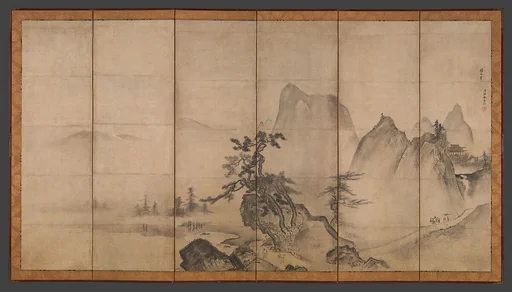
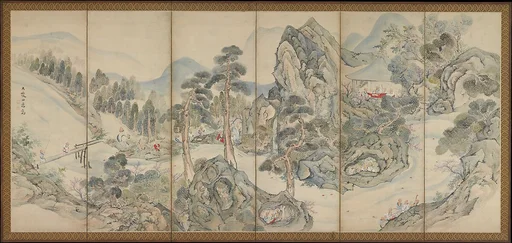
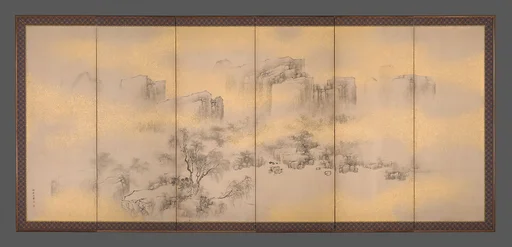
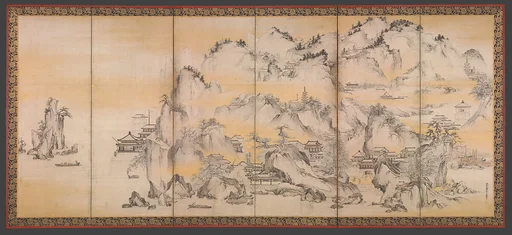
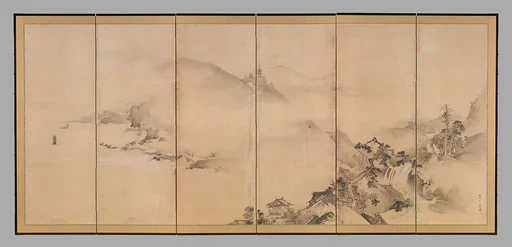
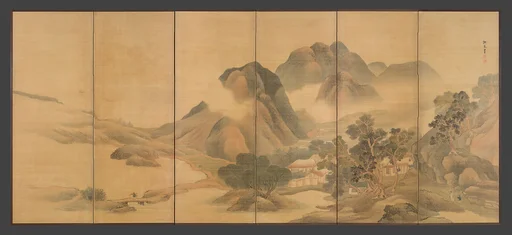
松村呉春筆 山樵漁夫図屏風|Woodcutters and Fishermen
Matsumura Goshun
ca. 1790–95 · Pair of six-panel folding screens; ink and color on paper · Asian Art
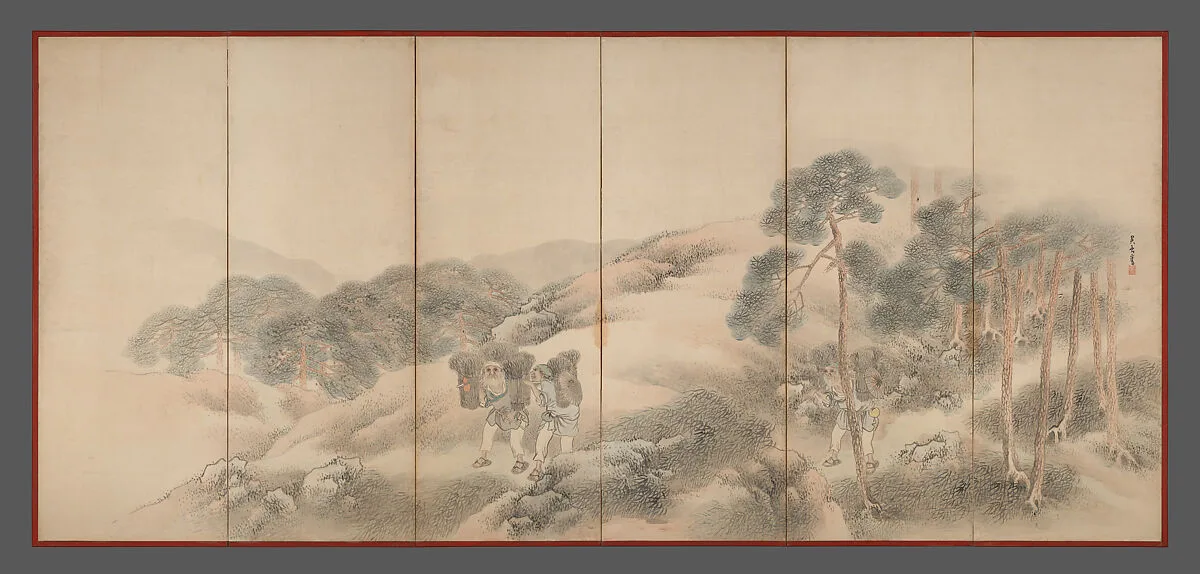
Shijō Street in central Kyoto, where Goshun opened the studio that came to be known as the Shijō school, was also the site of the artist’s residence. Born to a family of officials at the government mint, Goshun studied with the Nanga, or literati school, artist Yosa Buson (1716–1783). Following several years as a Buddhist monk in Ikeda, he joined a group of artists in Kyoto in 1787 to work with Maruyama Ōkyo (1733–1795), whose school combined traditional methods of Japanese painting with aspects of Western realism and perspective. In this composition, Chinese fishermen and woodcutters, their faces weathered and animated, move through a hazy spring landscape in which a hint of linear perspective indicative of Ōkyo’s influence melds with the lyricism that Goshun absorbed from Buson. The artist chose fishermen to symbolize the purity of the life of the recluse-scholar, following in the tradition of Chinese literati painters.
- Artist
- Matsumura Goshun
- Date
- ca. 1790–95
- Medium
- Pair of six-panel folding screens; ink and color on paper
- Culture
- Japan
- Department
- Asian Art
- Credit line
- Mary Griggs Burke Collection, Gift of the Mary and Jackson Burke Foundation, 2015