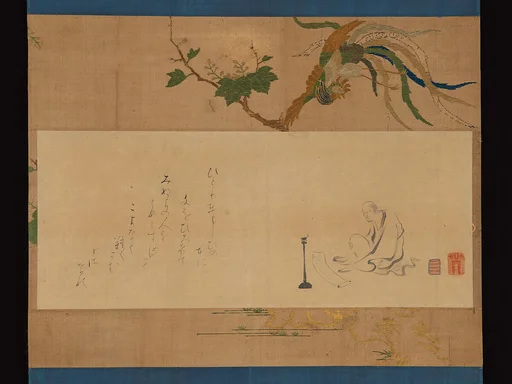
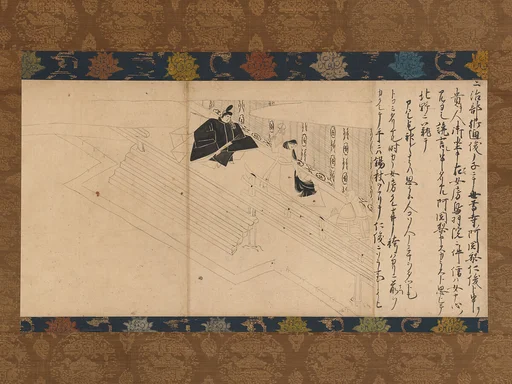
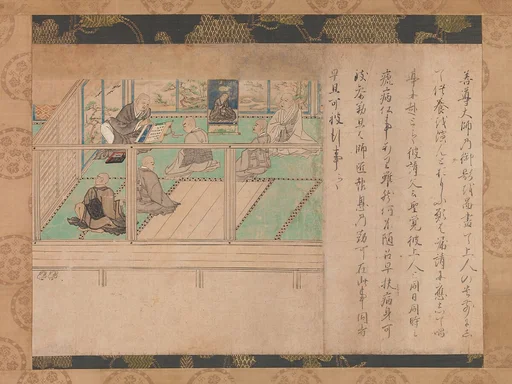
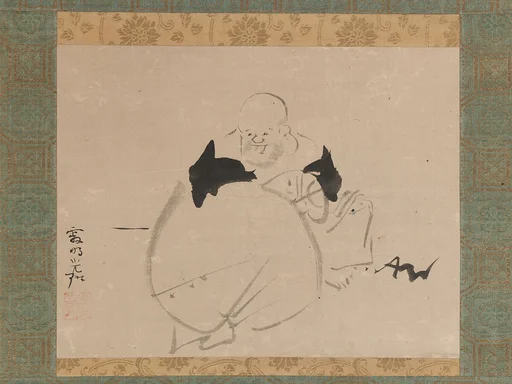
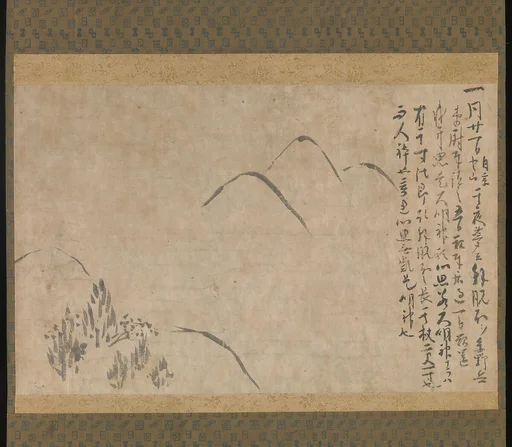
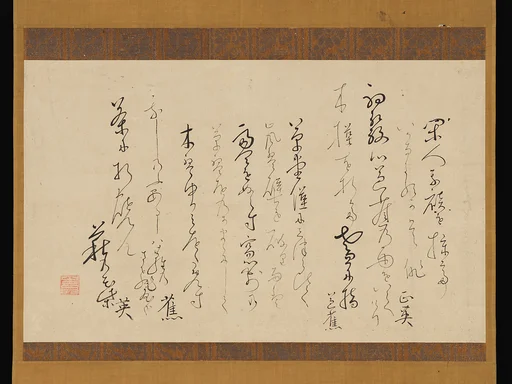
遍昭 慈鎭 木筆時代不同歌合絵|The Poets Henjō and Jichin, from Stylus-Illustrated Competition of Poets of Different Periods (Mokuhitsu jidai fudō uta awase-e)
Unidentified artist
mid-14th century · Fragment of a handscroll, mounted as a hanging scroll; ink on paper · Asian Art
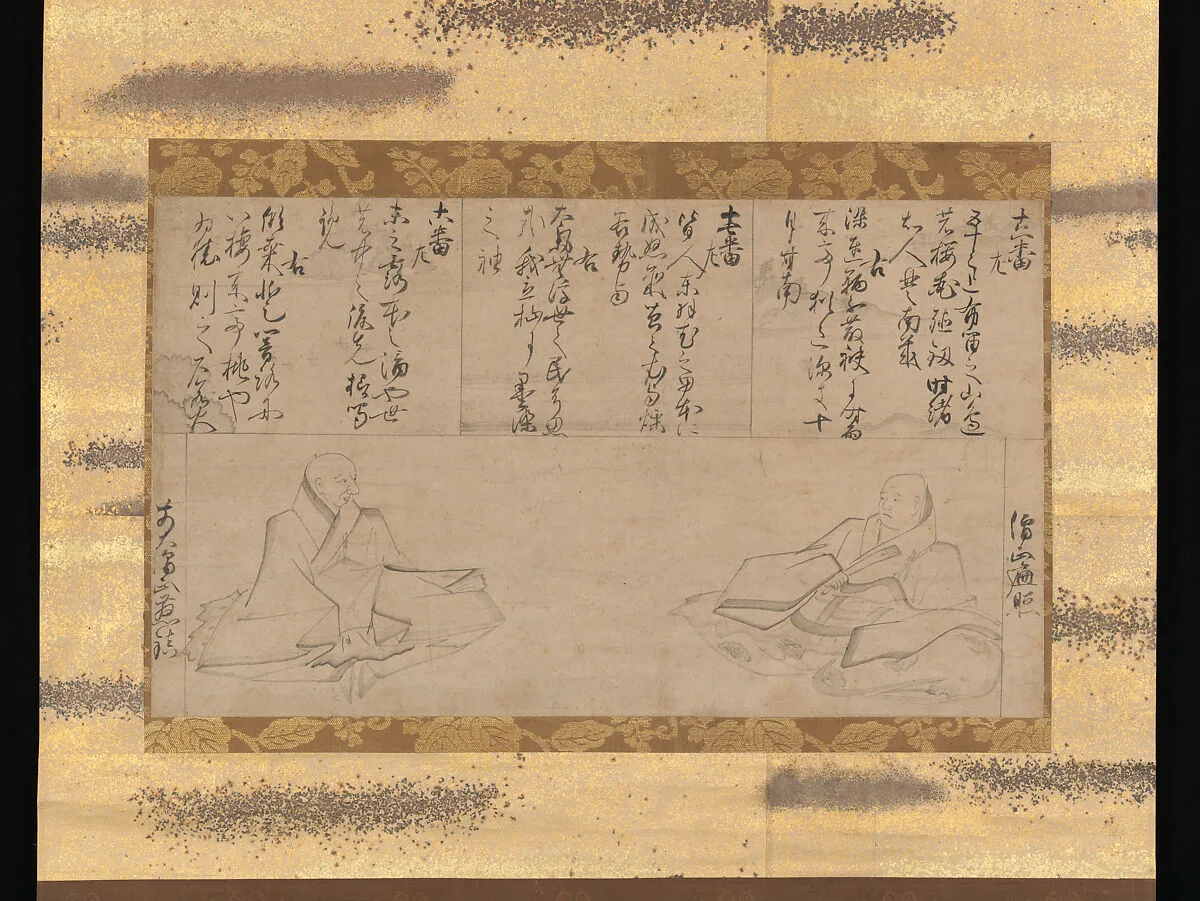
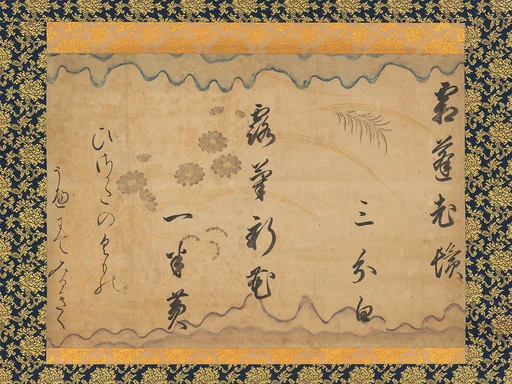
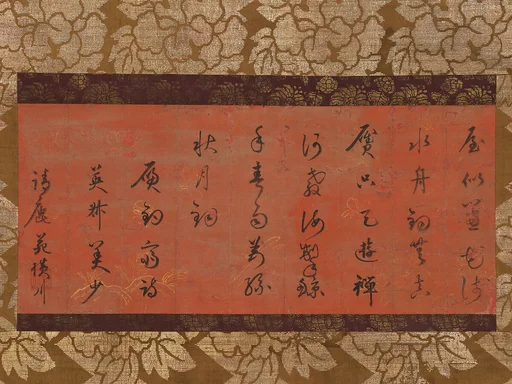
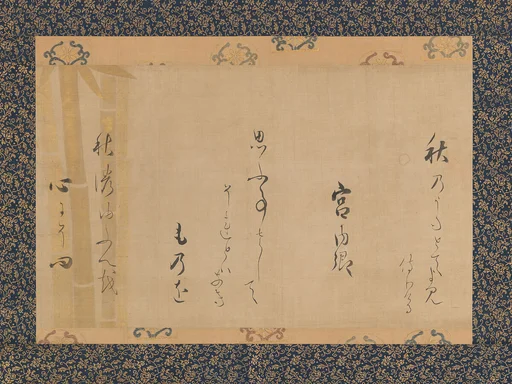
A popular pastime among courtiers of ancient Japan was the poetry contest, or uta-awase, which were often recorded for posterity. During the early medieval period, handscrolls illustrating imaginary competitions among various authors, not all of whom had lived at the same time (as seen here), were also created. In this handscroll section, both competitors are Buddhist monks, each represented by three waka (31-syllable court poems). The figures were drawn with a mokuhitsu, a flat wood “stylus” that makes fine, parallel lines with one stroke. The poems are inscribed above in an unusual style that combines orthodox kana (phonetic writing) with man’yōgana, the first Japanese writing system, in which Chinese characters were used to represent Japanese sounds. The poems thus visually resemble Chinese texts rather than the flowing forms usually expected for waka.
- Artist
- Unidentified artist
- Date
- mid-14th century
- Medium
- Fragment of a handscroll, mounted as a hanging scroll; ink on paper
- Culture
- Japan
- Department
- Asian Art
- Credit line
- Mary Griggs Burke Collection, Gift of the Mary and Jackson Burke Foundation, 2015