Untitled
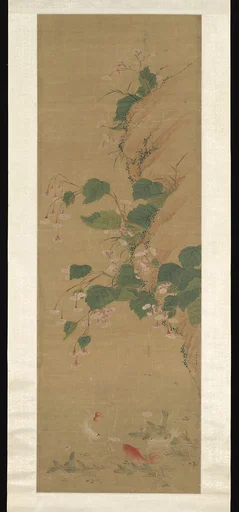
Tsubaki Chinzan
dated Fall 1850 · Hanging scroll; ink and color on paper · Asian Art
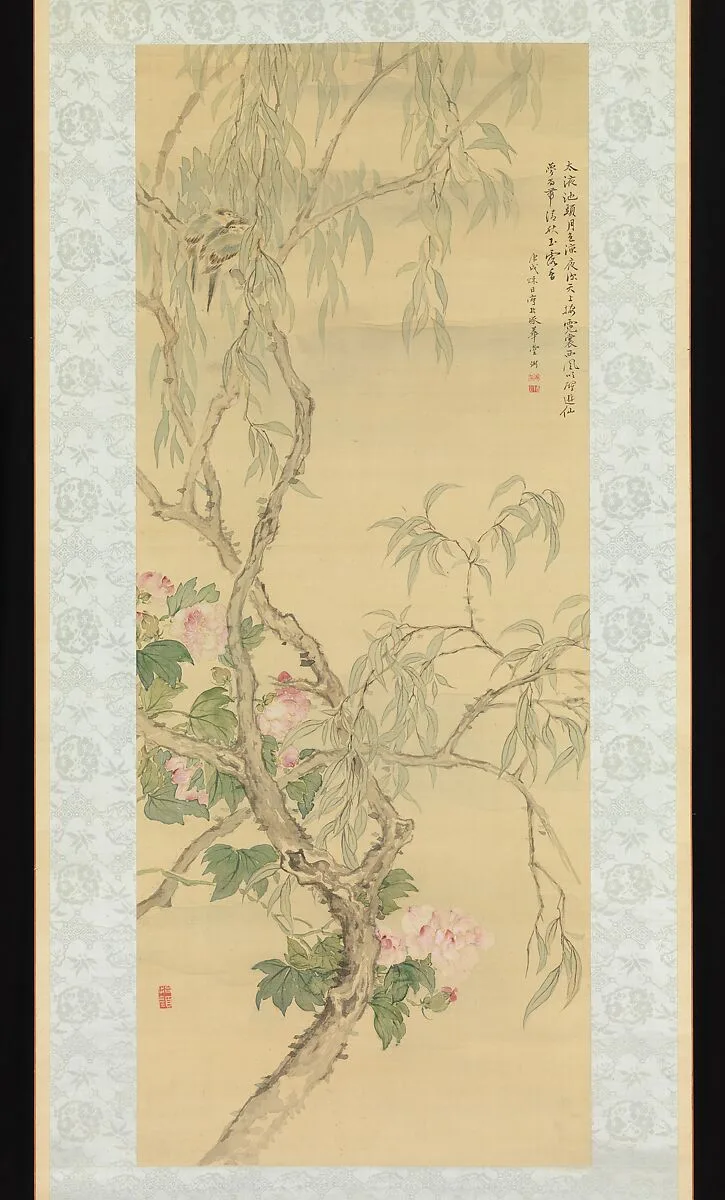
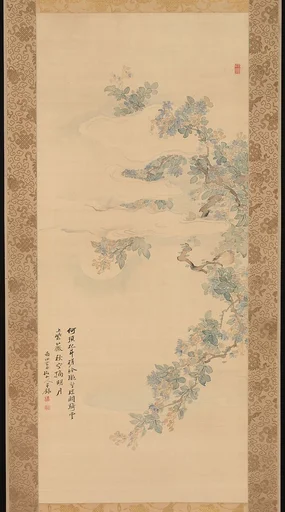
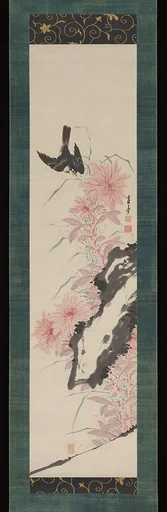
Chinzan was raised in Edo in a samurai family. He trained under the Nanga painters Tani Bunchō (1763–1840) and Watanabe Kazan (1793–1841) and favored Chinese literati artists of the Ming dynasty (1368–1644). Specializing in paintings of birds and flowers, he was an avid participant in sencha tea ceremonies, during which he would enjoy viewings of Chinese paintings and antiquities owned by his associates. He enhanced this painting with a poem that alludes to a passage from the "Song of Everlasting Sorrow" by the Tang dynasty (618–906) poet Bai Juyi (772–846). In it, Chinzan imagines the moon shining on the face of Lake Taiye and wonders if someone, a person he does not directly identify, still dances in the heavens in the deep of night. As the crisp autumn air of the west wind awakens him from his musings, he finds he can still smell her fragrance on the dew. In the original poem, the emperor discovers that, after the tragic death of his beautiful love, Yang Guifei, the hibiscus by Lake Taiye reminds him of her face, while the willows at Weiyang Palace recall her eyebrows. In this way, the contemporary poem and painting are brought together by the ancient text.
- Artist
- Tsubaki Chinzan
- Date
- dated Fall 1850
- Medium
- Hanging scroll; ink and color on paper
- Culture
- Japan
- Department
- Asian Art
- Credit line
- The Harry G. C. Packard Collection of Asian Art, Gift of Harry G. C. Packard, and Purchase, Fletcher, Rogers, Harris Brisbane Dick, and Louis V. Bell Funds, Joseph Pulitzer Bequest, and The Annenberg Fund Inc. Gift, 1975