Girdle Clasp
Unknown
late 18th century · Gold; inlaid with semi-precious stones and glass · Islamic Art
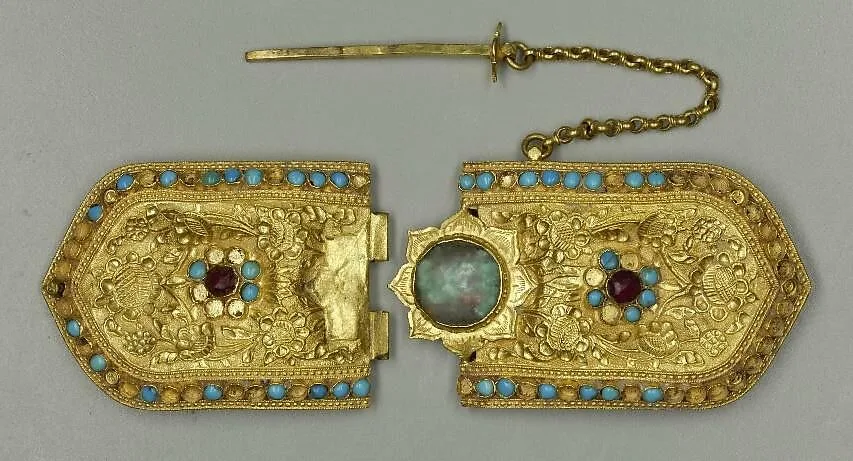
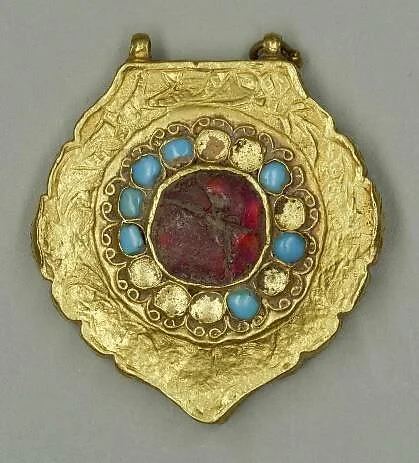
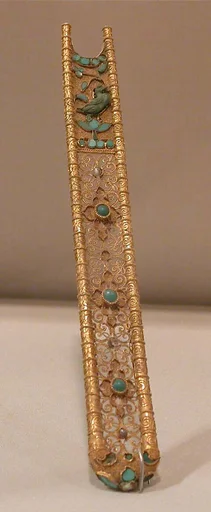
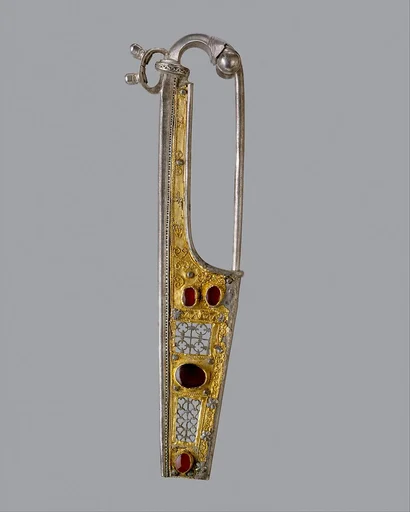
This girdle clasp, worked in gold with inlaid turquoise and colored glass cabochons, once belonged to a wealthy woman of the Ottoman upper classes. The technique, shape of the girdle clasp, and style of floral decoration all point to the later eighteenth century. It would have been attached to a luxurious belt or sash and worn as a luxurious accessory to hold together layers of clothing, including a lavish entari-robe, baggy trousers or şalvar, as well as a chemise or gömlek underneath. Together with slippers, an ornamented head dress, and other jewelry, it would complete the luxurious outfit. The clasp was not only an opulent accessory, but the girdle clasp was also part of a woman's dowry that provided her with financial security, and considered an important financial backup. The red and turquoise-blue colors of the encrusted stone and glass pieces were thought to have protective properties, while red is also associated with blood. These two colors were particularly favored in marital jewelry, as a way of ensuring a healthy life and life cycle of the bride and protect her during childbirth.
- Artist
- Unknown
- Date
- late 18th century
- Medium
- Gold; inlaid with semi-precious stones and glass
- Department
- Islamic Art
- Credit line
- Gift of Gloria Mizrahi in memory of Reuben M. Mizrahi, 2022