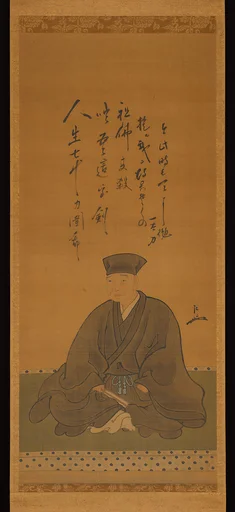
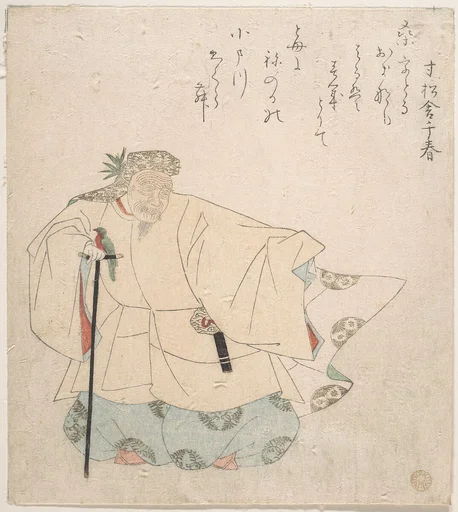
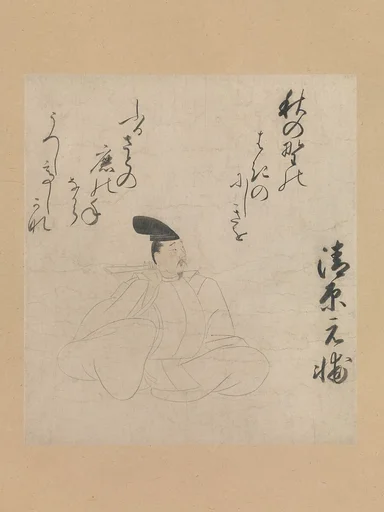
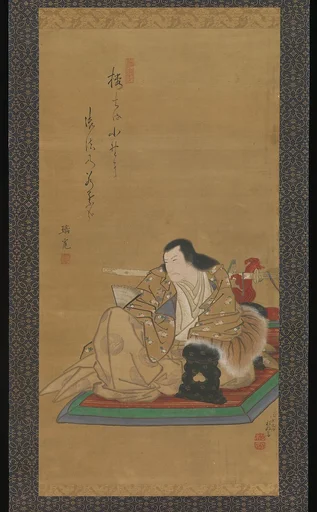
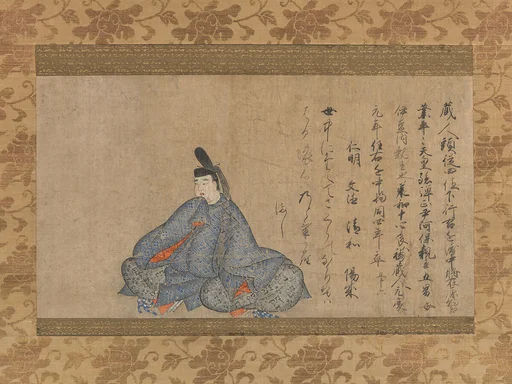
僧正遍照「道蘊本」三十六歌仙絵巻断簡|Archbishop Henjō (Sōjō Henjō zu), from the Dōon Version of the Thirty-Six Poetic Immortals
Iwasa Matabei 岩佐又兵衛
1620s–1630s · Hanging scroll: ink, color, gold and silver on paper · Asian Art
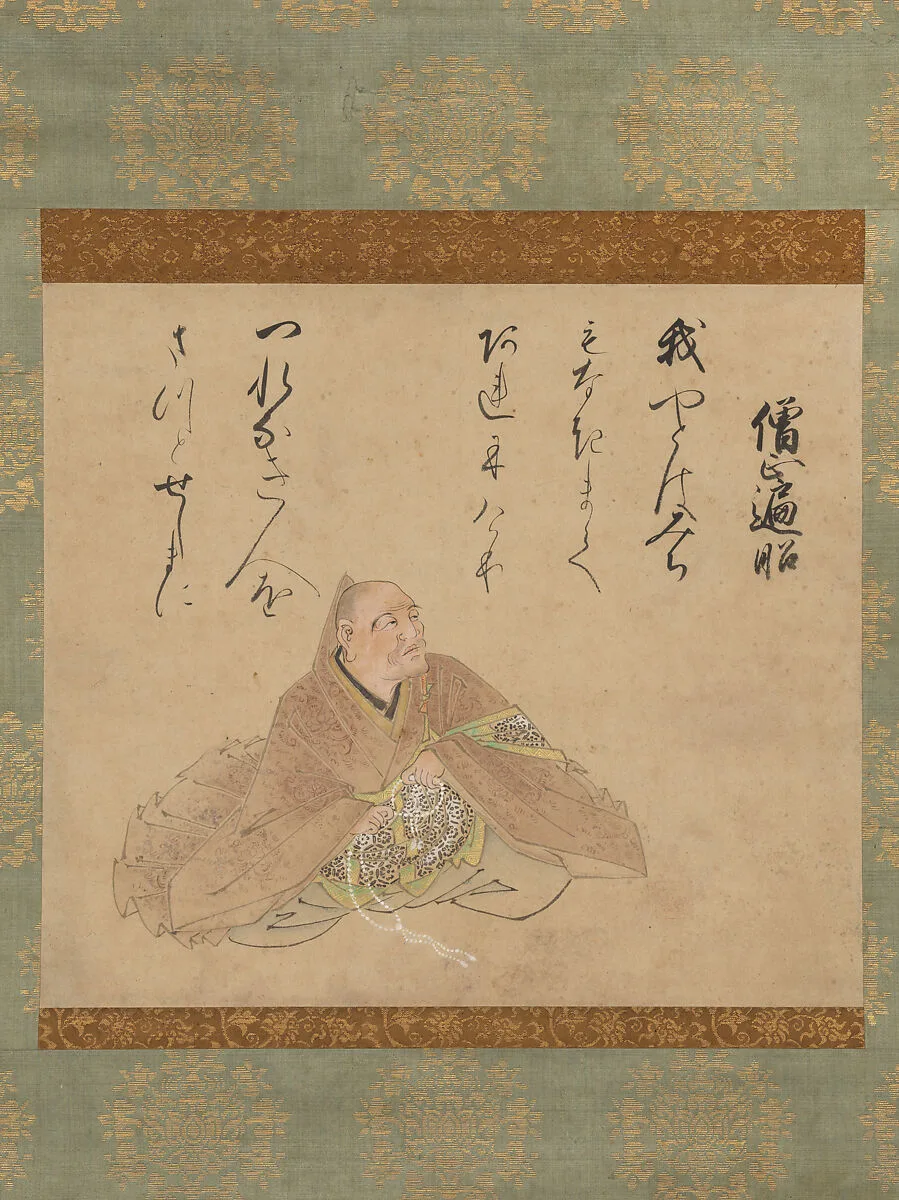
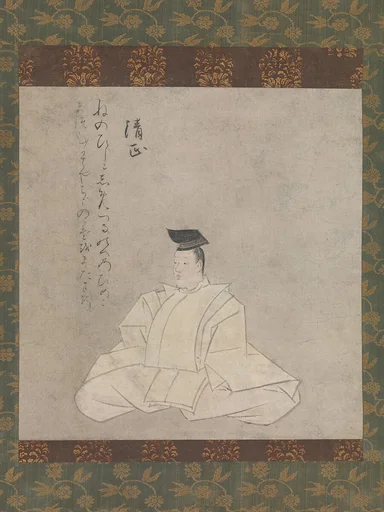
In ancient Japanese court society, poetry was the quintessential literary experience. Idealized and deeply admired, poets were often commemorated in portraiture. In the early eleventh century, Fujiwara Kintō (966–1041) selected thirty-six “poetic immortals” (kasen) from the past, and their images became a popular theme in Yamato-e, traditional Japanese painting. This imaginary portrait of Archbishop Henjō was originally part of a set of album leaves comprising all thirty-six poets. Some of the leaves feature the seal of the painter Iwasa Matabei, who broke away for the orthodoxy of the Kano and Tosa studios to create his own distinctive style of depicting the human figure. For instance, here he has rendered the aged monk with a wrinkled forehead, droopy eyes, sagging cheeks, and downturned mouth that convey melancholy—a far cry from the stylized poet portraits of previous centuries. Matabei’s poet portraits are expressive and compelling. Similarly impressive is the detailing of the crystal Buddhist rosary beads, the archbishop’s silk damask cloak and kesa surplice. Above the portrait of the poet is one of his famous poems from his younger years on the theme of love. The text is transcribed in four columns of calligraphy, mostly kana (Japanese syllables) with an admixture of kanji (Chinese characters). On the far right is the poet’s name and clerical title, Sōjō Henjō 僧正遍照, inscribed in bold semi-cursive script. The poem reads: 我やとはみちもなきまてあれにけり つれなき人をまつとせしまに Waga yado wa michi mo naki made arenikeri tsurenaki hito o matsu to seshi ma ni The path to my hut, completely overgrown, has now all but disappeared, while I waited to no avail for an out-of-touch lover. (Translated by John T. Carpenter)
- Artist
- Iwasa Matabei 岩佐又兵衛
- Date
- 1620s–1630s
- Medium
- Hanging scroll: ink, color, gold and silver on paper
- Culture
- Japan
- Department
- Asian Art
- Credit line
- Mary and Cheney Cowles Collection, Gift of Mary and Cheney Cowles, 2021