六祖・芦雁・叭々鳥図|Huineng, the Sixth Patriarch of Zen, with Geese and Myna
Unkoku Tōeki 雲谷等益
first half 17th century · Set of three hanging scrolls; ink on paper · Asian Art
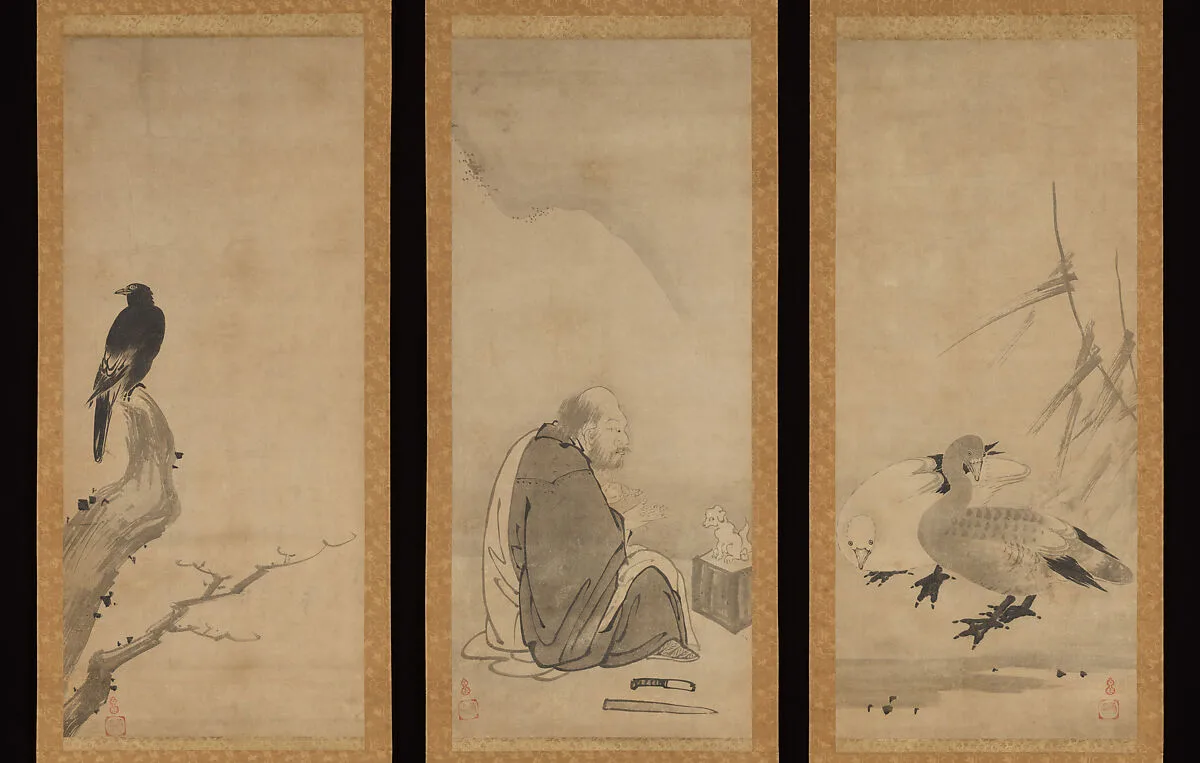
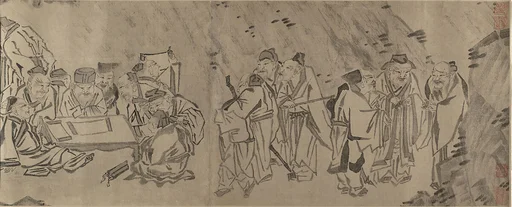
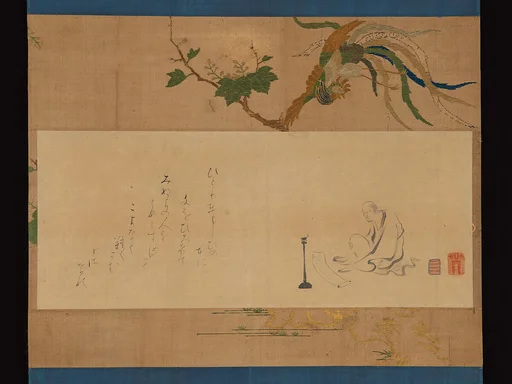
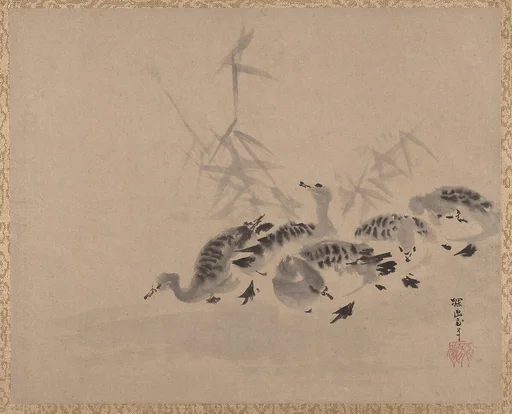
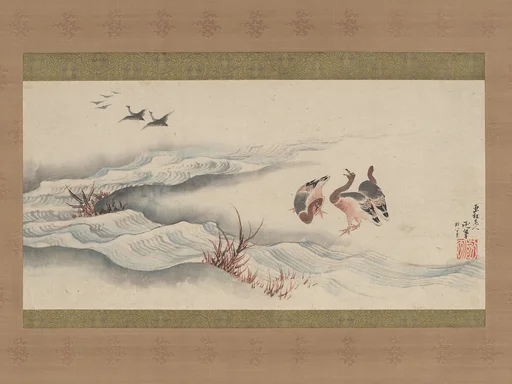
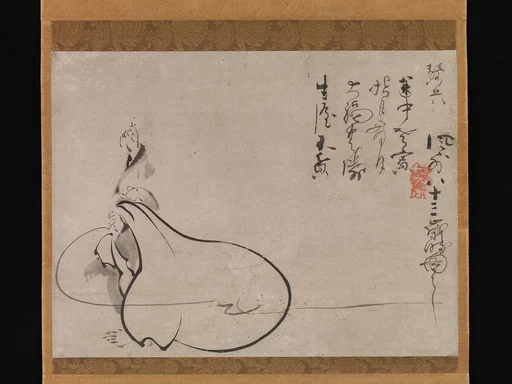
This work combines three seemingly unrelated subjects in a single, multi-scroll composition, a format common in early Zen devotional painting and adopted widely during the sixteenth century. The central scroll illustrates the Chan monk Zhaozhou Congshen (Jōshū Jūshin, 778–897), perhaps best remembered for his response to the koan “Does a dog have a Buddha nature?” He replied simply, “Wu,” meaning on one level “no.” In a Zen mindset, however, this may have been a short verbal signal to stop the logical process of trying to find an answer. Zhaozhou is flanked by so-called bird-and-flower subjects, originating in China—two geese and autumnal reeds at right, and a mynah atop a tree stump at left. The artist Tōeki belonged to the Unkoku school, painters-in-attendance to the powerful Mōri clan.
- Artist
- Unkoku Tōeki 雲谷等益
- Date
- first half 17th century
- Medium
- Set of three hanging scrolls; ink on paper
- Culture
- Japan
- Department
- Asian Art
- Credit line
- Mary and Cheney Cowles Collection, Gift of Mary and Cheney Cowles, 2021