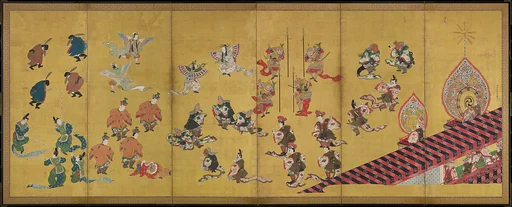
風流踊図 屏風|Festive Dancing at a Samurai Residence (Fūryū odori zu byōbu)
Unidentified artist
ca. 1660 · Four-panel folding screen; ink and color on paper · Asian Art
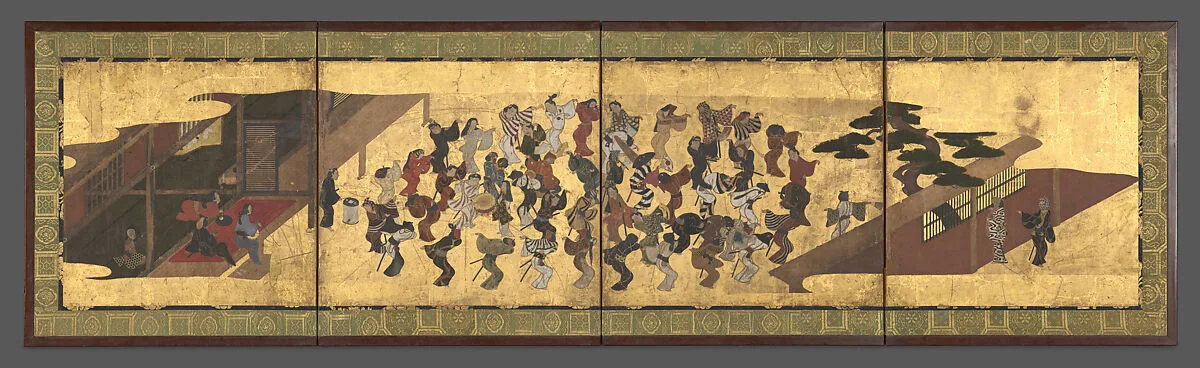
In the garden of a grand samurai residence, guests dance to the music of small hand drums (tsutsumi), a larger shime-daiko drum held by a girl and played by a young man, a bamboo transverse flute (shinobue), and a three-stringed shamisen played by a minstrel, seen from behind. Several of the wakashu, male youths who often served as companions to older samurai patrons, are dressed in garments more appropriate for young women, but can be identified by their shaven pates and swords. The dancers wave their arms and tap sticks in time to the music, performing furyū-odori, fashionable, modern dances popular at festivals in the early to mid-seventeenth century and also enjoyed at private gatherings, as depicted here. The unknown artist was very likely a machi-eshi, or town-based painter with no close affiliation to any particular school of painting. Bright colors and detailed textile patterns such as those seen here were frequently used in genre paintings depicting the various classes of Edo-period society and the celebration of various festivals. Such images are precursors of ukiyo-e (“pictures of the floating world”) scenes of the pleasures of urban life that began to flourish in the later years of the 17th century and grew in popularity and sophistication over the next two hundred years.
- Artist
- Unidentified artist
- Date
- ca. 1660
- Medium
- Four-panel folding screen; ink and color on paper
- Culture
- Japan
- Department
- Asian Art
- Credit line
- Mary and Cheney Cowles Collection, Gift of Mary and Cheney Cowles, 2018