舞伎図屏風|Dancers
Unknown
late 17th–early 18th century · Six-panel folding screen; ink, color, and gold on paper · Asian Art
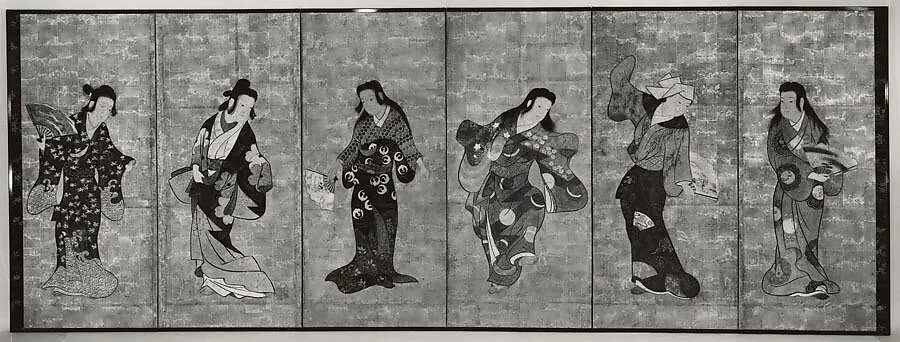
The male and female performers on this screen wear sumptuously decorated kosode. The hairstyles and decorative motifs on the costumes reflect fashion trends of the Kanbun period (1661–72), though the work might have been painted slightly later. The well-balanced presentation of figures embodies the elegance and reserved movements of Japanese dance. It also points to the importance of fans in the overall scheme of a performance and demonstrates how the flowing sleeves of a costume were used to accent the fluid lines created by dancers. Japanese dance underwent a transition during the seventeenth century. The religious and festival themes that had characterized prior dance forms declined in the regimented environment created by the Tokugawa shogunate. Older traditions were absorbed and transformed into different dances and incorporated into other performing arts, most notably Kabuki, which began as a form of female dance performance and evolved. The two figures to the left appear to be young male Kabuki actors. Within the rising urban milieu, these new dance forms grew in popularity. The panels were originally part of a pair of six-panel folding screens. At some point, the panels were seperated and some were lost. The present screen is a combination of the surviving panels.
- Artist
- Unknown
- Date
- late 17th–early 18th century
- Medium
- Six-panel folding screen; ink, color, and gold on paper
- Culture
- Japan
- Department
- Asian Art
- Credit line
- H. O. Havemeyer Collection, Bequest of Mrs. H. O. Havemeyer, 1929
![南四季 夏景|The Four Seasons in Southern Edo: A Summer Scene (Minami shiki; Natsu [no] kei)](https://d2pvxr3eb77vb4.cloudfront.net/assets/v1/00/0003065c35ae4f35b40ec7c9ed952ddf00ea393ed80107ed591e9a3cfdc0d025/graph.webp)