北野天神縁起絵巻|Illustrated Legends of the Kitano Tenjin Shrine (Kitano Tenjin engi emaki)
Unknown
late 13th century · Set of five handscrolls; ink, color, and cut gold on paper · Asian Art
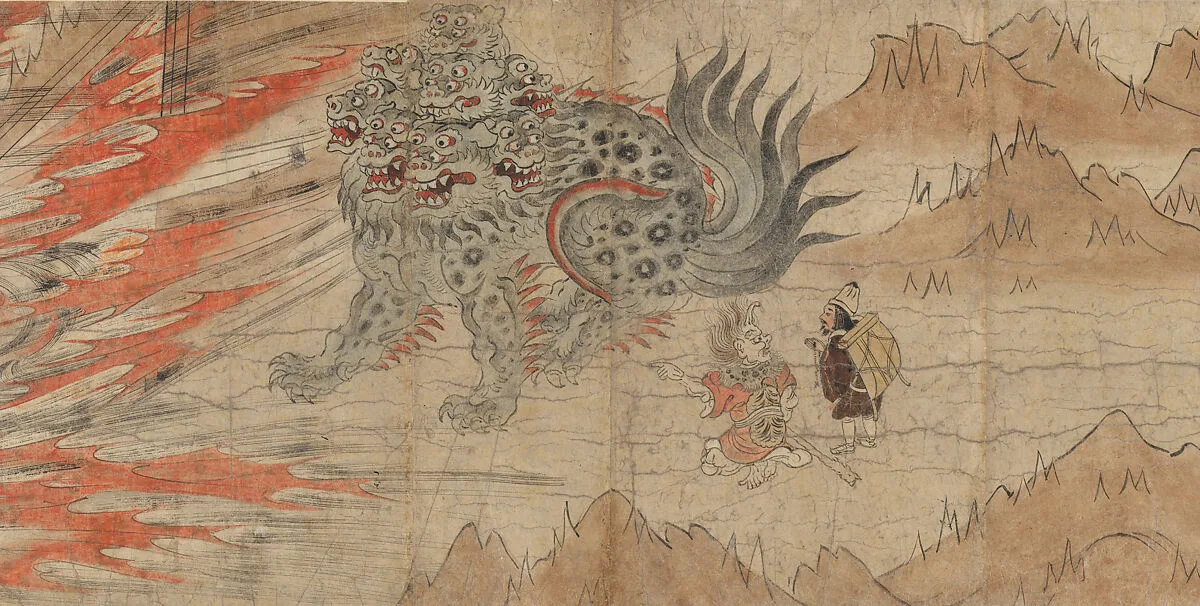
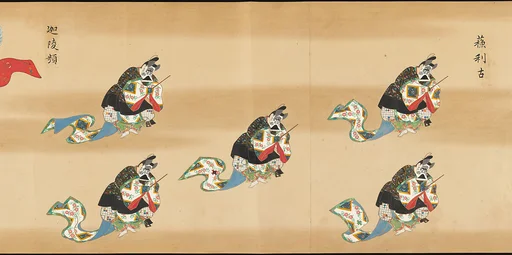
An ancient Shinto belief that the unpredictable, calamitous forces of nature are animated by tormented human spirits (onryō) underlies the legendary origin of the Kitano Tenjin shrine, dedicated to Sugawara Michizane (845–903). Michizane was a distinguished scholar, poet, and statesman who died in exile, having been slandered by enemies at court. After his death, a series of extraordinary natural disasters and plagues caused the untimely deaths of his detractors. In an attempt to appease his vengeful spirit, he was posthumously pardoned and promoted to high office, but the disasters continued. In 942, Michizane’s spirit revealed his wish to be honored at a shrine dedicated to the thunder god in the northwestern section of the capital. He was deified as Tenjin, an ancient god of agriculture and patron of the falsely accused. Later, perhaps because poems were offered to him at the shrine, he came to be venerated as the Shinto god of literature and music. Among the more than thirty extant sets of handscrolls recounting Michizane’s life and the events leading to the establishment of the Tenjin cult, this version is second in age and quality only to the early thirteenth-century treasure in the main Kitano Tenjin shrine in Kyoto. The minister who had slandered Michizane took ill. He had a Buddhist monk chant mantras to dispel his sickness. When the monk did so, two blue dragons came out of the minister’s ears and announced Michizane’s intent to avenge his wrongful exile and death. Shortly thereafter, the minister fell dead. Despite the unpleasant event depicted in the scene, the scroll’s painter included a nicely executed painting-within-a painting of an early type of yamato-e (Japanese-style painting) landscape screen favored by the well-to-do. The rectilinear shapes on two of the panels are meant to indicate beautifully decorated papers, with poems praising the landscape in fine calligraphy. According to legend, Michizane was not born of human parents but miraculously appeared one day as a grown boy of five or six years of age in the garden of a courtier-scholar. The boy declared this courtier to be his father. The scene is depicted here, on the verandah of the courtier’s mansion. Ladies of the residence peek out at the curious pair. Though the related text is missing, the next painting here shows Michizane as a young man composing a poem at the request of the emperor. His foster father, himself a celebrated poet, looks on proudly.
- Artist
- Unknown
- Date
- late 13th century
- Medium
- Set of five handscrolls; ink, color, and cut gold on paper
- Culture
- Japan
- Department
- Asian Art
- Credit line
- Fletcher Fund, 1925