御所車図|Imperial Carts (Gosho guruma)
Unknown
mid-17th century · Six-panel folding screen; ink, color, gold, and gold leaf on paper · Asian Art
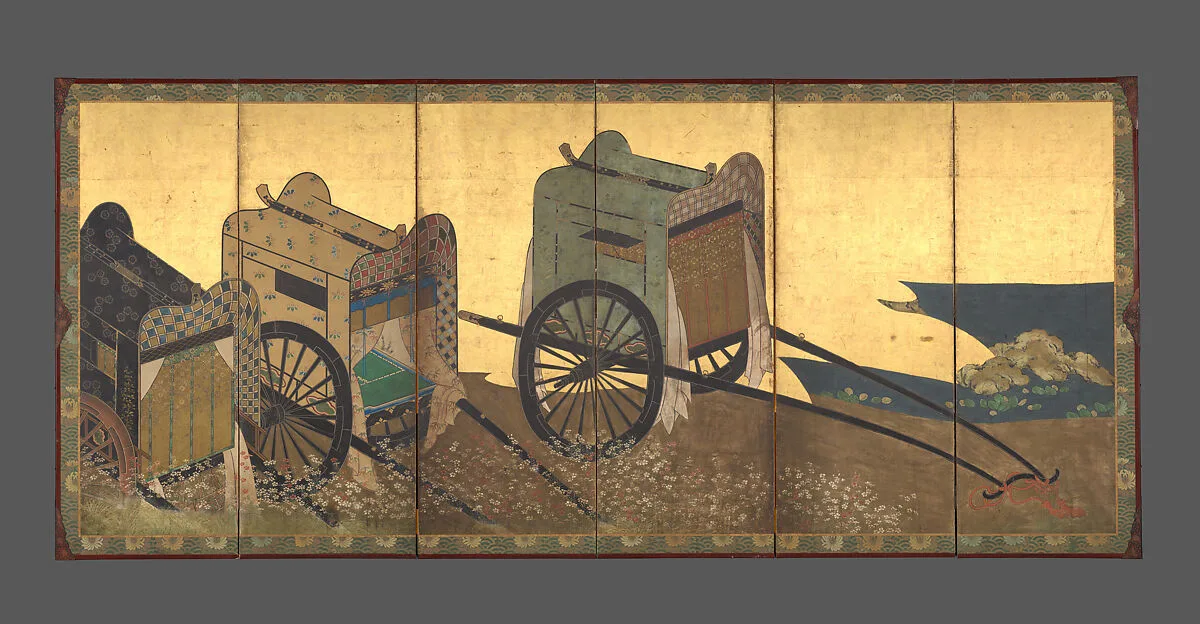
In ancient and medieval Kyoto, the imperial family and nobility rode in carriages drawn by oxen. In this depiction of three carriages, lowered bamboo blinds tantalizingly suggest the presence of an elegant lady or nobleman. This image alludes to several classic literary scenes, among them an event from the “Leaves of Wild Ginger” (Aoi) chapter in The Tale of Genji, in which attendants of Genji’s wife and his former lover create a crush of carts as they compete for the best position from which to view the Kamo festival in Kyoto. Such beautifully appointed vehicles, decorated with a wild ginger motif, were a popular subject for decorative art objects and textiles. Lacking evidence of a dispute, the composition is a decorative representation of carts set among the delicate pink blossoms of early summer. The painting convention of omitting human presence, common in the decorative arts, came to be called the “motif of absence” (rusu moyō).
- Artist
- Unknown
- Date
- mid-17th century
- Medium
- Six-panel folding screen; ink, color, gold, and gold leaf on paper
- Culture
- Japan
- Department
- Asian Art
- Credit line
- Gift of Mrs. P. H. B. Frelinghuysen, 1962