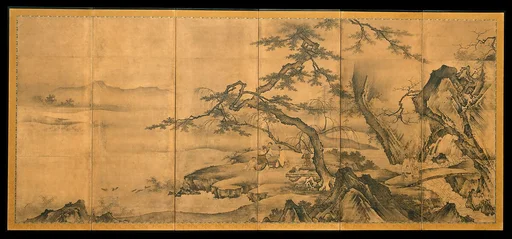
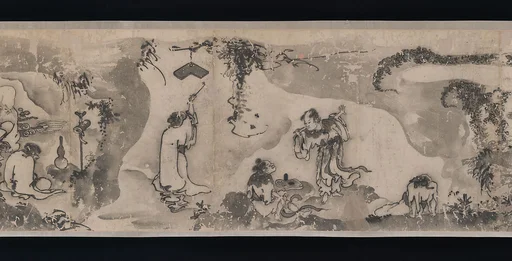
群仙図屏風|Immortals
Hasegawa Sakon 長谷川左近
ca. 1620s–30s · Six-panel folding screen; ink and gold on paper · Asian Art
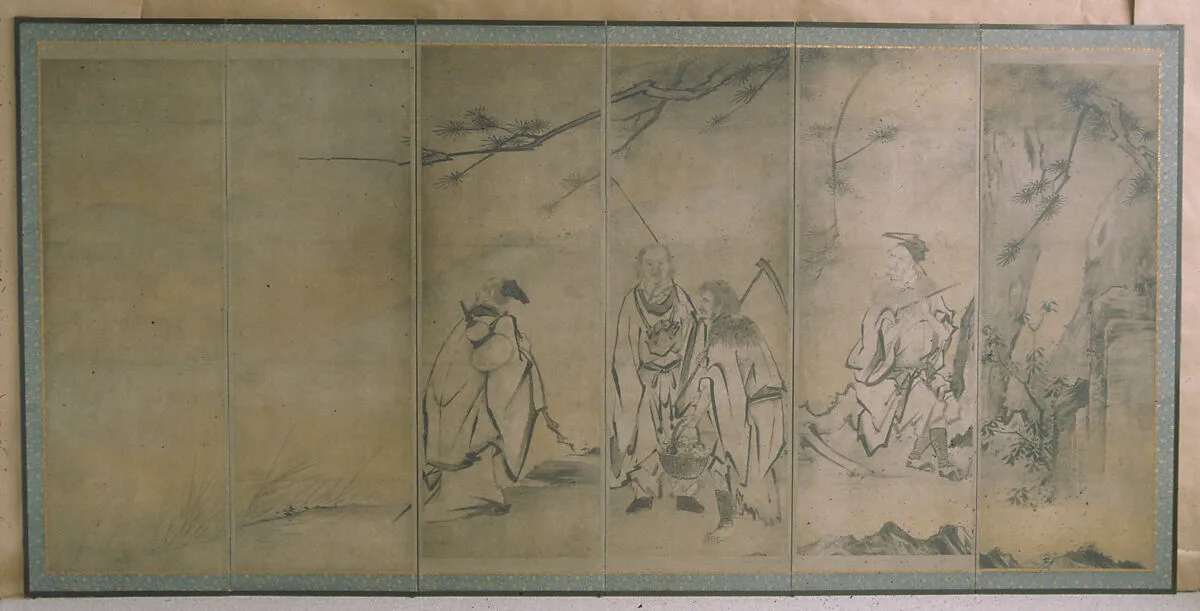
The Chinese Daoist immortals are legendary mountain recluses who attained supernatural powers and longevity by practicing meditation and alchemy. Auspicious personalities, they became a popular subject for screens and sliding-door panels in sixteenth-century Japan. The attributes seen here, such as the flute, the basket of life-extending fungus, and the gourd, suggest that these figures represent four of the Eight Immortals. The remaining four (including the two female immortals) were presumably depicted on the missing mate to this screen. The Hasegawa workshop was one of the most important producers of screens and paintings for the great lords and merchants of the Momoyama (1573–1615) and early Edo periods. This example demonstrates the Hasegawa expertise both with ink and with exotic Chinese subjects. Bold, exaggerated brushstrokes give the figures their eccentric energy—an effect enhanced by the shallow foreground space framed by the pine and rocks.
- Artist
- Hasegawa Sakon 長谷川左近
- Date
- ca. 1620s–30s
- Medium
- Six-panel folding screen; ink and gold on paper
- Culture
- Japan
- Department
- Asian Art
- Credit line
- Fletcher Fund, 1933