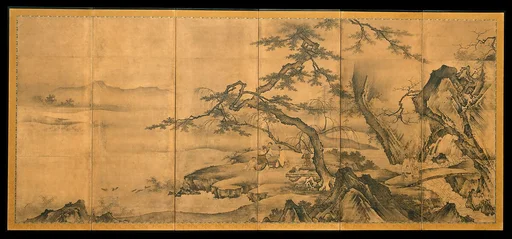
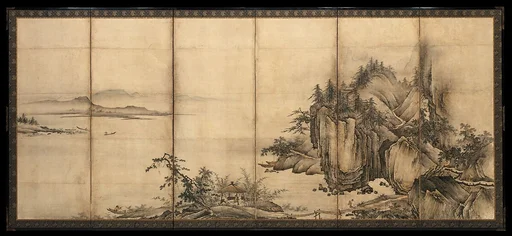
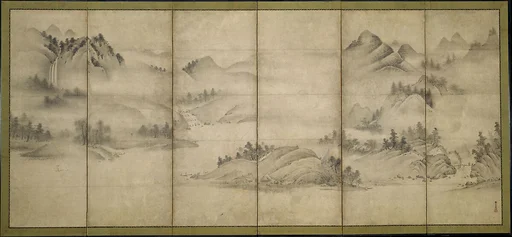
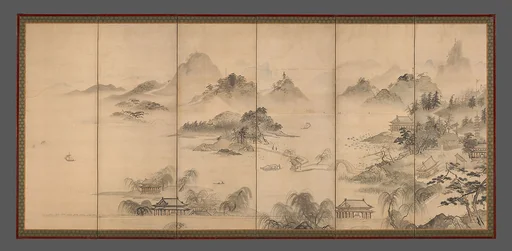
近江八景|Eight Views of Ōmi (Ōmi hakkei)
Soga Shōhaku
ca. 1762–66 · Six-panel folding screen; ink and paper · Asian Art
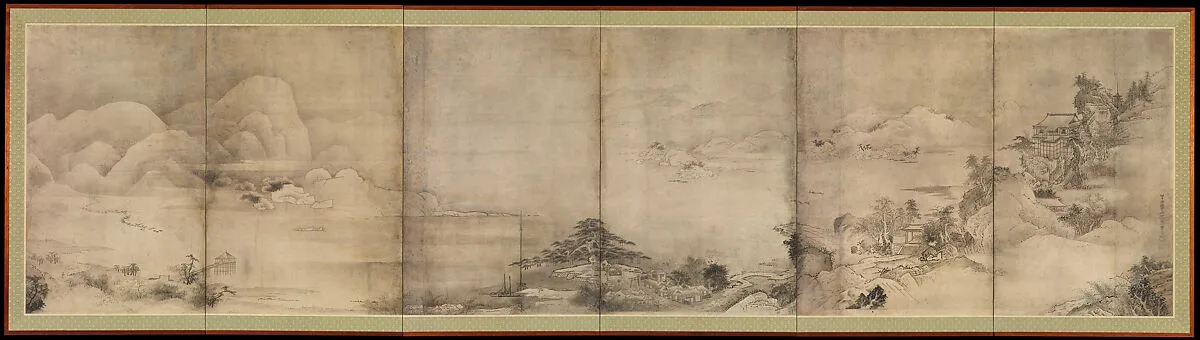
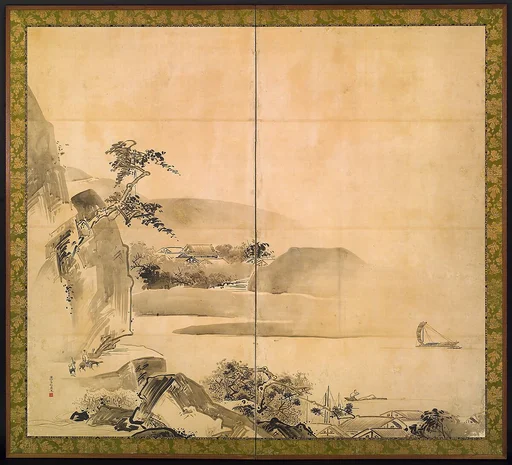
Soga Shōhaku was a prominent, if eccentric, figure in Kyoto during the second half of the eighteenth century, when he developed the style that set him apart from painters of the Kano, Nanga, and Shijō schools. Here, he has depicted the standard ink landscape theme of Eight Views, but with a local twist. This screen, the left of a pair, shows four of the Eight Views of Ōmi. Each of the moments celebrated in the Chinese theme has been matched with a place and season from the area of Lake Biwa, Japan's largest and most fabled lake, just east of the mountains that form the eastern border of the ancient capital at Kyoto. His contemporary and local interpretation is rendered in a style of ink painting that knowingly refers to the work of painters of the Soga school, who were active during the late fifteenth and sixteenth centuries. Conspicuous on the right is the Ishiyamadera, the hillside temple where the author of The Tale of Genji is said to have been moved to write her compelling portrait of court life by the sight of the full moon reflected on the lake.
- Artist
- Soga Shōhaku
- Date
- ca. 1762–66
- Medium
- Six-panel folding screen; ink and paper
- Culture
- Japan
- Department
- Asian Art
- Credit line
- Gift of William and Marjorie Normand, 1994