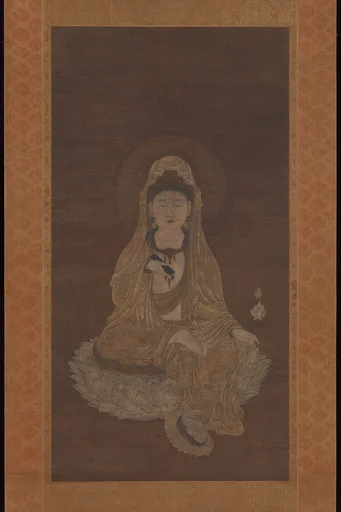
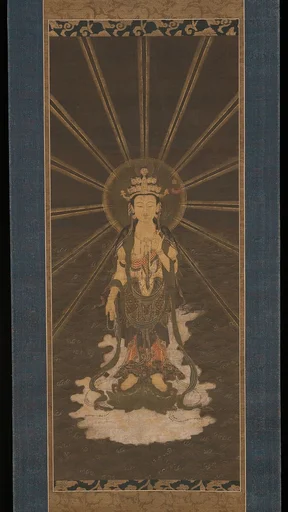
白衣観音図|White-Robed Kannon
Unknown
15th century · Hanging scroll; ink on silk · Asian Art
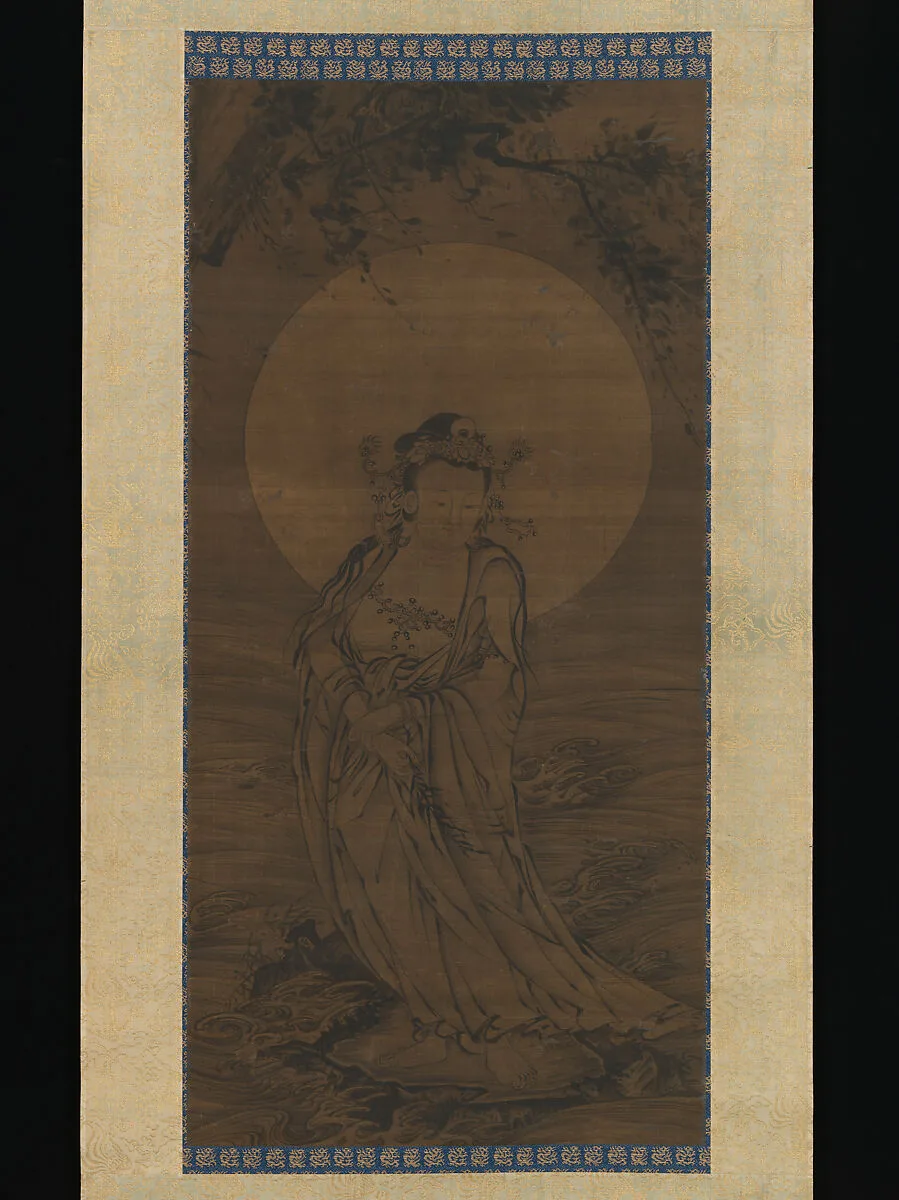
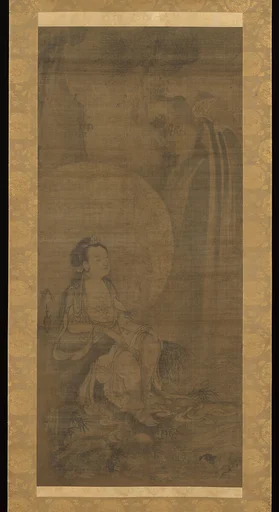
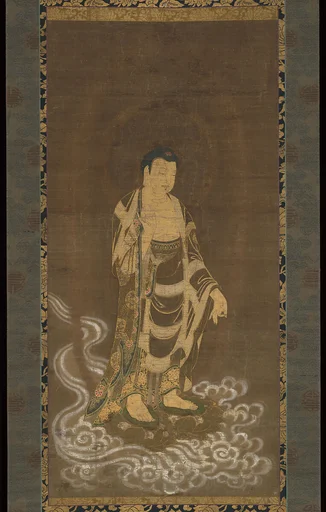
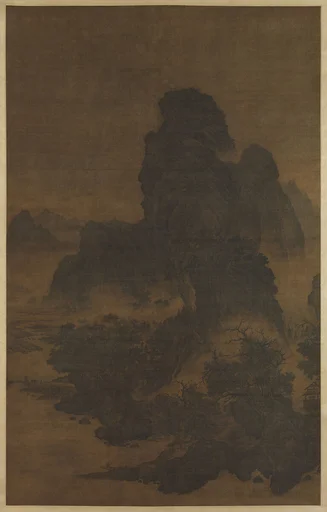
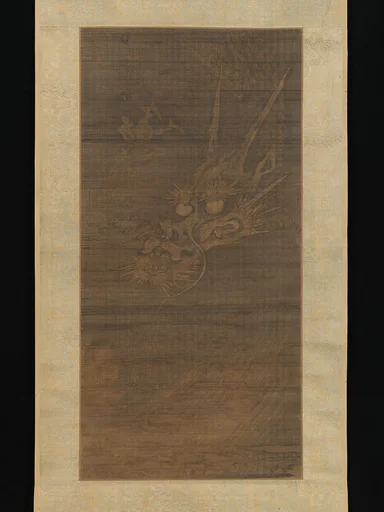
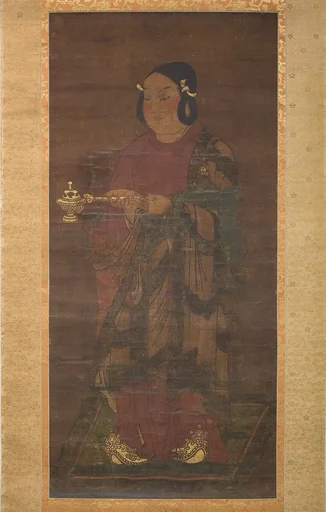
The painted dragon and tiger, animals symbolic of yin and yang in Chinese iconography, form a triptych with a serene figure of the Buddhist deity Kannon (Sanskrit: Avalokiteshvara) in a white robe. Monochrome ink paintings of Kannon were important in the religious life of the earliest Zen temples of Muromachi Japan. The bodhisattva, embodying the concept of merciful compassion, is represented here in a casual pose and natural setting that emphasize his humanity rather than his role as deified intercessor for a faithful devotee. There are many similar triptychs that combine secular subjects, such as the dragon and the tiger, with a central Buddhist image. Such triptychs were often hung in the tokonoma (alcove) of official rooms, an architectural feature suited for displaying prized Chinese-style art that developed in Japanese interiors during the fourteenth century.
- Artist
- Unknown
- Date
- 15th century
- Medium
- Hanging scroll; ink on silk
- Culture
- Japan
- Department
- Asian Art
- Credit line
- Purchase, Mary Livingston Griggs and Mary Griggs Burke Foundation Gift, 1984