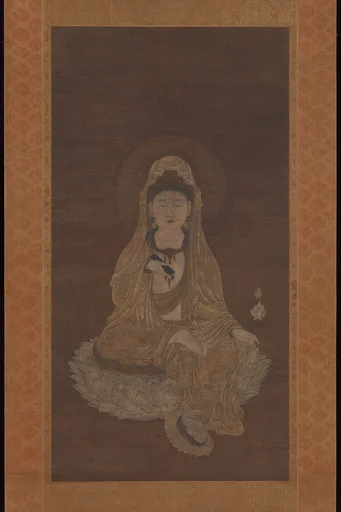
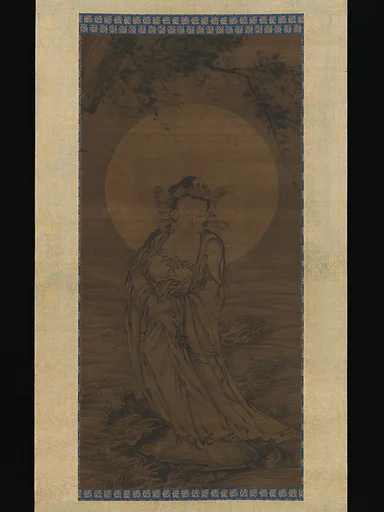
白衣観音図|White-robed Kannon
Unknown
14th century · Hanging scroll; ink on silk · Asian Art
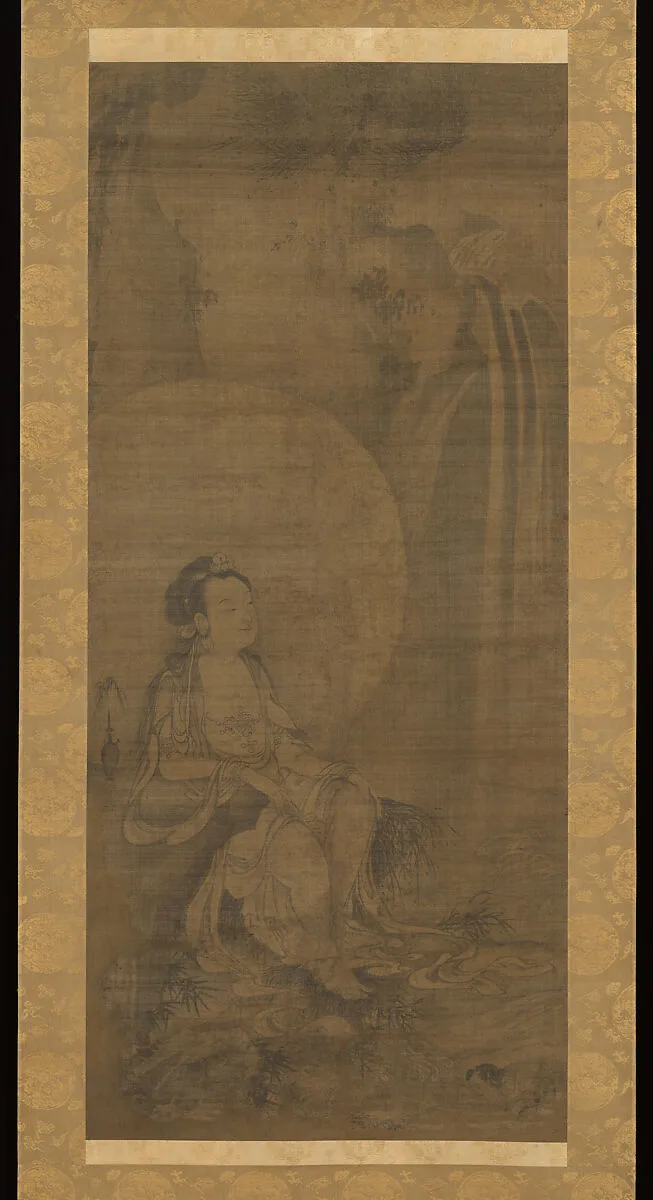
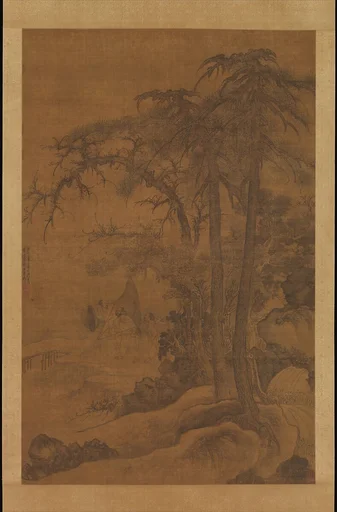
Avalokiteshvara, or Kannon in Japanese, one of the most important bodhisattvas in Mahayana Buddhism, was traditionally venerated in Zen more as a model for the contemplative life than for his traditional role as savior. This approach is reflected in the iconographic mode most favored in Zen, the white-robed Kannon. A more human image of the deity, he relaxes here near a waterfall in a woodland setting. The inclusion of Sudhana (lower right), the archetypal pilgrim youth who sought the bodhisattva in Potalaka, his island paradise, reflects Zen assimilation of Pure Land belief. This early painting, with its skillful handling of ink in supple lines for the figure and graduated wash for the landscape, adheres closely to thirteenth- and fourteenth-century Chinese models and reveals the roots of Japanese ink painting.
- Artist
- Unknown
- Date
- 14th century
- Medium
- Hanging scroll; ink on silk
- Culture
- Japan
- Department
- Asian Art
- Credit line
- Purchase, Bequest of Dorothy Graham Bennett, Herbert J. Coyne Gift, Seymour Fund and Fletcher Fund, by exchange, 1985