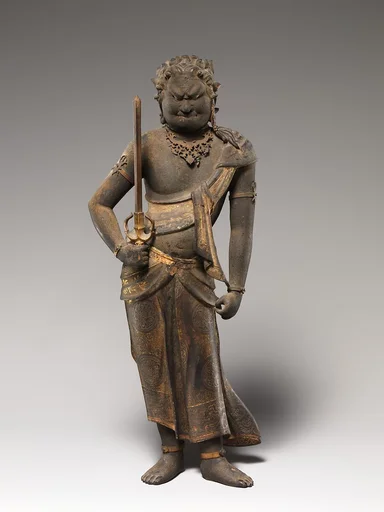
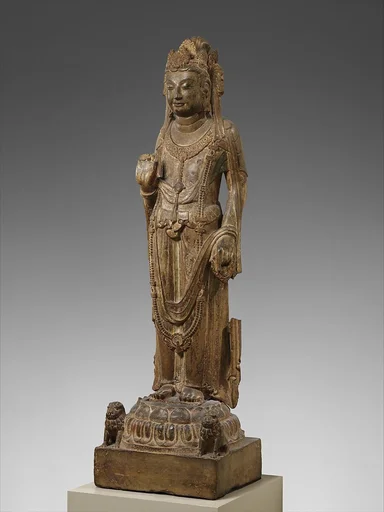
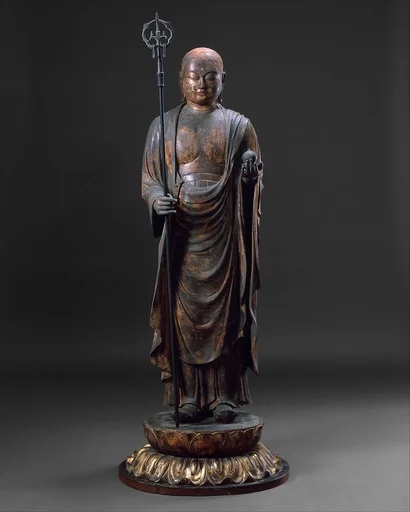
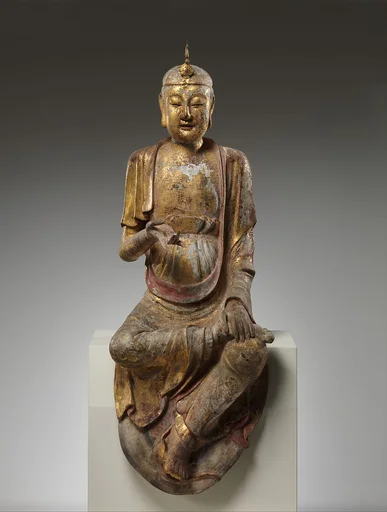
不動明王像|Fudō Myōō (Achala-vidyārāja)
Unknown
12th century · Wood with lacquer, gold leaf, and color; joined-woodblock construction (yosegi-zukuri) · Asian Art
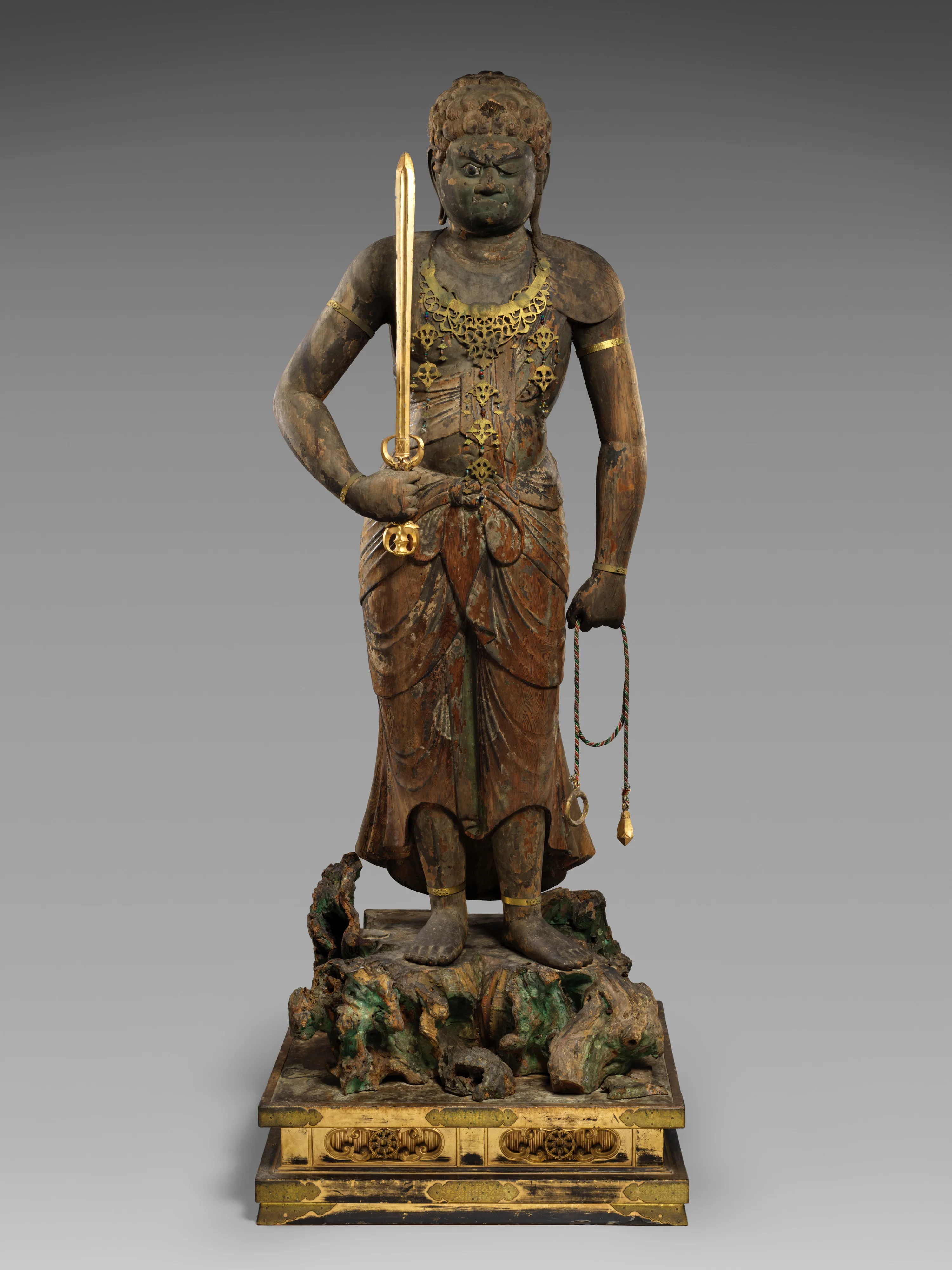
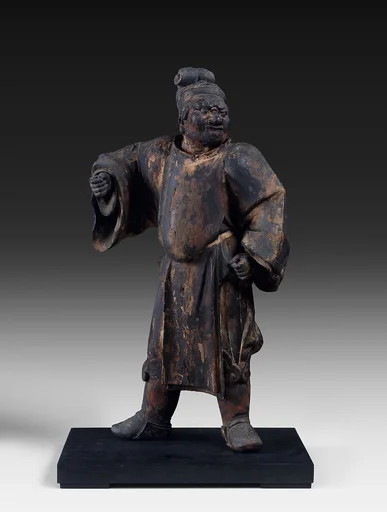
Fudō is the most widely represented of the Buddhist deities known as Myōō, or Kings of Brightness. A fierce protector of the Buddhist law, he is a direct emanation of Dainichi Nyorai, the principal Buddha of Esoteric Buddhism. The first sculptures of Fudō Myōō made in Japan showed the figure seated, but standing examples like this one began to appear in the eleventh century. Fudō uses his sword to cut through ignorance and his lasso to reign in those who would block the path to enlightenment. The heavy weight of the shoulders and back is planted firmly on the stiffened legs, appropriate for a deity whose name means “the Immovable One.” This statue, composed of six hollowed-out pieces of wood, was formerly the central icon at Kuhonji Temple, northwest of Kyoto.
- Artist
- Unknown
- Date
- 12th century
- Medium
- Wood with lacquer, gold leaf, and color; joined-woodblock construction (yosegi-zukuri)
- Culture
- Japan
- Department
- Asian Art
- Credit line
- The Harry G. C. Packard Collection of Asian Art, Gift of Harry G. C. Packard, and Purchase, Fletcher, Rogers, Harris Brisbane Dick, and Louis V. Bell Funds, Joseph Pulitzer Bequest, and The Annenberg Fund Inc. Gift, 1975