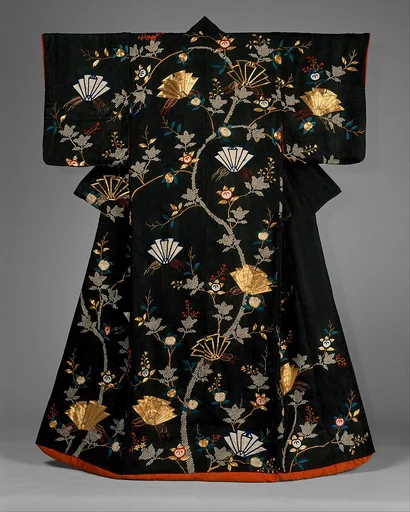
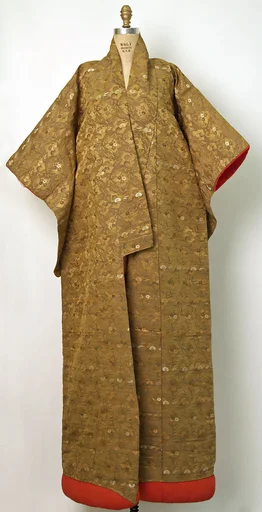
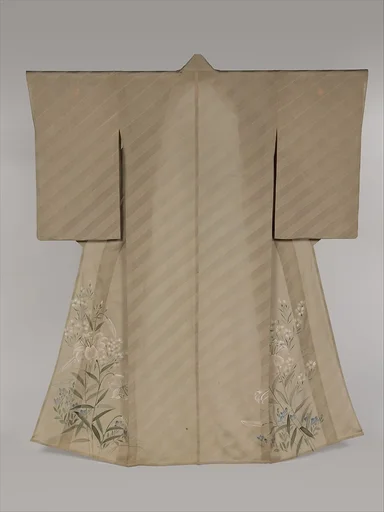
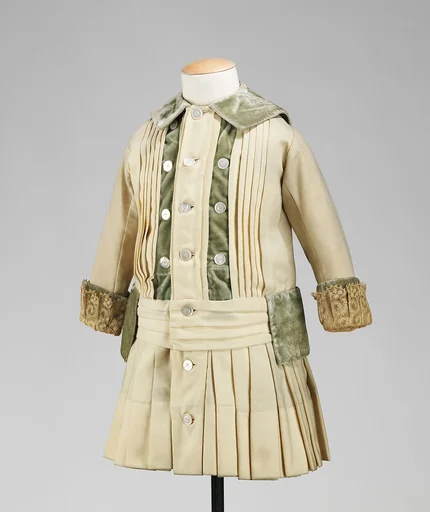
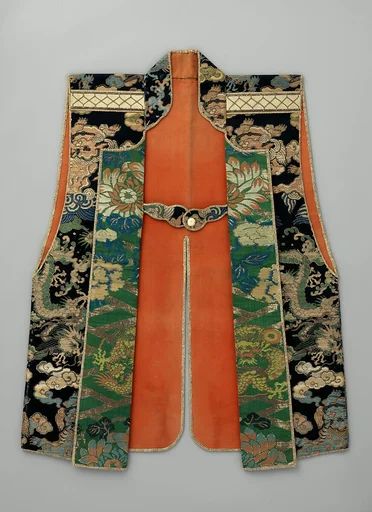
藍羅紗藤紋陣羽織|Surcoat (jinbaori)
Unknown
late 16th century · Silk, metallic thread, felt, wool, and velvet · Asian Art
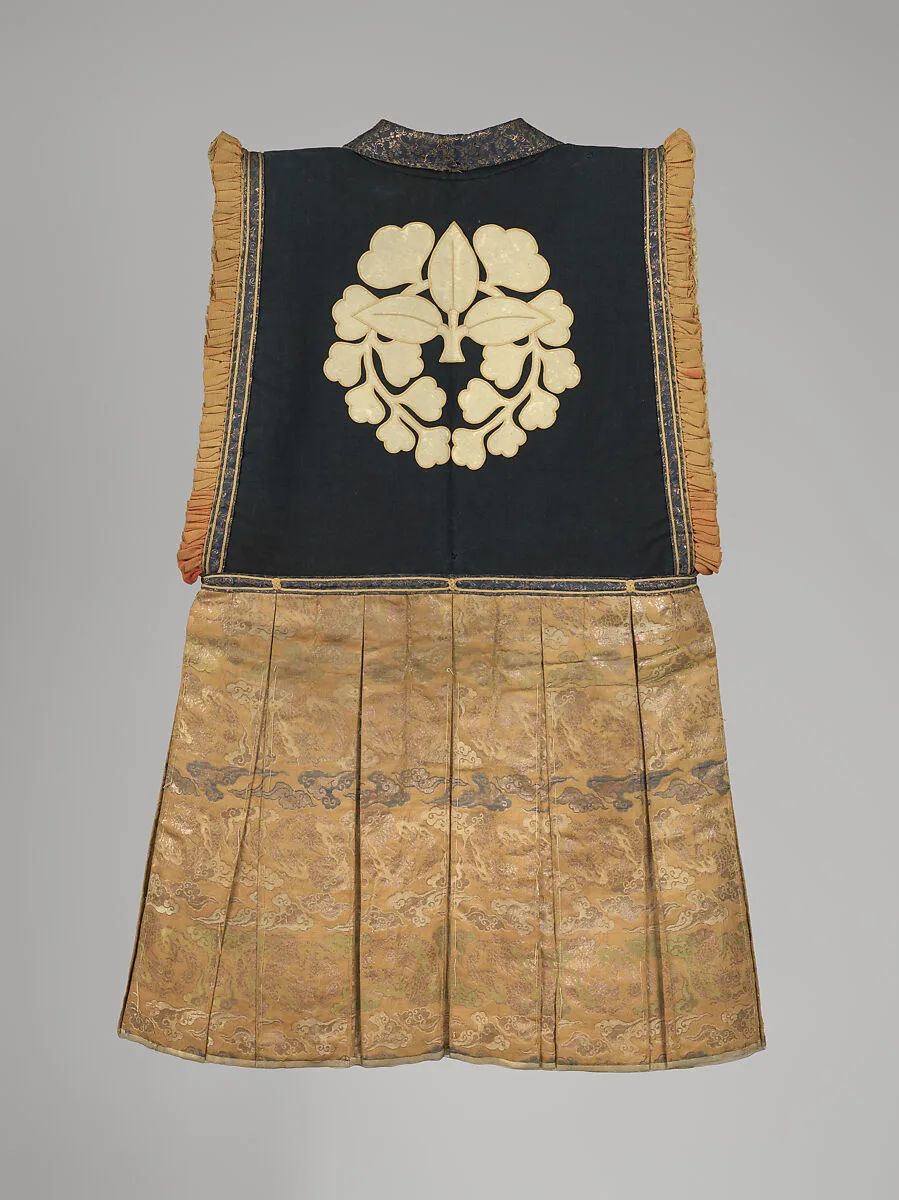
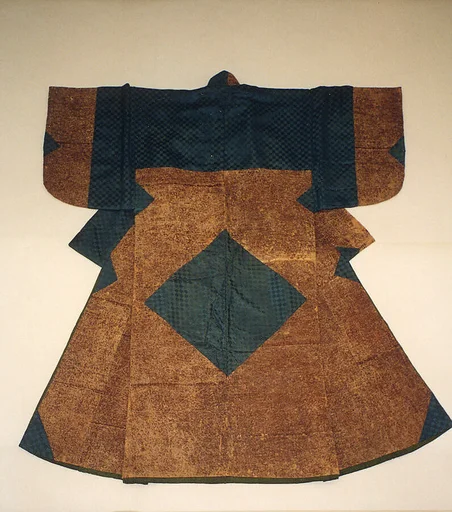
With the arrival of the Portuguese in 1543, Japan became involved in global trade. High-ranking samurai wore luxurious battle surcoats (jinbaori) made from expensive, imported fabrics. This elegant Momoyama-period jinbaori is a very rare type—only three similar examples are known, all of which belonged to warlords or high-ranking warriors associated with either the general Toyotomi Hideyoshi or shogun Tokugawa Ieyasu (1543–1616). The surcoat’s pleated “skirt” is a Chinese brocaded silk with a gold and silver “dragon and cloud” design. The vest is made of wool imported from the West, an exotic material in late sixteenth-century Japan. On the back of the vest, the flowering wisteria crest of the Naitō family (allies of Ieyasu’s) is appliquéd in white wool felt and decorated with refined cording. The crest was inspired by the fact that one character of the Naitō family name is “wisteria.”
- Artist
- Unknown
- Date
- late 16th century
- Medium
- Silk, metallic thread, felt, wool, and velvet
- Culture
- Japan
- Department
- Asian Art
- Credit line
- Mary Livingston Griggs and Mary Griggs Burke Foundation Fund, 2017