Upper Part of a Hippo Goddess
Unknown
2649–2528 B.C. · Indurated limestone, plaster, paint · Egyptian Art
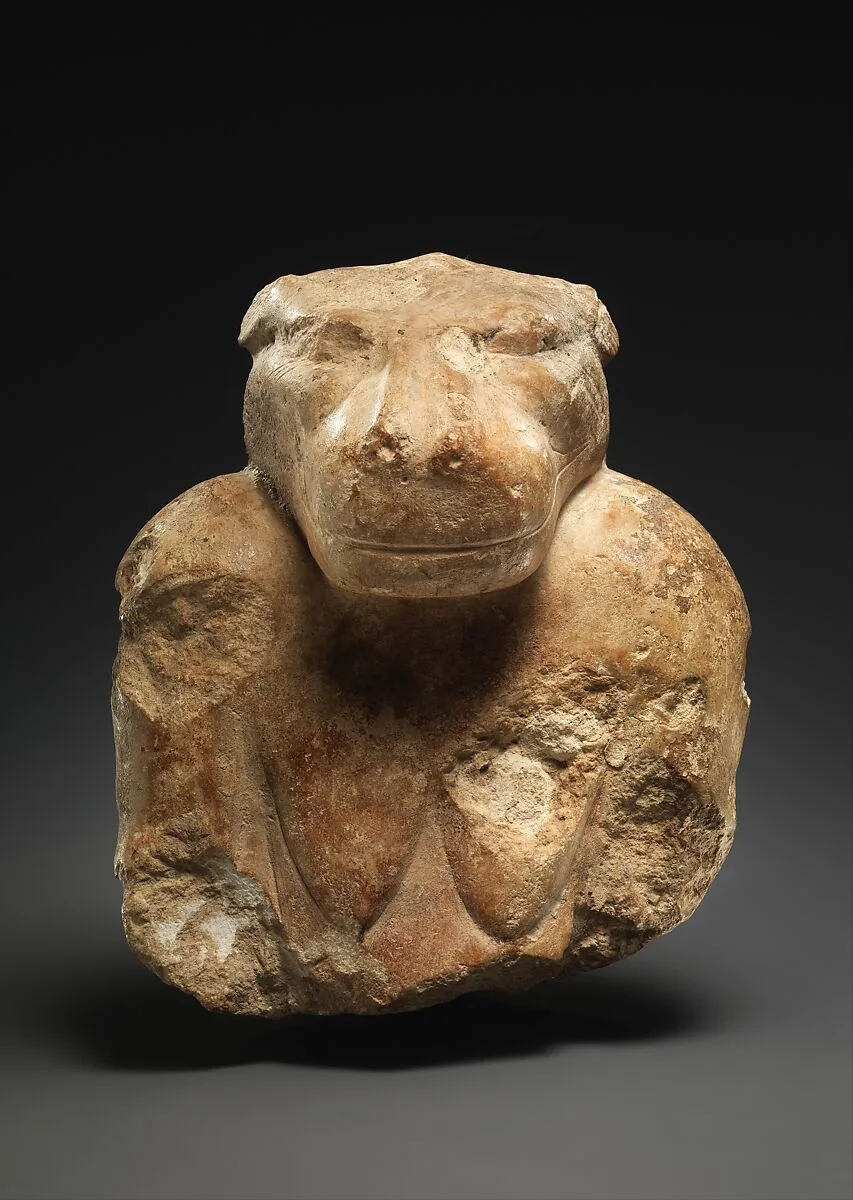
This powerful sculpture is one of the earliest known statues joining multiple animal features to a human body, here a pregnant woman. This quintessential Egyptian concept produced striking imagery. Here the woman’s gravid body was given a hippo’s head from which a great crocodile tail emerges and flows down her back. Closer examination shows a crocodile’s skin flap at the back of the hippo’s mouth, and subtle incised lines at her eyes’ outer edges and above the brows represent the long hairs found on a lion’s face. Traces of pigment indicate she was once painted red with black details. Hippo goddesses, such as Ipy and Taweret, are well known in the Egyptian pantheon after the late Old Kingdom (ca. 2323-2150 B.C.), often depicted with a fiercer demeanor than communicated here. These goddesses were responsible for the safe delivery of pregnant women and for protecting a newborn’s health. They also had a role in taking care of the king. This sculpture has been assigned an early date based on the closed mouth, absent neck, and lack of lion’s mane.
- Artist
- Unknown
- Date
- 2649–2528 B.C.
- Medium
- Indurated limestone, plaster, paint
- Department
- Egyptian Art
- Credit line
- Purchase, Mr. and Mrs. John A. Moran Gift, 2015