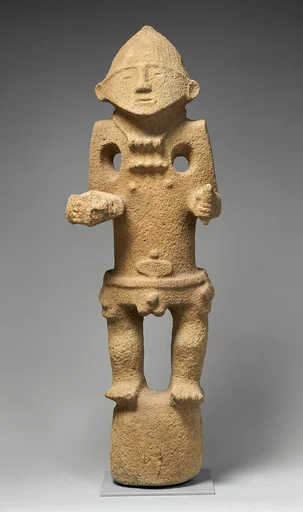
Figure: Seated Male
Unknown
16th–20th century · Stone · Arts of Africa, Oceania, and the Americas
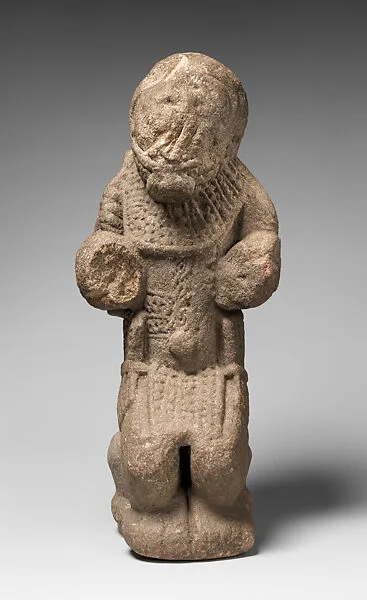
Carved stone heads and figures with broad, bulging features adorned with elaborate clothing, jewelry, and coiffures, were made by the Sapi people as memorials for dignitaries. The Sapi, early inhabitants, of the Western Guinea Coast and ancestors of the present-day Baga, Bullom, and Landuma peoples, among others, were assimilated by immigrants from the Western Sudan in the mid-sixteenth century. Portuguese records along with stylistically similar ivory carvings for Portuguese patrons help in dating the stone sculptures to the sixteenth century. Found accidentally in fields and riverbeds, they are identified as ancestors, castoffs from previous inhabitants of the region, or nature spirits. The sculptures are commonly placed on family altars to ensure fertile fields, and they serve in oath-taking and divination rituals.
- Artist
- Unknown
- Date
- 16th–20th century
- Medium
- Stone
- Culture
- Sapi peoples
- Department
- Arts of Africa, Oceania, and the Americas
- Credit line
- The Michael C. Rockefeller Memorial Collection, Bequest of Nelson A. Rockefeller, 1979