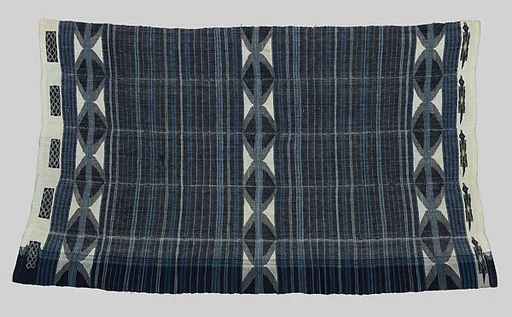
Wrapper (Seru Njaago)
Unknown
1960s · Cotton · Arts of Africa, Oceania, and the Americas
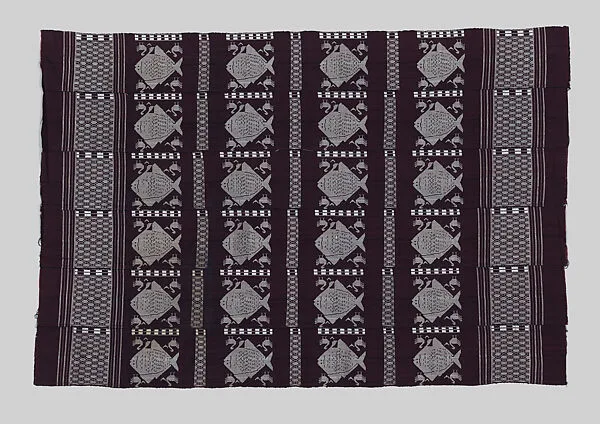
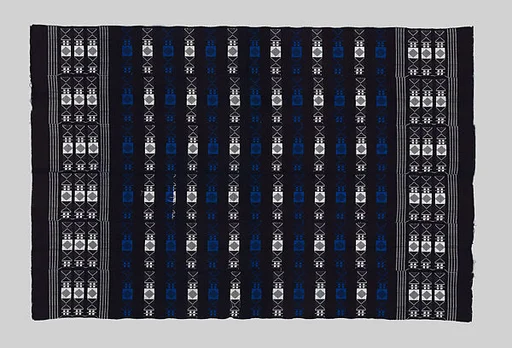
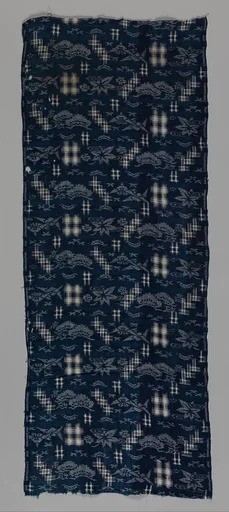
A rectangular panel composed of six strips sewn together to form a woman's wrapper. Each band measures approximately eight inches wide and composed of brown and unspun white cotton creating both geometric and figurative zoomorphic motifs. The same pattern is repeated in vertical columns which are aligned so that they match with those of adjacent strips. The resulting overall pattern are four aligned rows of flat fish surrounded by diminutive birds, framed at either side by one row of geometric patterns. While several distinct cultural traditions from Senegal are known for their textiles creations, those woven for Manjaka communities remain the most sought after. They are an essential component of each important phase in the life of Senegalese women. Distinctive for their thick and stiff qualities, such textiles are conceived by their wearers as protective shields. They are commonly ornamented by motifs that recall the many external influences that impacted the Manjaka communities through trade, colonial history and displacements: Portuguese, Moroccan and Spanish. This textile's striking graphic composition is characterized by the repetition of its unusual zoomorphic motifs.
- Artist
- Unknown
- Date
- 1960s
- Medium
- Cotton
- Culture
- Manjaka peoples
- Department
- Arts of Africa, Oceania, and the Americas
- Credit line
- Gift of Dr. and Mrs. Pascal James Imperato, 2015