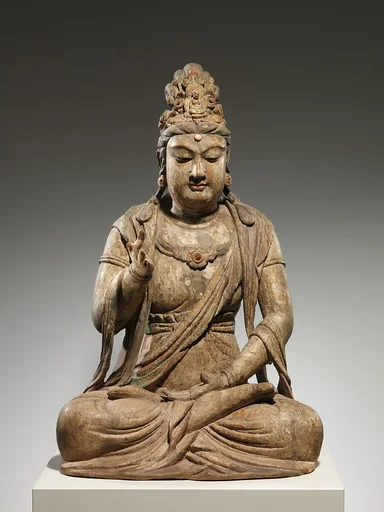
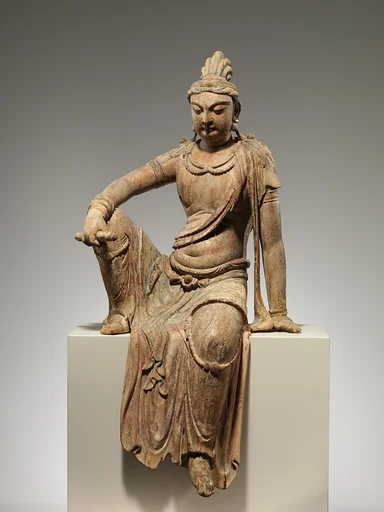
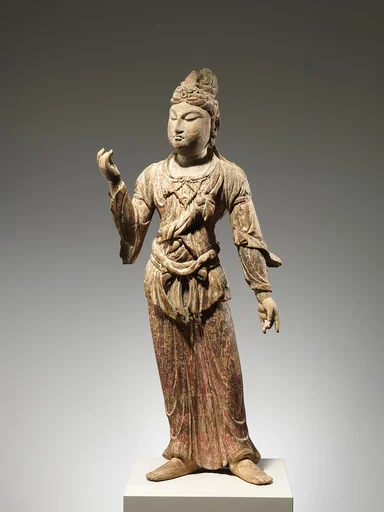
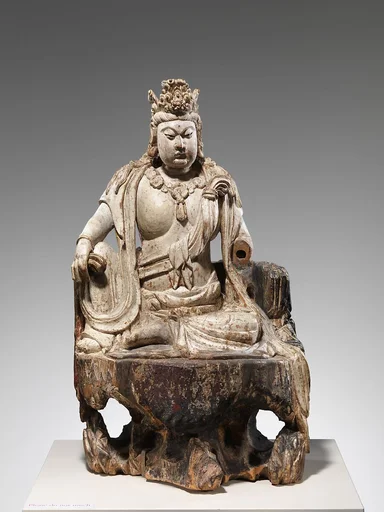
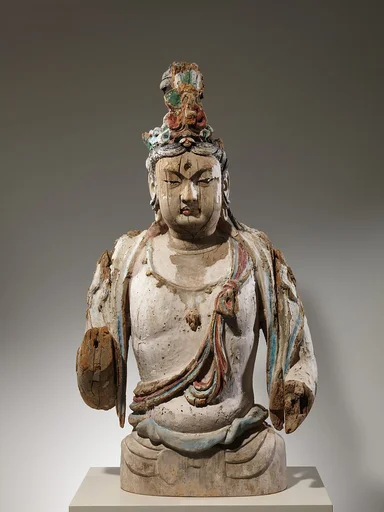
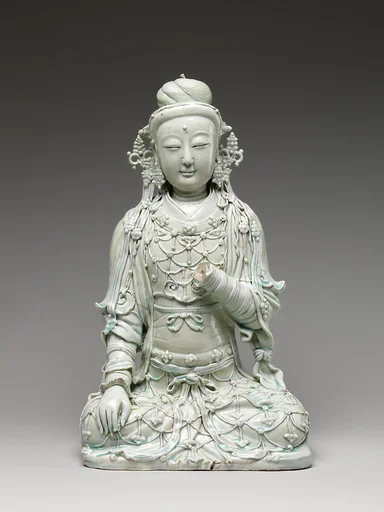
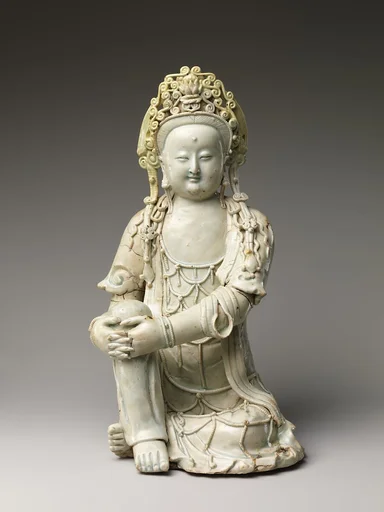
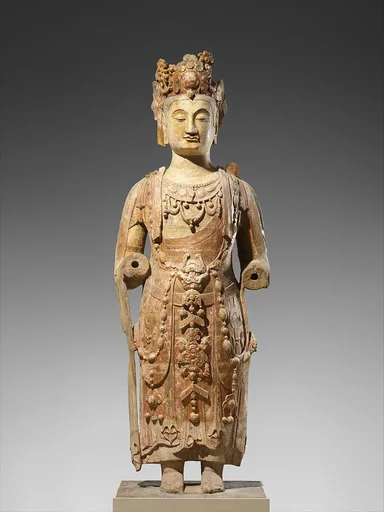
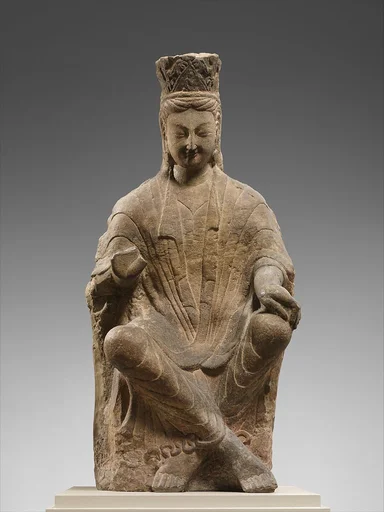
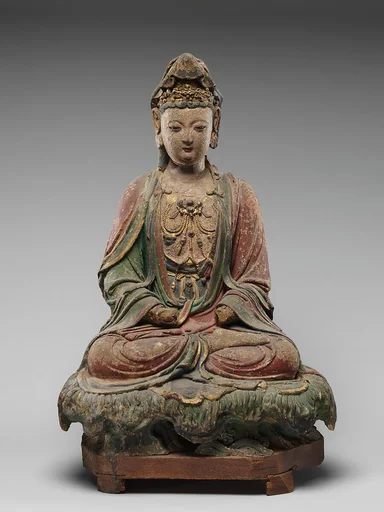
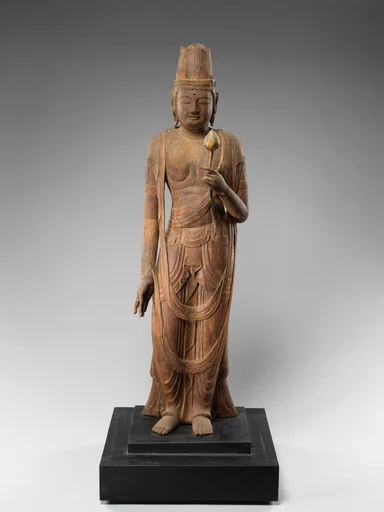
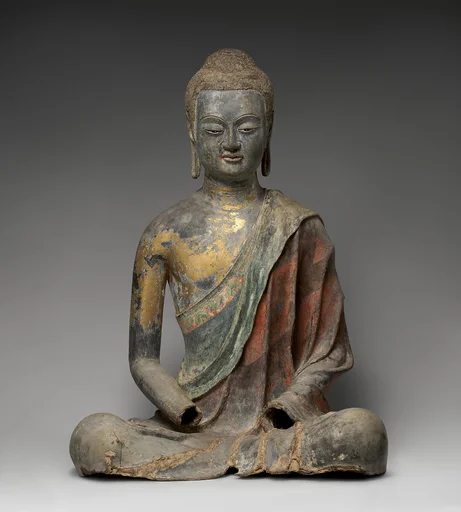
遼 彩繪木雕水月觀音菩薩像(柳木胎)|Bodhisattva Avalokiteshvara in Water Moon Form (Shuiyue Guanyin)
Unknown
11th century · Wood (willow) with traces of pigment; multiple-woodblock construction · Asian Art
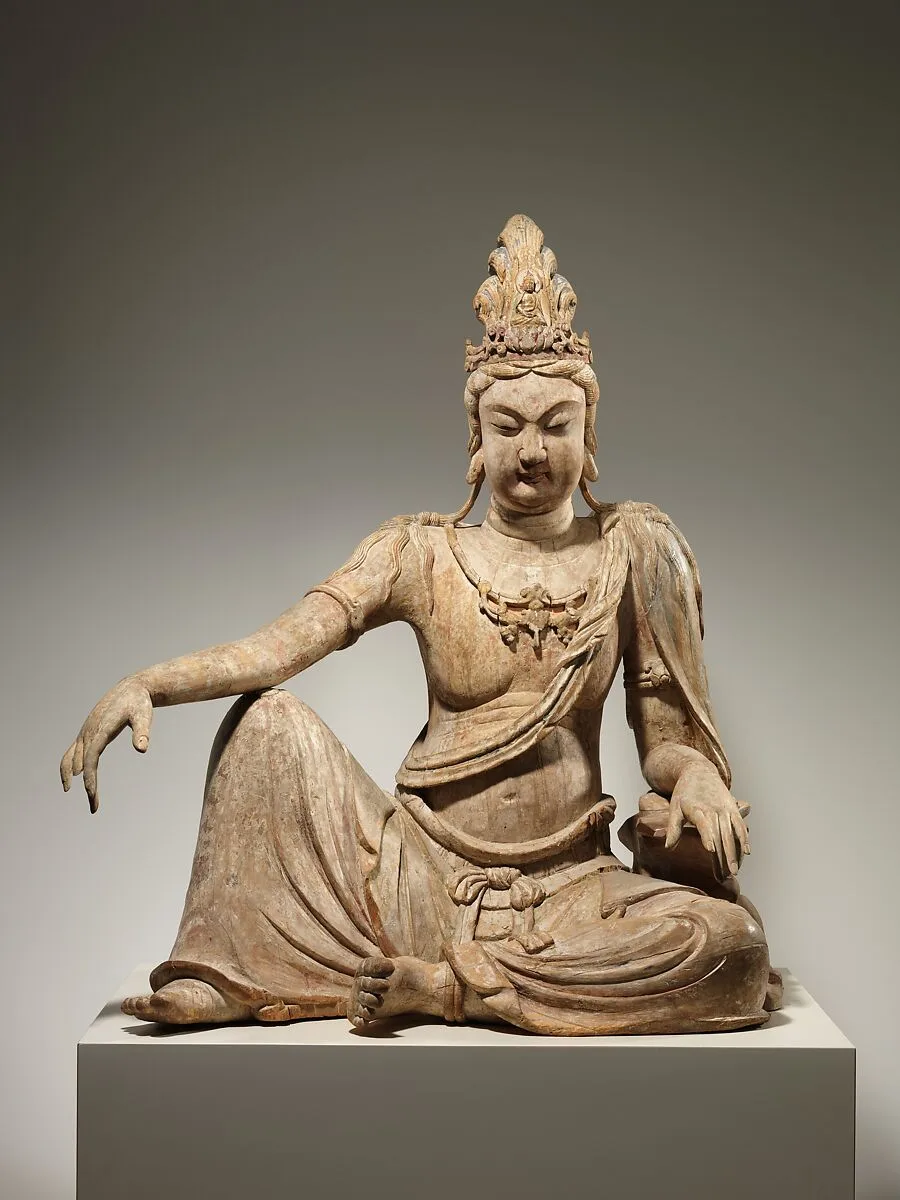
After the tenth century, one of the more prominent representations of Avalokiteshvara shows the bodhisattva seated with the right knee raised and the left leg crossed before the body. The posture represents the Water Moon manifestation, understood as a depiction of the divinity in his Pure Land, or personal paradise. Known as Mount Potalaka, Avalokiteshvara’s Pure Land was originally thought to be located on an island somewhere south of India. By the Ming dynasty (1368–1644), this mythical paradise had been identified with Mount Putuo, an island off the east coast province of Zhejiang, and had become an important pilgrimage site.
- Artist
- Unknown
- Date
- 11th century
- Medium
- Wood (willow) with traces of pigment; multiple-woodblock construction
- Culture
- China
- Department
- Asian Art
- Credit line
- Fletcher Fund, 1928