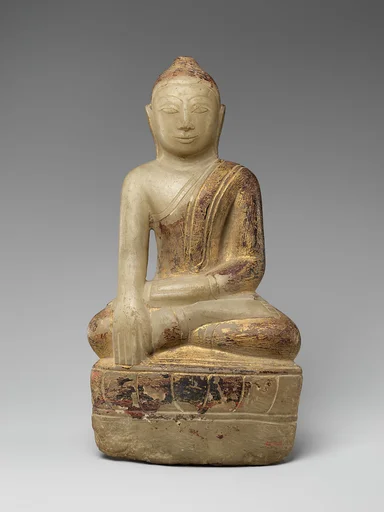
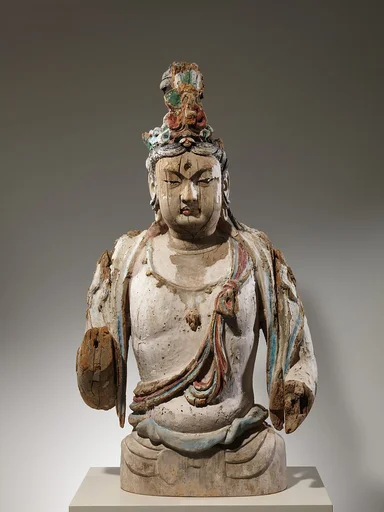
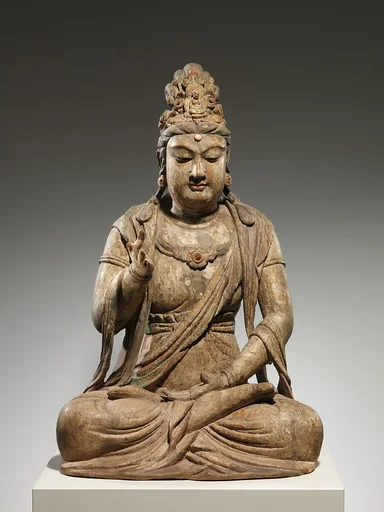
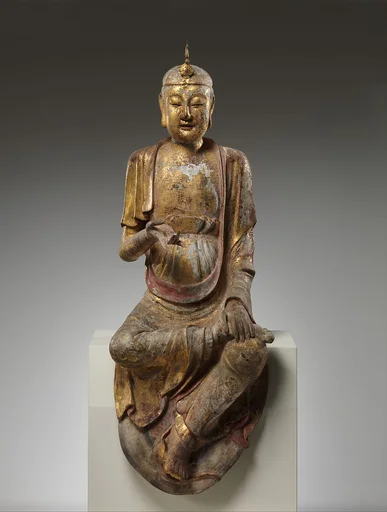
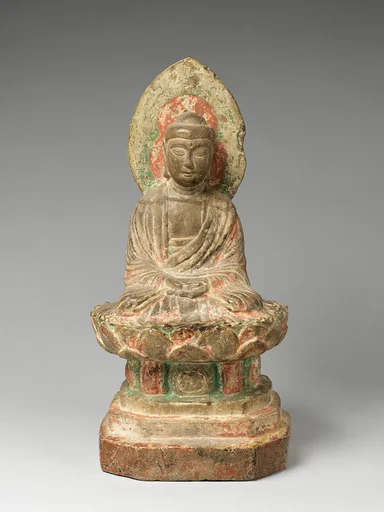
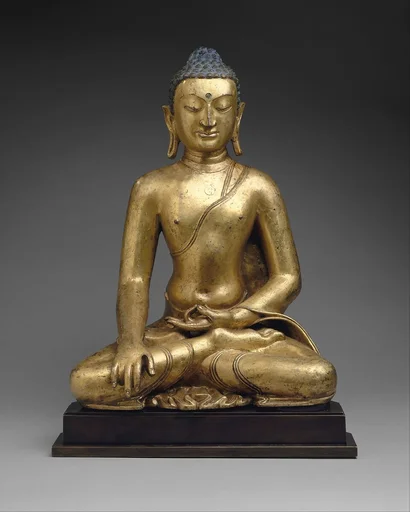
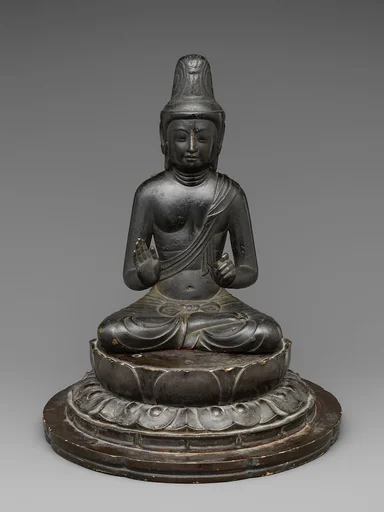
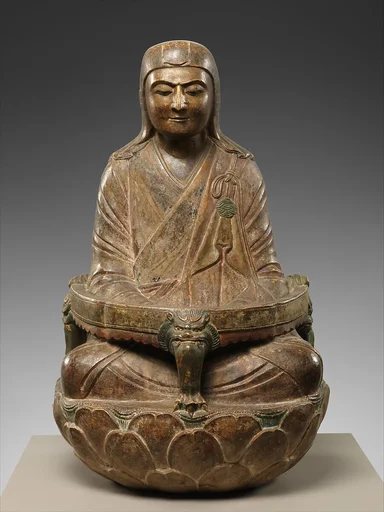
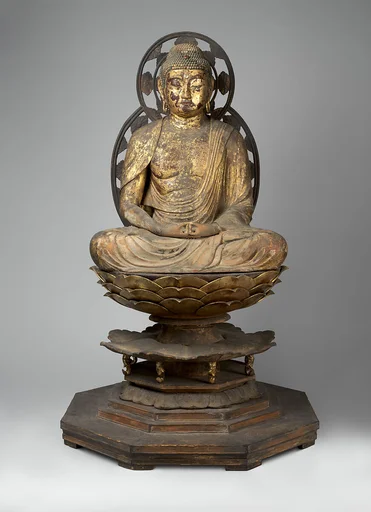
唐 彩繪塗金夾紵漆阿彌陀佛像|Buddha, probably Amitabha
Unknown
early 7th century · Dry lacquer with polychrome pigment and gilding · Asian Art
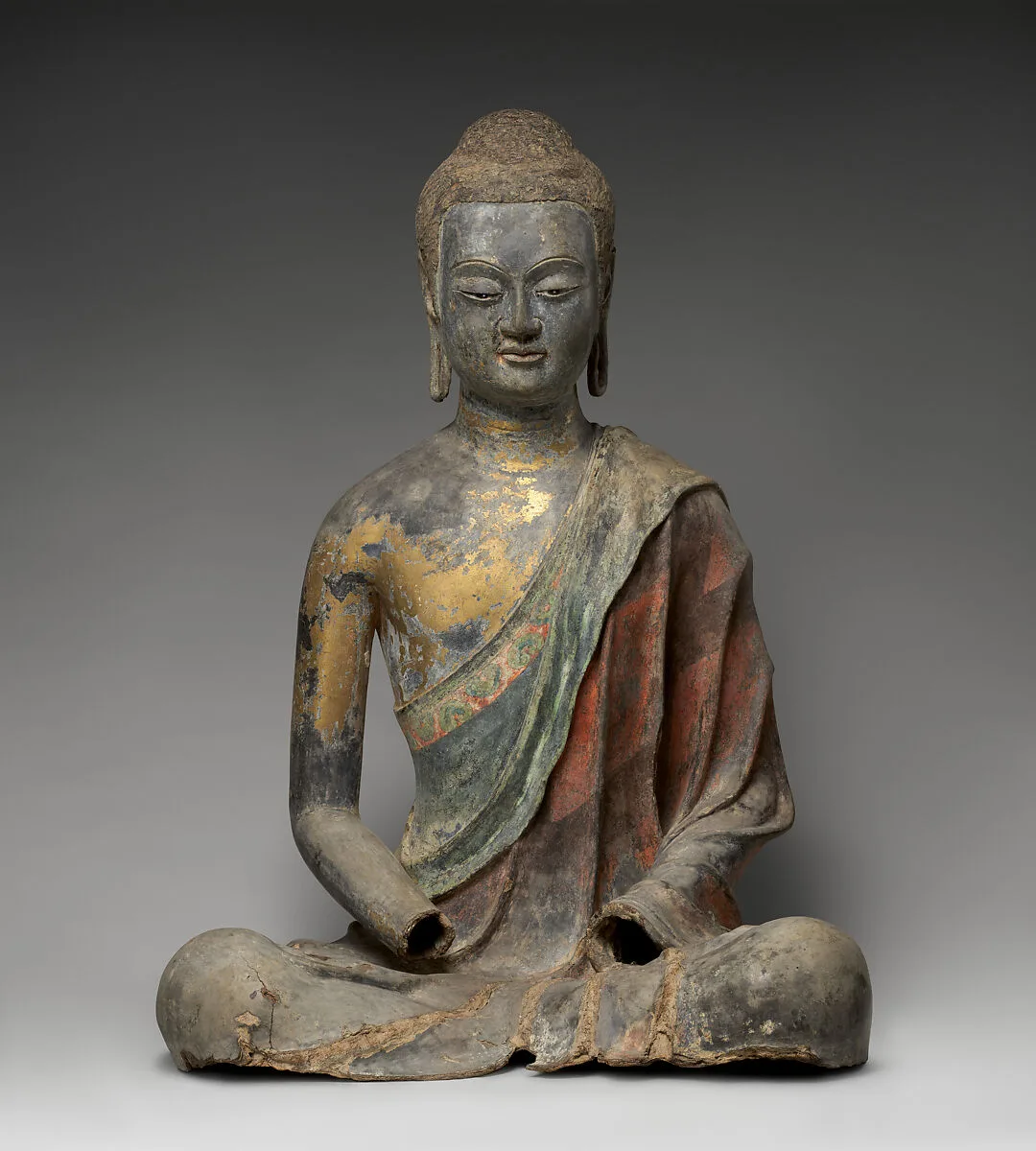
The position of the Buddha’s arms indicates that the hands were once held in a gesture of meditation and suggests that this sculpture represents Amitabha, a celestial Buddha who presides over his Western Paradise. Devotion to Amitabha, a major component of Chinese Buddhist practice since the sixth century, promotes the goal of rebirth in Amitabha’s Pure Land, where conditions are conducive to achieving spiritual understanding. The sculpture was made using the dry-lacquer technique, in which a core (often made of wood) is covered with clay and then wrapped in layers of cloth that have been saturated with lacquer— a tree resin that hardens when exposed to oxygen. As many as seven or eight additional layers of lacquer might then be applied. In the eighth century, this technique spread from China to Japan, where it was used widely in the production of Buddhist sculptures.
- Artist
- Unknown
- Date
- early 7th century
- Medium
- Dry lacquer with polychrome pigment and gilding
- Culture
- China
- Department
- Asian Art
- Credit line
- Rogers Fund, 1919