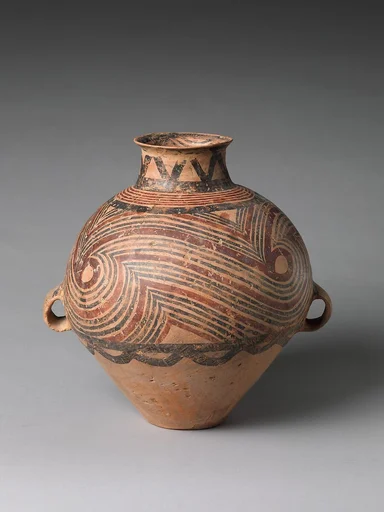
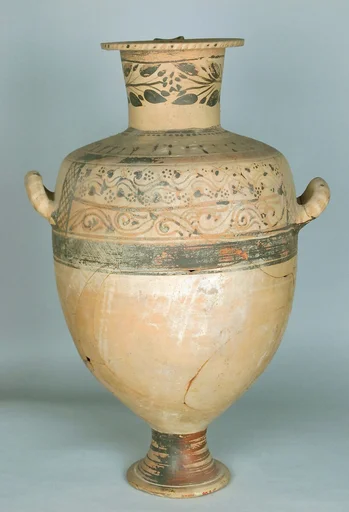
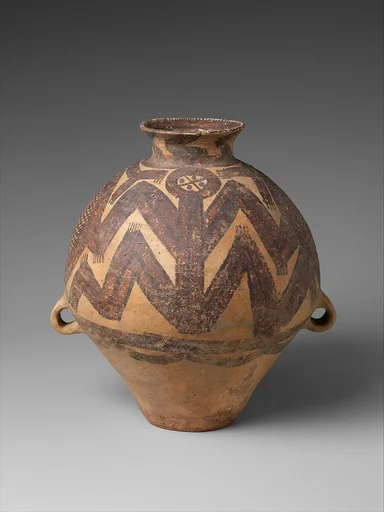
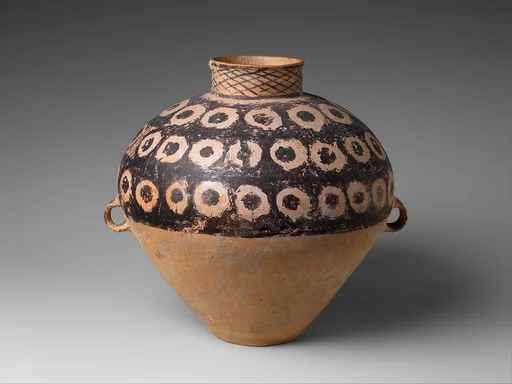
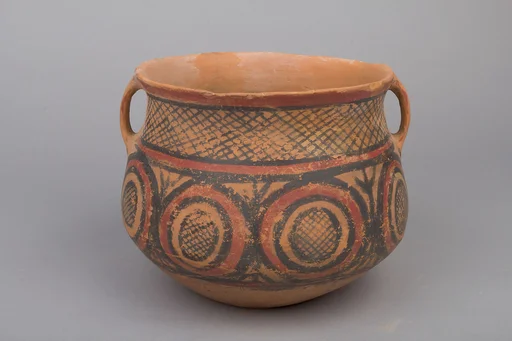
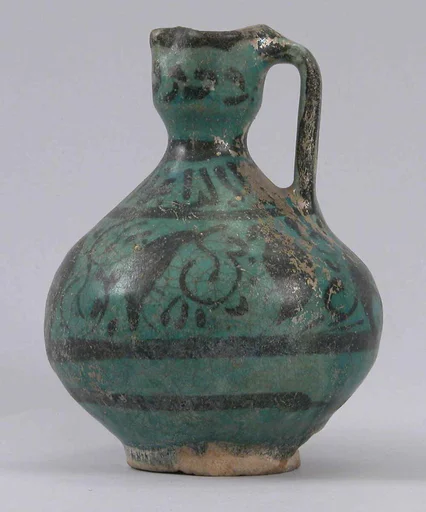
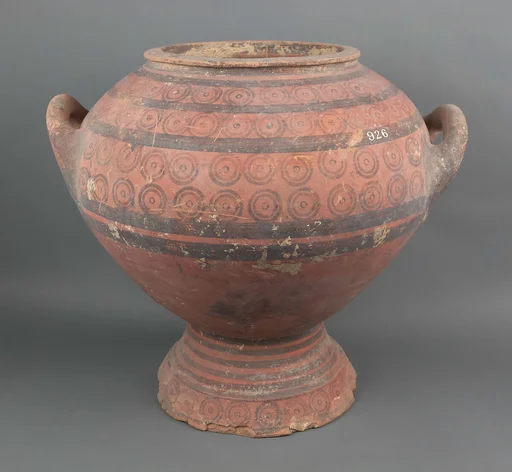
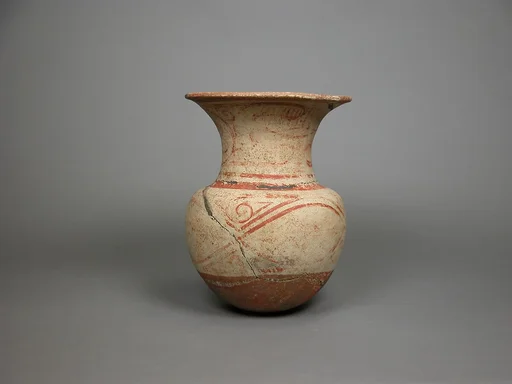
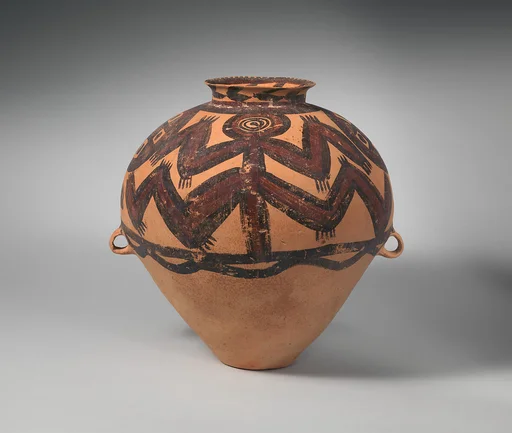
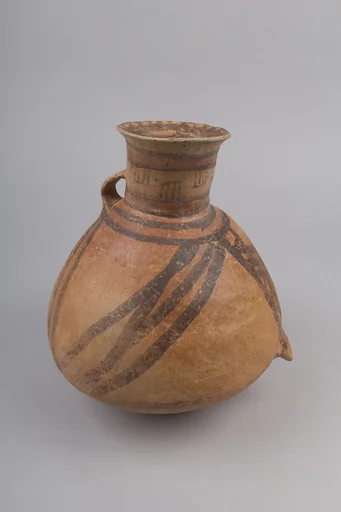
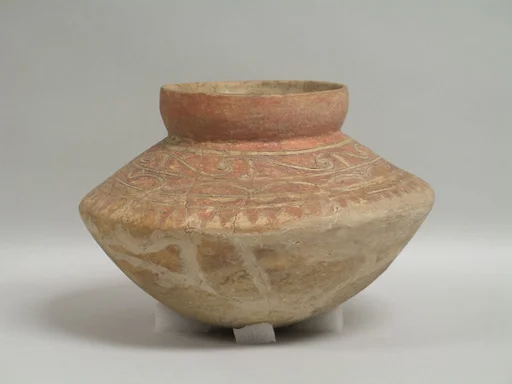
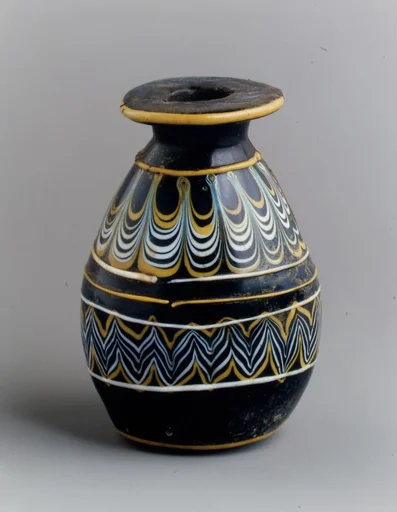
西漢 雲氣紋彩繪陶壺|Covered Jar (Hu)
Unknown
1st century BCE · Earthenware with painted decoration · Asian Art
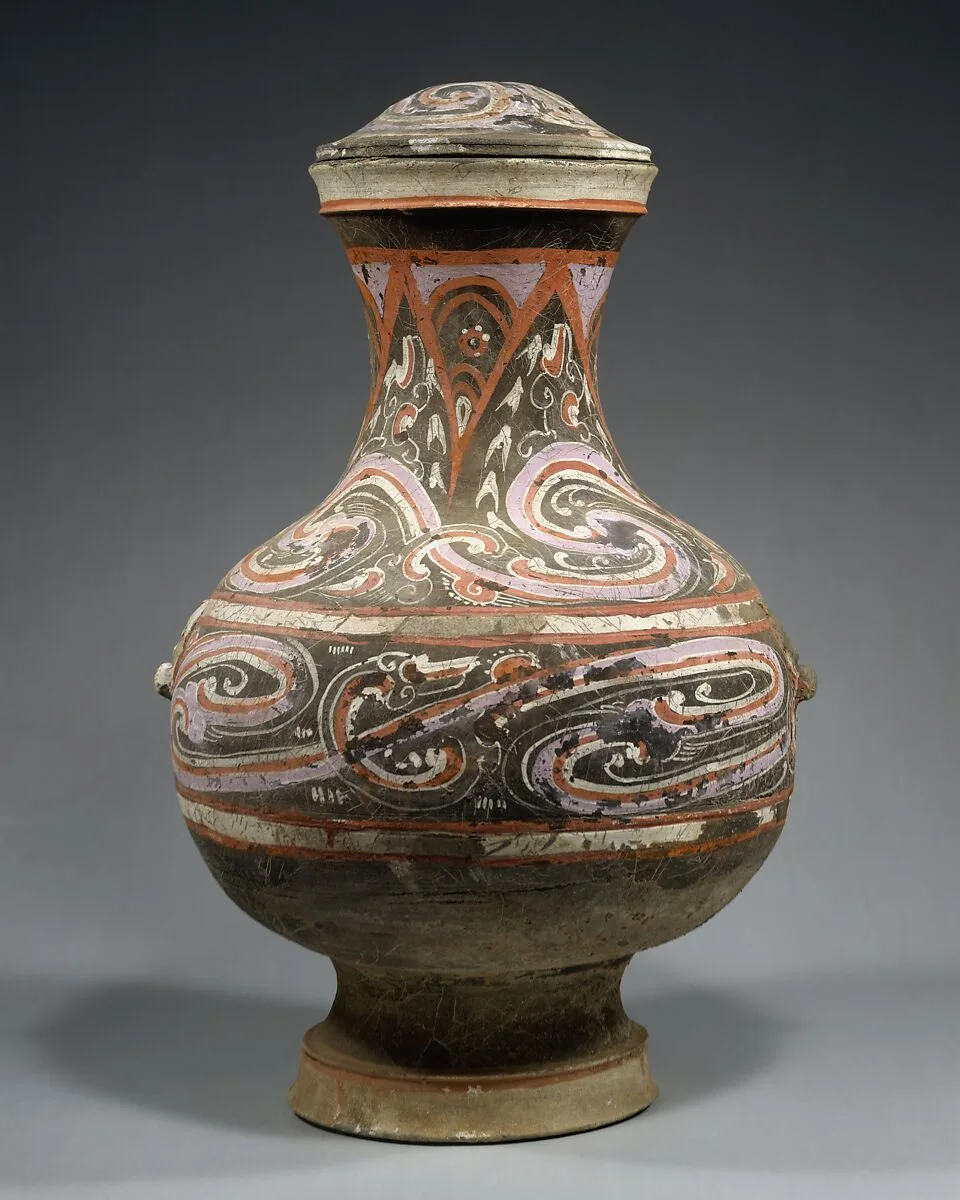
During the Warring States period (475–221 B.C.), jades, bronze, textiles, musical instruments, books and other luxuries were often placed in tombs to serve the needs of the deceased in the afterlife. In the early Han dynasty pottery models known as mingqi or "spirit goods" began to be produced as substitutes for more valuable possessions, and to provide figures of servants, entertainers, livestock, pets, and vessels and other necessities for the tomb. Made of low-fired earthenware and painted with chalky mineral pigments that flake off when handled, this covered jar is too porous to hold liquids. The swirling cloud-like designs covering the vessel are thought to represent celestial mists through which the deceased would travel to join the immortals.
- Artist
- Unknown
- Date
- 1st century BCE
- Medium
- Earthenware with painted decoration
- Culture
- China
- Department
- Asian Art
- Credit line
- Purchase, Mr. and Mrs. Oscar Tang Gift, 1986