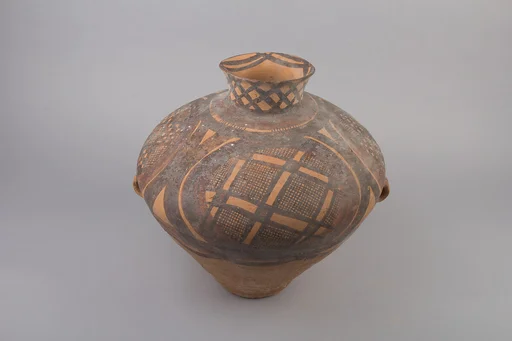
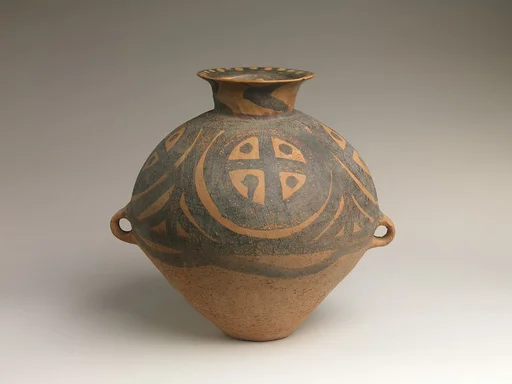
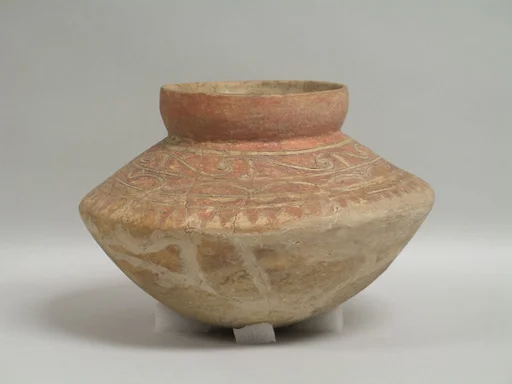
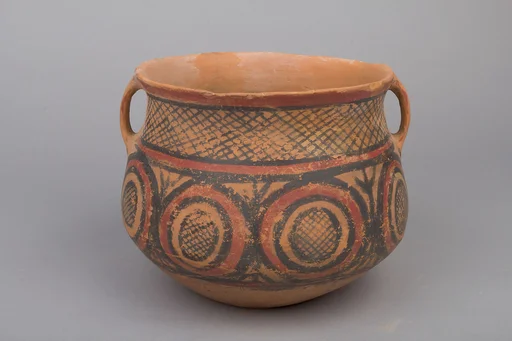
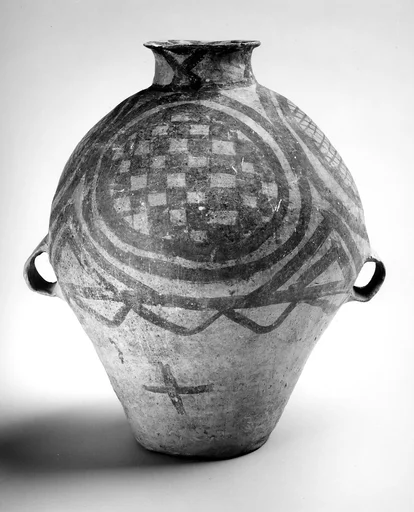
新石器時代馬家窯文化 馬厰類型彩陶罐|Jar (Guan)
Unknown
Machang phase, ca. 2350–2050 BCE · Earthenware with pigment · Asian Art
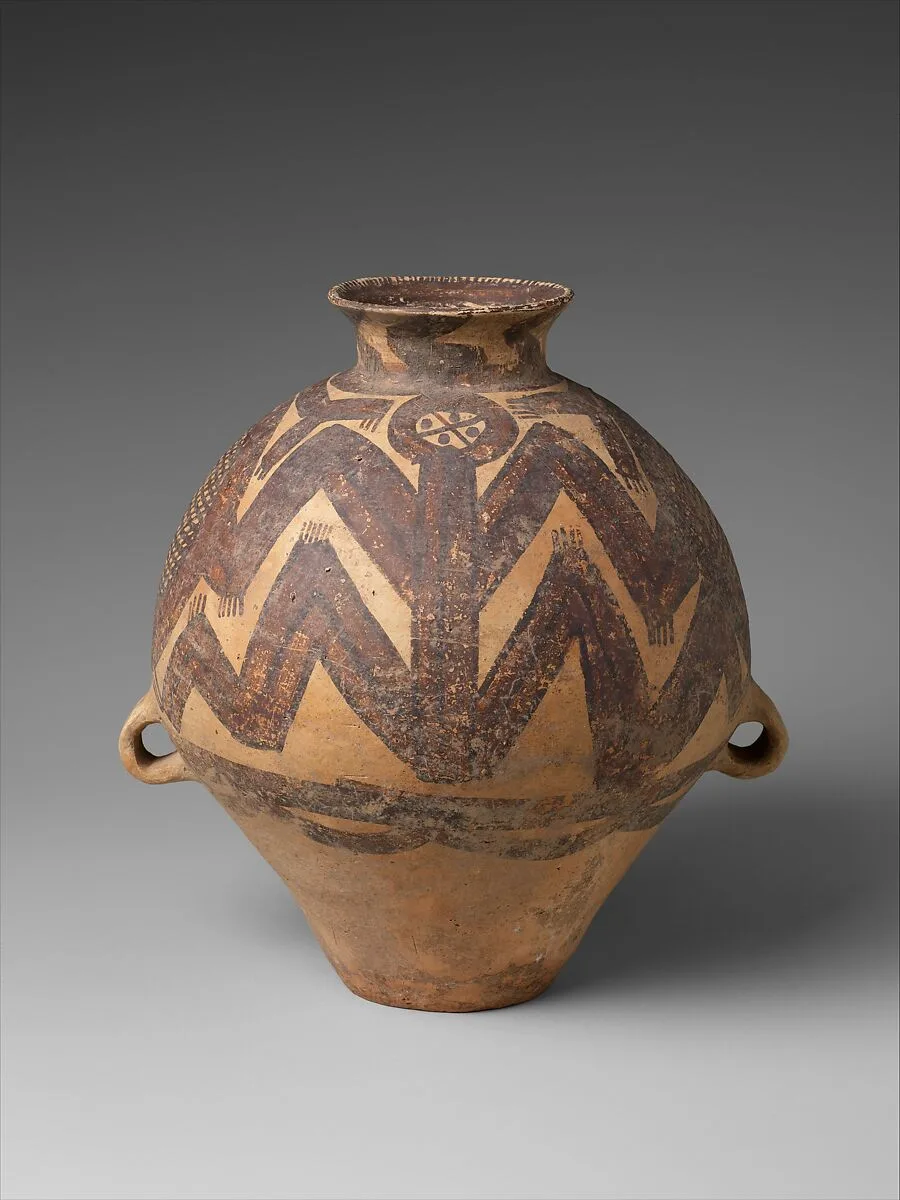
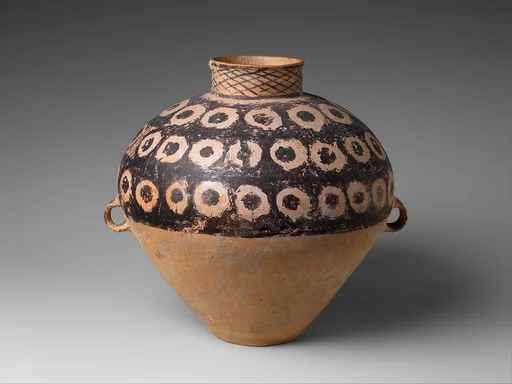
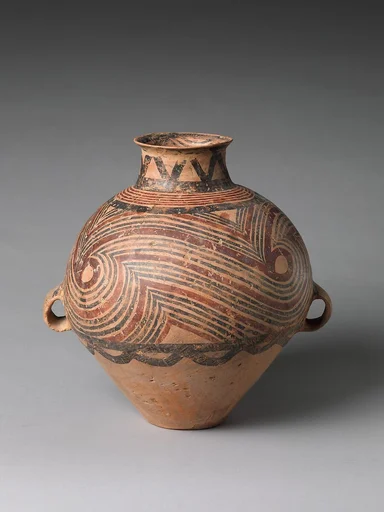
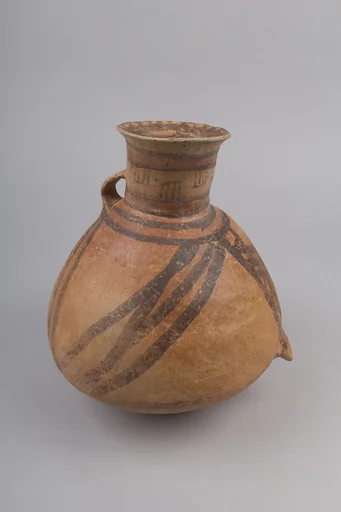
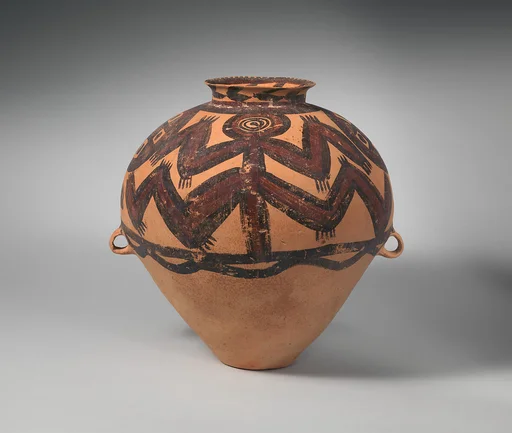
Large and small two-handled jars, pitchers, bowls, and beakers are the most common forms produced in the Machang phase of the Majiayao (or Gansu Yangshao) culture. Decorative motifs on Machang-period wares are largely geometric and include curvilinear patterns and cross-hatching, and lozenges, triangles, circles, and squares in an endless array of combinations. The zoomorphic figure in the center of this jar is one of the more distinctive images in the Machang vocabulary. Four limbs, bent in the center, are attached to a long torso, capped by a small head. Feathers or some other type of tufting are found at the end of the upper limbs and at the joints of all four appendages. These enigmatic motifs are variously interpreted: they are sometimes explained as abstract representations of natural creatures such as frogs; other hypotheses suggest that they are symbolic of either the costume worn by a shaman or the transformation he undergoes during rituals.
- Artist
- Unknown
- Date
- Machang phase, ca. 2350–2050 BCE
- Medium
- Earthenware with pigment
- Culture
- China
- Department
- Asian Art
- Credit line
- Charlotte C. and John C. Weber Collection, Gift of Charlotte C. and John C. Weber, 1992