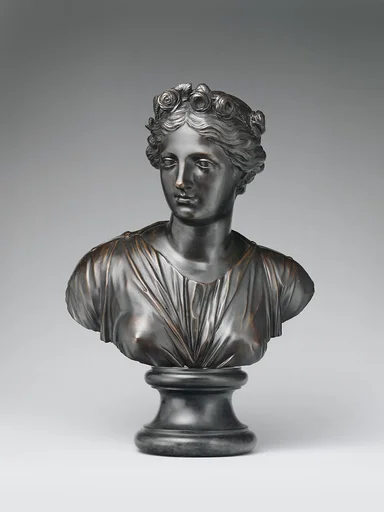
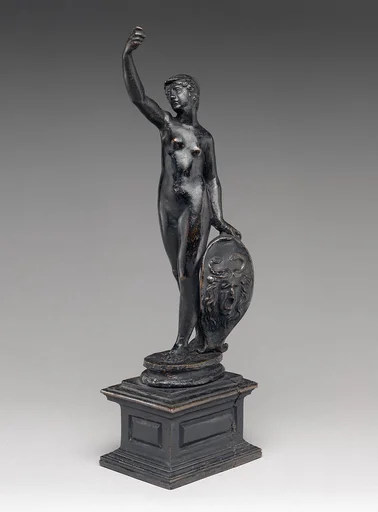
Female warrior probably representing Minerva
Unknown
late 18th or 19th century · Bust: white and black stone marble; socle: variegated red, black and gray/pink marble · European Sculpture and Decorative Arts
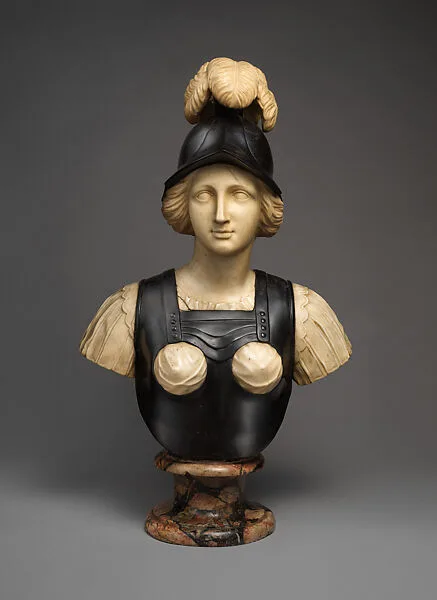
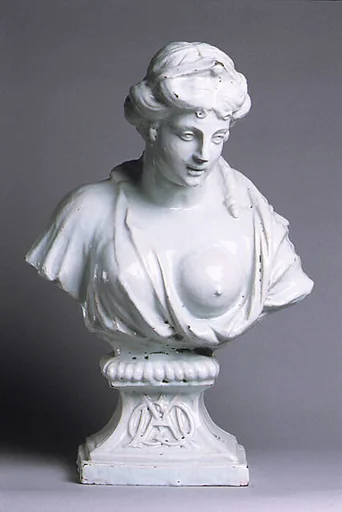
Minerva and its pendant bust of Mars (2015.507.1a, b) evoke the classicizing subjects, bust-length formats, and style that originated in France during the reign of Louis XIV (1643–1715) and that concurrently was popularized across Europe. The busts' simple forms, stiff poses, and solemn facial types are consistent with the late Baroque sculptures that were carved in Flanders during this period. In Flanders, especially in Antwerp and Brussels, sculpture and architectural decoration traditionally was carved using combinations of native black marble (noir belge), mottled red marble (rouge belge), and white marble or alabaster. The use of these stones in colorful counterpoint speaks most strongly to the busts’ Flemish origins. The veneration of ideal heroes and heroines in ancient costume and arms took on extravagant form in the 17th century, with countless variations. Within this imaginative tradition, the identification of the pair as Minerva and Mars cannot be certain. The female bust, for example, could be identified as Bellona, Roman goddess of war, who is depicted in 17th and 18th century French paintings wearing flamboyantly plumed helmets and low-cut cuirasses that expose her breasts. Whatever their identities, the female and male warriors are portrayed as calm rather than bellicose beings. The sovereign pair does not threaten war but rather offers the assurance of peace achieved through martial readiness. Boldly colorful and easily apprehended, Minerva and Mars probably were intended to make a strong, primarily decorative impact within a grandly embellished setting typical of the period.
- Artist
- Unknown
- Date
- late 18th or 19th century
- Medium
- Bust: white and black stone marble; socle: variegated red, black and gray/pink marble
- Culture
- possibly Flemish
- Department
- European Sculpture and Decorative Arts
- Credit line
- Gift of Kenneth Jay Lane, 2015