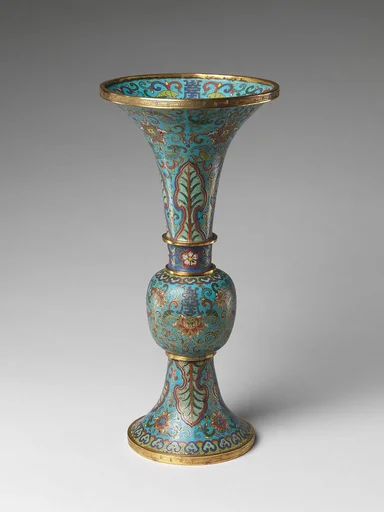
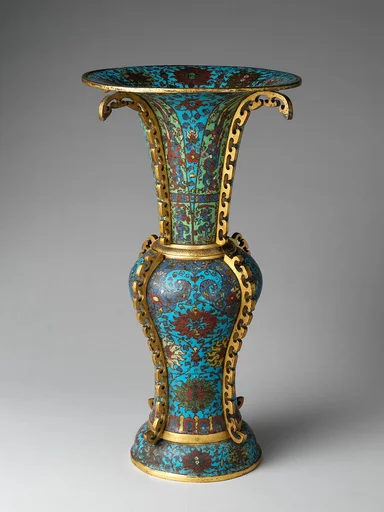
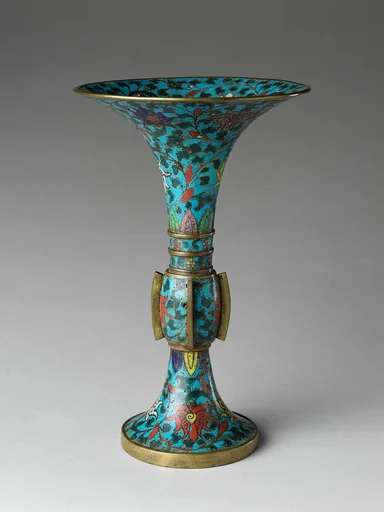
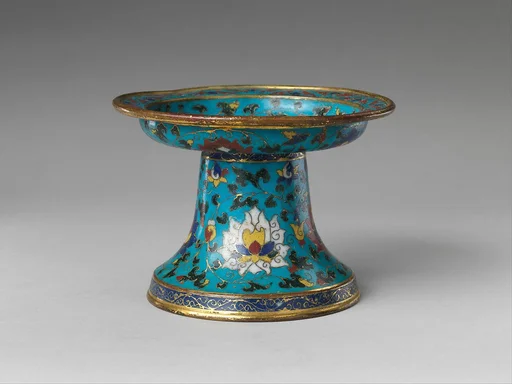
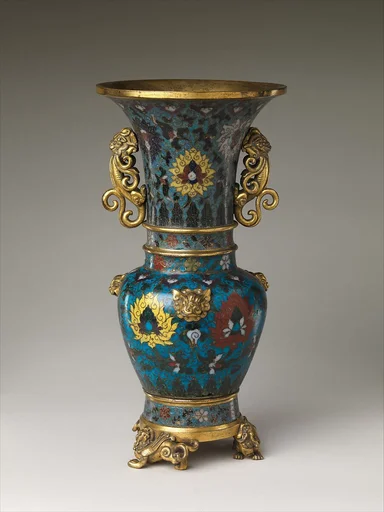
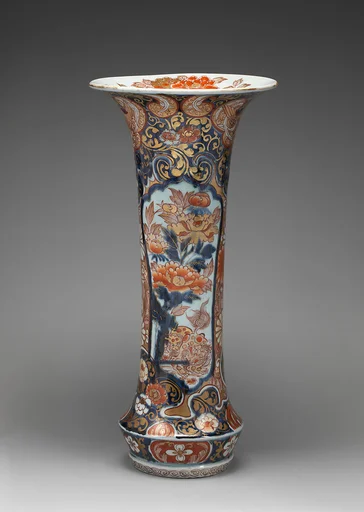
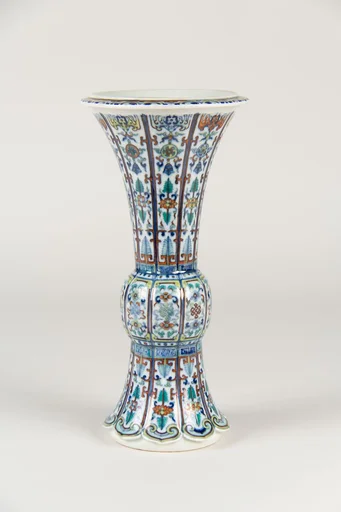
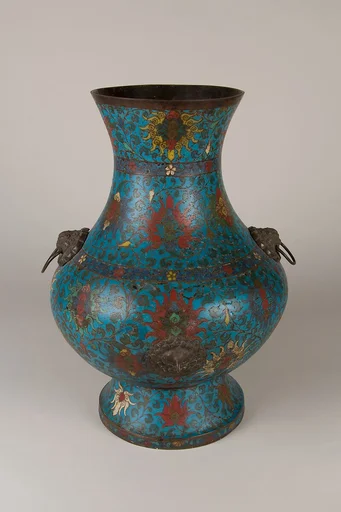
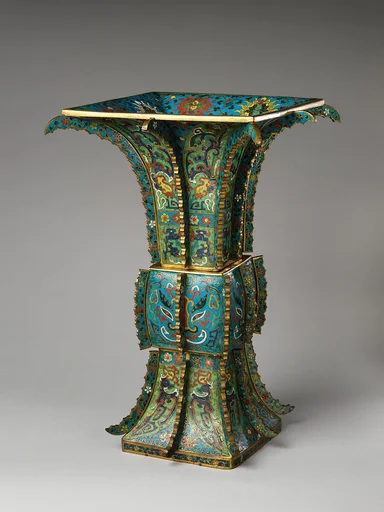
清中期 掐絲琺瑯花觚(五供之一)|Vase from a five-piece altar set
Unknown
second half 18th century · Cloisonné enamel · Asian Art
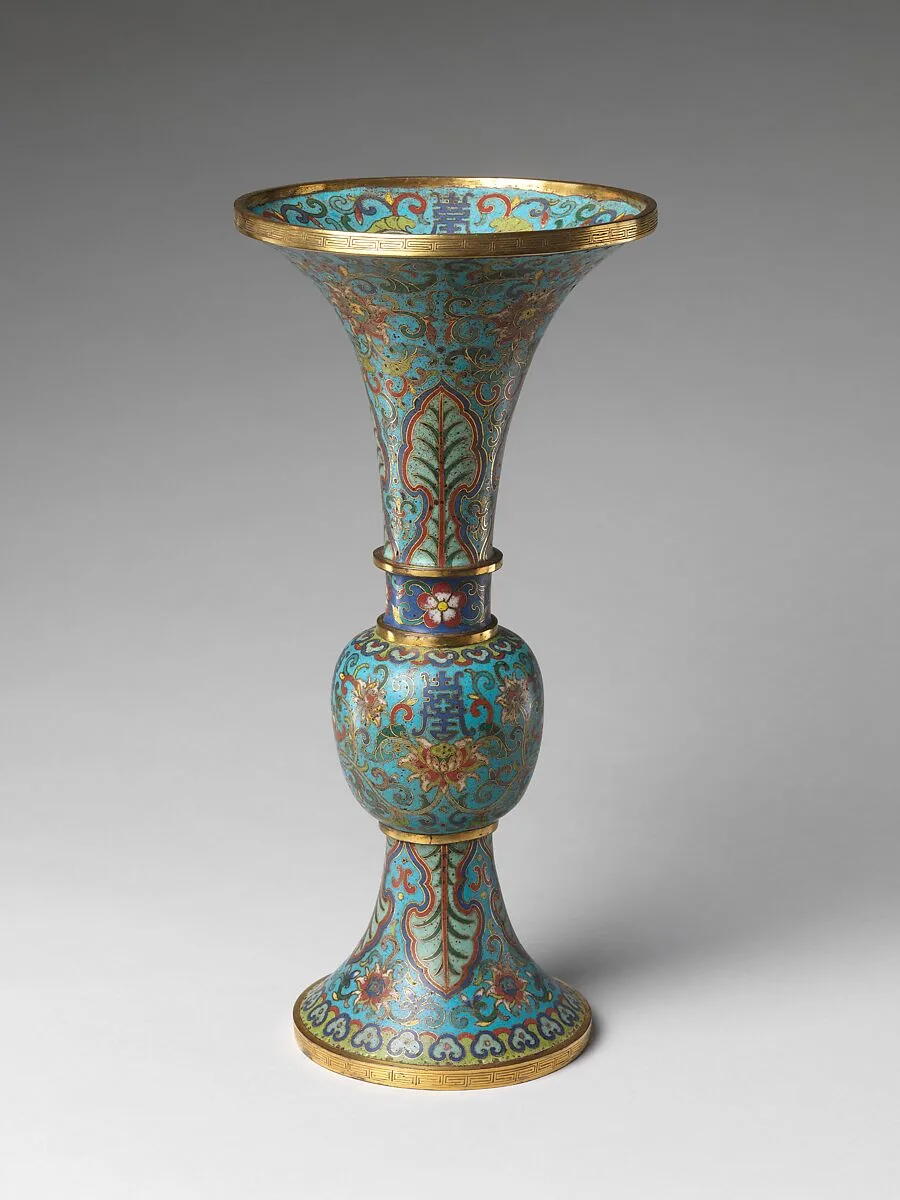
Cloisonné is the technique of creating designs on metal vessels with colored glass paste placed within enclosures made of copper or bronze wires, which have been bent or hammered into the desired patterns. Known as cloisons (French for "partitions"), the enclosures are generally either glued or soldered onto the metal body. The glass paste, or enamel—which gets its color from metallic oxides—is painted into the contained areas of the design. The vessel is usually fired at a relatively low temperature, about 800 degrees Celsius. Enamels tend to shrink during firing, and the process is repeated several times to fill in the design. Once this process is completed, the surface of the vessel is rubbed until the edges of the cloisons are visible.
- Artist
- Unknown
- Date
- second half 18th century
- Medium
- Cloisonné enamel
- Culture
- China
- Department
- Asian Art
- Credit line
- Gift of Edward G. Kennedy, 1929