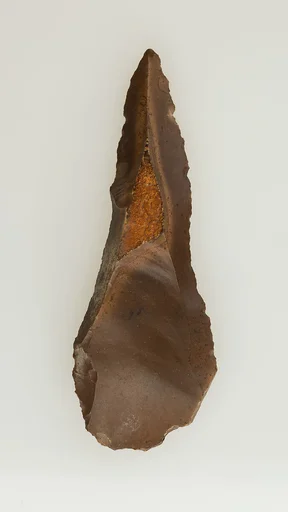
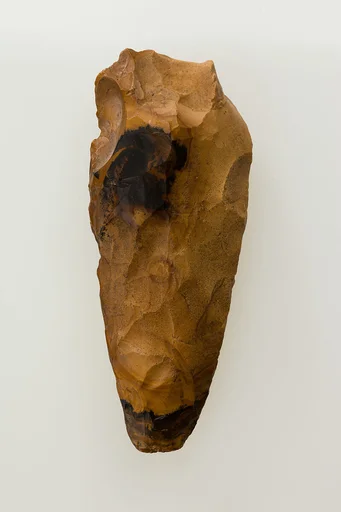
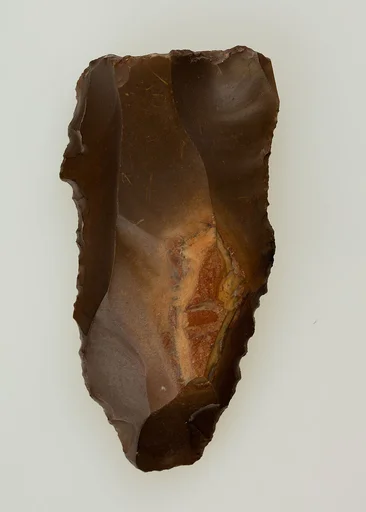
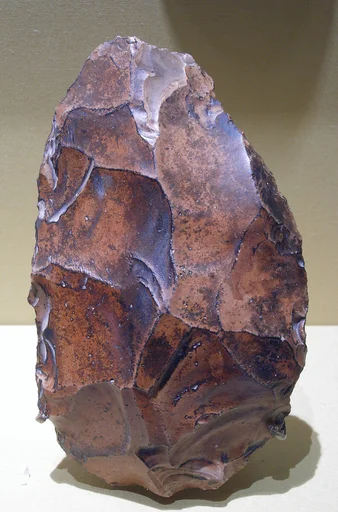
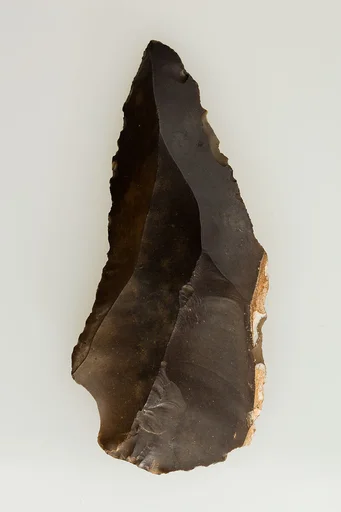
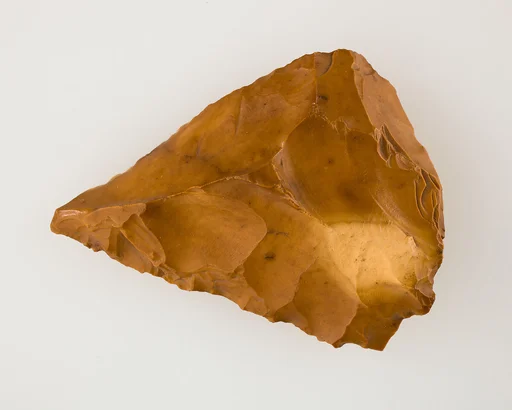
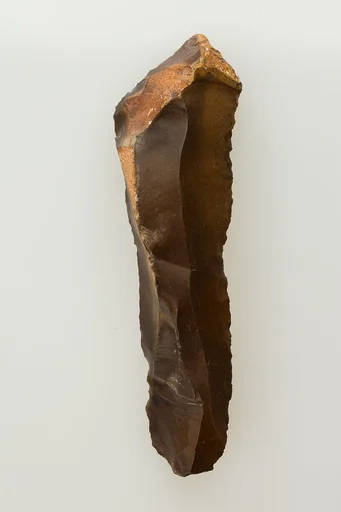
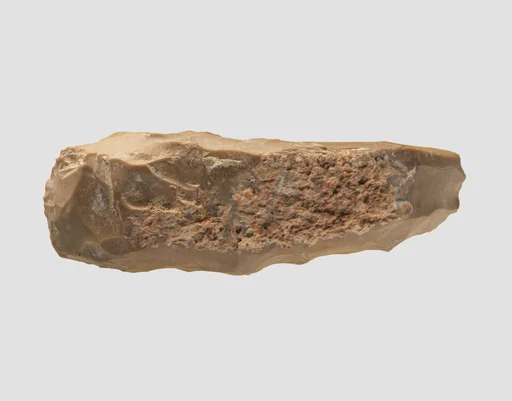
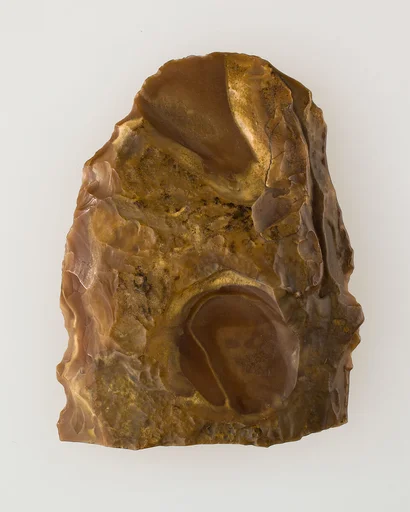
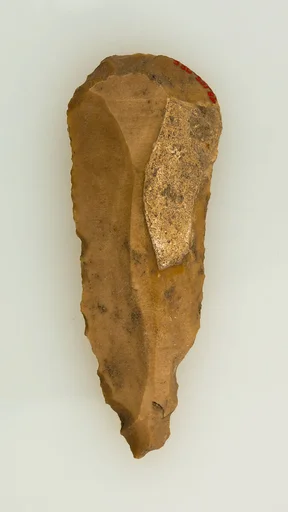
Biface, commonly referred to as a hand ax
Unknown
ca. 400,000–240,000 B.C. · Flint · Egyptian Art
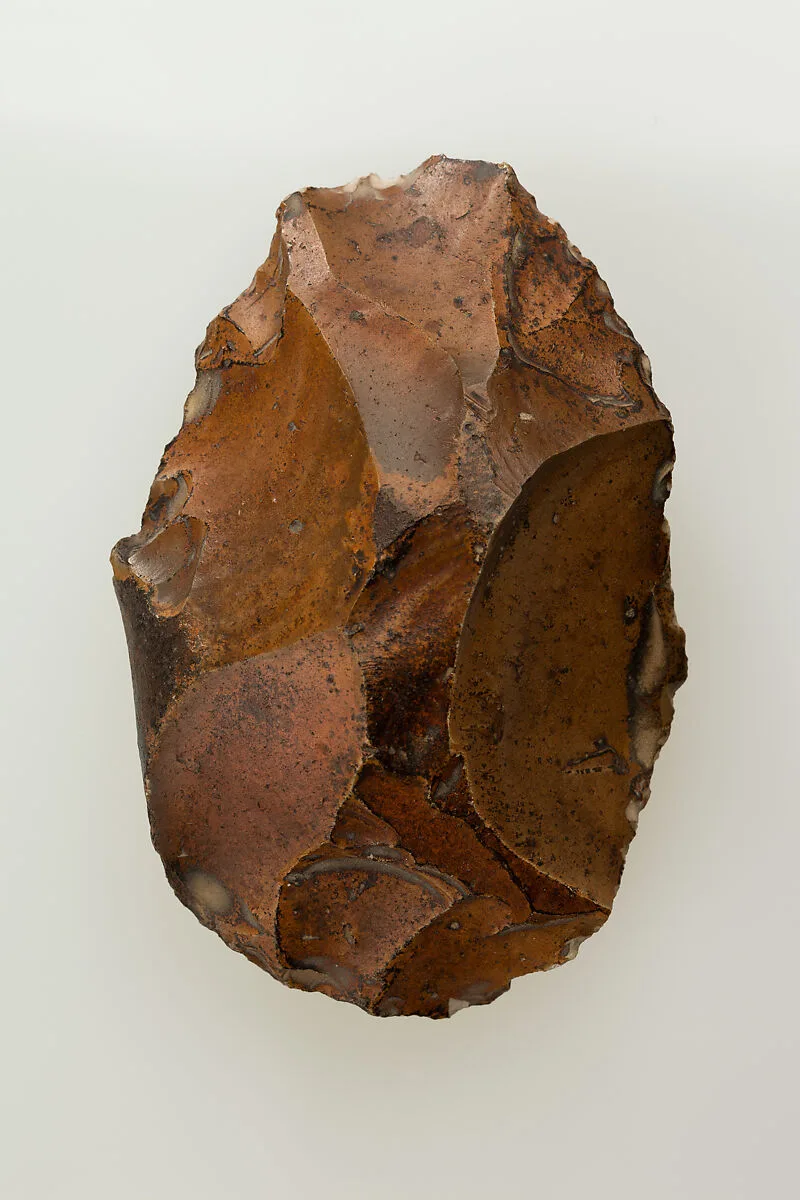
Often referred to as handaxes, bifaces were made by the Hominin predecessors of humans during the Lower Paleolithic period. Although bifaces are found in many shapes and sizes, the basic tool type was used for a very long time span and can be found all over Africa, Asia and Europe. Rather than a tool made for a specific task, bifaces were a kind of multi-tool that could be used in a variety of ways such as chopping, cutting, and scraping. Additionally the large tools could serve as a portable source for flakes if smaller tools or sharper edges were needed. This ovate biface was made on a nodule, as can be seen from the cortex remaining along one edge.
- Artist
- Unknown
- Date
- ca. 400,000–240,000 B.C.
- Medium
- Flint
- Department
- Egyptian Art
- Credit line
- Gift of C. T. Currelly, 1906